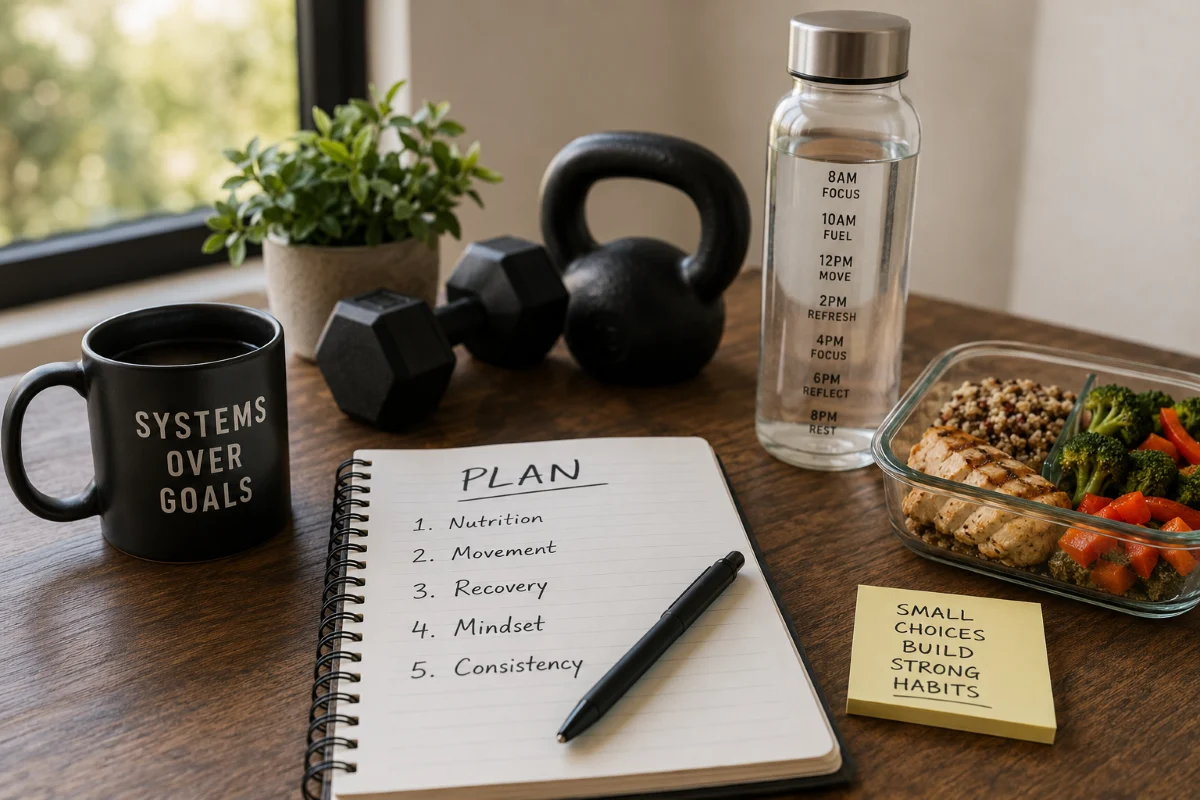
Every January, millions of individuals embark on a familiar ritual: they set ambitious health and fitness goals. Driven by the optimism of a new year, they commit to rigorous exercise regimens, stringent meal plans, and promises of total lifestyle overhauls. Yet, by the time summer arrives, the vast majority of these resolutions have been abandoned.
For years, the fitness industry focused on the "Goal-First" model, emphasizing the destination—the weight lost, the muscle gained, or the race finished. However, contemporary behavioral science is revealing a critical flaw in this approach: goals provide the "what," but they offer nothing in the way of "how." As the initial burst of willpower fades, clients are left without the structural scaffolding necessary to navigate the complexities of daily life. The new paradigm in health coaching suggests that if you want to change your life, you must stop focusing on the goal and start designing the system.
The Architecture of Behavior: Goals vs. Systems
At the core of this shift is a fundamental distinction between an outcome and a process. Goals, such as losing 20 pounds or running a sub-four-hour marathon, serve as essential navigational markers; they provide direction and purpose. They clarify what matters to the client and provide a shared language for the coach and athlete.
However, goals are essentially static. They describe a future state that does not yet exist. A goal does not dictate the moment you wake up, the decision you make when a work meeting runs late, or how you respond to the exhaustion of a long day. This is where systems come into play. A system is a collection of routines, environmental cues, and feedback loops that govern daily behavior.
Successful fitness professionals are moving away from the role of mere "workout planners" and evolving into "behavioral architects." They understand that while a goal is a dream with a deadline, a system is the daily machine that makes that dream inevitable.
The Chronology of Change: From Motivation to Automation
The trajectory of a typical fitness journey often follows a predictable path. It begins with high motivation, often sparked by a specific event—a health scare, an upcoming wedding, or a New Year’s resolution. During this "honeymoon phase," the client relies heavily on willpower.
As the calendar turns, however, "life happens." Work demands escalate, family responsibilities shift, and the initial excitement wanes. This is the "friction point." If the client has relied solely on motivation, the system collapses. They find themselves debating whether to go to the gym, negotiating with their own fatigue, and eventually, giving up.
A systems-based approach fundamentally alters this timeline. Instead of relying on a finite supply of willpower, the coach and client spend the early weeks "designing the environment."
- Preparation Phase: Removing the "friction" of starting (e.g., packing the gym bag the night before).
- Implementation Phase: Linking new habits to existing "anchors" (e.g., taking a walk immediately after dinner).
- Refinement Phase: Using data—not just on body weight, but on behavioral consistency—to adjust the system in real-time.
Supporting Data: The Science of Decision Fatigue
Psychological research into "decision fatigue" provides the strongest evidence for the systems-based model. Every decision—what to eat, when to work out, how to fit exercise into a commute—requires mental energy. By the end of a high-pressure workday, a client’s "cognitive fuel tank" is often empty, leading to poor choices.
Habits are the brain’s way of bypassing this fatigue. When a behavior becomes an automatic routine, it requires almost no conscious decision-making. The professional who helps a client automate their nutrition through meal-prep systems or their training through scheduled appointments is effectively "outsourcing" willpower. By reducing the number of choices a client must make under stress, the coach significantly increases the probability of adherence.
Leading vs. Lagging Indicators: A New Metric for Success
One of the most profound implications of systems-based coaching is the redefinition of "success." Traditional models focus on lagging indicators: weight, body composition, and blood work. These are important, but they are "lagging" because they only show the result of actions taken weeks or months ago.
The systems-based model prioritizes leading indicators—the daily, controllable behaviors that influence those outcomes. These include:
- The "Three-Workout" Rule: Did the client hit their minimum training frequency?
- Sleep Hygiene: Did the client maintain their sleep window?
- Nutritional Infrastructure: Was the grocery shopping completed on time?
- Movement Breaks: Did the client utilize active commuting or walking meetings?
By tracking these indicators, the coach provides the client with immediate, positive feedback. Even if the scale hasn’t moved, the client can see that they have "won" their week by being consistent with their systems. This reinforces the identity of someone who is "active" rather than someone who is "trying to lose weight."
Expert Perspectives: The Role of the Coach
Leading fitness professionals are now vocal about the shift in their coaching philosophy. "We aren’t here to be the client’s conscience," says one veteran health coach. "We are here to be their engineers. If a client fails, we don’t scold them for lack of discipline. We look at the system. Was the cue too weak? Was the environment too cluttered with distractions? We iterate until the behavior becomes the path of least resistance."
This perspective has profound implications for the coach-client relationship. It fosters a non-judgmental environment. Instead of the client feeling "guilty" for missing a workout, they feel "empowered" to adjust the system. They move from an all-or-nothing mindset to a mindset of resilience and continuous improvement.
Implications for Long-Term Adherence
The most significant implication of this approach is the concept of the "flexible system." Life is inherently unpredictable. A rigid plan that demands perfection is destined to break when a client faces a work crisis or an illness.
A flexible system, however, includes "Plan B" protocols. For instance:
- If the 60-minute gym session is impossible, the system dictates a 15-minute bodyweight circuit at home.
- If a client cannot cook a full meal, the system includes a list of "healthy convenience" options.
This flexibility ensures that the habit remains intact even when the activity must be modified. This is the secret to lifelong health. It isn’t about being perfect; it’s about never missing twice.
Conclusion: Becoming the Architect of Your Health
To move beyond the cycle of seasonal fitness, we must embrace a fundamental truth: human beings are creatures of environment and habit, not just desire. If you want to change your body, you must first change your surroundings and your routines.
By shifting our focus from the outcome (the goal) to the mechanism (the system), we strip away the need for constant, exhausting willpower. We replace the fragile engine of motivation with the robust machinery of habit. Whether it is packing your gym bag, prepping your meals, or scheduling your workouts as non-negotiable appointments, the systems you build today are the only things that will carry you through the challenges of tomorrow.
Success, ultimately, is not a destination you reach. It is a system you inhabit. By becoming the architect of your own healthy environment, you ensure that your fitness goals are not just achieved—they are sustained for a lifetime.