
For millions of people over the age of 55, the relationship with exercise is often defined by a cycle of hope and frustration. You start with the best of intentions, head to the local gym, and find yourself navigating a sea of chrome-plated, padded resistance machines. But instead of feeling stronger, you end up with a stiff lower back, a "clicking" knee, or a shoulder that just doesn’t feel quite right. You eventually return to the sofa, concluding that perhaps you’re just "too old" for intense training.
After nearly 40 years as a personal trainer, including two decades spent mentoring the next generation of fitness professionals at TRAINFITNESS, I have observed a consistent pattern: the gym equipment we are told will keep us fit is often the very thing causing our discomfort. The secret to aging well isn’t found in a seated chest press; it is found in mastering the fundamental movements of human life.
The Mechanics of Pain: Why We Get Hurt
Pain is the primary deterrent for adults over 55. It is rarely the result of a single catastrophic injury; rather, it is the accumulation of years spent in sedentary postures that have misaligned our musculoskeletal systems.

The Triad of Common Ailments
- The Lower Back: This is the most common point of failure. Modern living encourages chronic sitting, which weakens the glutes and tightens the hip flexors. Consequently, the lower back is forced to compensate for the lack of support, performing tasks it was never designed to handle.
- The Knees: Frequently, knee pain is a "victim" of the hips. When the gluteal muscles are weak, the knee is forced to track inwards under load. Over time, this misalignment causes wear and tear that leads to inflammation.
- The Shoulders: Rounded posture—a hallmark of desk work and digital device usage—leaves the rotator cuff underutilized and vulnerable. When life finally demands a sudden reach or lift, the joint is unprepared.
The Fallacy of Machine-Based Training
The fitness industry has spent decades selling us on the stability of machines. They promise safety by "locking" the user into a set path. However, this is precisely why they are ineffective for functional longevity.
In the real world, nothing stabilizes you. When you carry groceries, lift a grandchild, or reach for a high shelf, your body must stabilize itself. Machines perform the "balancing" work for you, effectively putting your stabilizing muscles to sleep. By contrast, free-standing, gravity-based movements require the entire kinetic chain to fire in unison. This not only builds strength but also sharpens the neuromuscular coordination that prevents falls and injuries.
Five Essential Moves for Real-Life Strength
To regain functional independence, you must train your body to handle its own weight through space.

1. The Hip Hinge
The back extension machine isolates the lower back, which is exactly what you don’t want. The hip hinge teaches you to move through the hips while keeping the spine neutral.
- The Benefit: This is the primary movement for lifting anything off the floor safely.
- Form Tip: Practice against a wall. Stand with your feet a few inches from the wall, then push your hips back until your glutes touch the surface. This "wall slide" keeps your spine honest.
2. Bodyweight Squat to Chair
While the leg press allows you to lift heavy weight with a compromised posture, the chair squat provides a depth target that forces your quads, glutes, and core to work together.
- The Benefit: It builds the exact strength needed to rise from a seat or climb stairs.
- Form Tip: If you are a beginner, use a higher surface like a dining chair with a cushion. You can use your hands for assistance on the way up until your strength improves.
3. The Split Squat
Leg extensions isolate the quad, which can stress the knee joint. The split squat, however, forces the leg to stabilize itself, training the glutes to protect the knee.

- The Benefit: Improved balance and unilateral stability.
- Form Tip: Use a kitchen worktop for support. Start with a very shallow range of motion and increase depth over several weeks.
4. The Incline Press-Up
Seated chest presses pin your back to a pad. The incline press-up, performed against a sturdy worktop or bench, forces your trunk muscles to hold your entire body together.
- The Benefit: It builds shoulder stability and core strength simultaneously.
- Form Tip: The more upright you stand, the easier the move. Start near a wall and gradually move to a lower surface as you progress.
5. Single-Arm Bent Over Row
Lat pulldowns remove the trunk from the equation. A single-arm row forces your core to resist rotation while you work your upper back.
- The Benefit: It builds the posture-supporting muscles of the back and prepares the spine for asymmetrical loads.
- Form Tip: Use a worktop to support your weight with one hand. Pull the other elbow back slowly, focusing on the squeeze between the shoulder blades.
A Chronology of Progress
If you begin this routine, you should view your progress in phases. Consistency is the primary factor in neurological and physiological adaptation.
- Weeks 1–2 (The Adjustment Phase): Focus on form rather than intensity. You will likely notice that daily tasks—carrying shopping bags or walking up stairs—begin to feel less taxing.
- Weeks 3–4 (The Niggle Reduction): Many people report that the "grumbling" in their lower back or the clicking in their knees begins to subside as the muscles around the joints become more capable.
- Weeks 5–6 (The Strength Gains): You will likely observe a 30–50% increase in strength. You may notice yourself standing taller and walking with more confidence.
- The Long Term: The true success of this program isn’t found in a mirror, but in what doesn’t happen. By training for stability, you are actively preventing the falls and strains that lead to loss of independence.
Implementation: How Often to Train
A sustainable routine is a successful one.
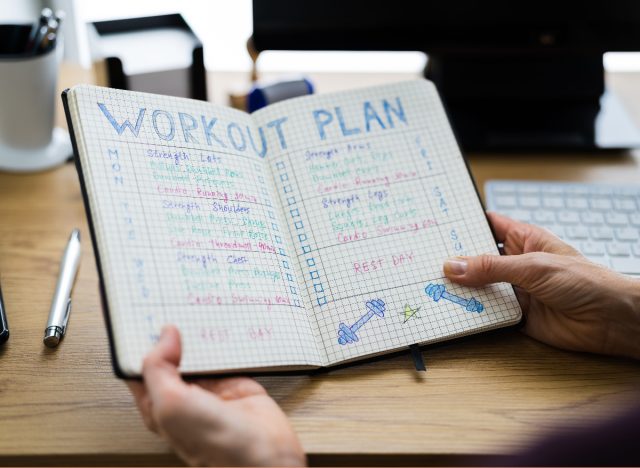
- Frequency: Train three days per week. The "off" days are just as important as the training days, as they allow your tissues to recover and rebuild.
- Volume: Start with two sets of 8–12 repetitions. Always stop two reps short of total failure; you should finish each set feeling as though you could have done more.
- Progression: After one month, add a third set or increase the reps to 15. After six weeks, begin adding small amounts of external weight to the row and squat.
Safety and Professional Guidance
Before starting any new exercise regimen, particularly if you are over 55, it is vital to acknowledge your specific health history.
When to Seek Medical Advice
If you have a history of joint surgery, heart conditions, poorly managed blood pressure, or recent unexplained falls, consult your GP or a physical therapist before beginning. Similarly, those with diagnosed disc herniations or osteoporosis should seek a professional assessment to ensure these movements are adapted to their specific needs.

Red Flags
Stop immediately if you experience:
- Sharp, shooting pain (as opposed to the dull fatigue of muscle work).
- Pain that persists for more than two hours after the session.
- Numbness or tingling in the limbs.
- Dizziness or lightheadedness.
The Implications for Aging
The narrative that we must naturally decline in physical capability as we reach our 60s and 70s is outdated. While we cannot stop the clock, we can dictate the quality of our movement. By shifting the focus from "isolating muscles" to "integrating systems," we move away from the risk of injury and toward the goal of functional autonomy.
When you train your body to function as a unified, stable, and strong system, you are doing more than just exercise—you are investing in the ability to remain active, mobile, and independent for the rest of your life. The gym is a tool, but your body is the machine that matters most. Treat it with the intelligence it deserves.