For the vast majority of professional athletes, the hoisting of a championship trophy represents the ultimate destination—the summit of a career’s worth of toil. For Kansas City Chiefs quarterback Patrick Mahomes, however, a Super Bowl ring is not a finish line. It is merely a starting block.
To watch Mahomes on the field is to witness a paradox: a player who operates with the creative, improvisational flair of a backyard athlete, yet executes with the clinical precision of a programmed machine. While millions of fans marvel at his sidearm deliveries and no-look passes, the three-time Super Bowl champion remains singularly focused on the one element of his game that never makes the highlight reel: the invisible, exhaustive grind of recovery and preparation.
The Foundation of Consistency: A Philosophical Shift
In a candid conversation with Muscle & Fitness, Mahomes peeled back the curtain on the mindset that keeps him at the pinnacle of the NFL. When pressed to define what "improvement" looks like for a man who has already conquered the sport, he bypassed discussions of legacy or record-breaking stats. Instead, he centered his response on a singular, unwavering principle: consistency.
"The biggest thing is consistency," Mahomes asserts. "Consistency in everything that you do. How you eat, what you put in your body, your film study; it’s all the little things that give you that extra step."
This philosophy was not innate; it was a lesson absorbed from the veterans who mentored him during his rookie years. Mahomes recognized early on that talent might secure a spot on an NFL roster, but it is the meticulous, mundane habits—the discipline to treat every day as a professional obligation—that separates a starter from a legend.
Decoding the Chaos: The "Stroupe" Methodology
To the casual observer, Mahomes’ ability to turn a broken play into a touchdown looks like pure, unfiltered instinct. In reality, it is a highly calculated output of a sophisticated training system.
Mahomes works closely with his longtime trainer, Bobby Stroupe, whose approach to physical conditioning mirrors the analytical rigors of a quarterback coach. Rather than focusing on traditional weight-room metrics like bench press maxes or vertical leaps, Stroupe conducts "film study" on the quarterback’s own body. He meticulously maps the awkward, off-balance, and physically compromising positions Mahomes finds himself in during live game play.
"What my trainer does is he watches tape, just like I watch tape," Mahomes explains. "He sees the positions that I’m put in, and then we train at those positions."
This leads to a training regimen that often looks unconventional to the untrained eye. Mahomes engages in drills designed to create instability, forcing his body to find balance in chaos. By simulating the adverse conditions of a collapsing pocket or an off-platform throw, Stroupe ensures that when the lights go up on Sunday, Mahomes isn’t improvising—he is executing a movement pattern he has already rehearsed a thousand times in the gym.
The Recovery Ecosystem: A New Competitive Edge
As the physical toll of an NFL season accumulates, Mahomes has undergone a profound shift in his relationship with recovery. Early in his career, recovery was a secondary consideration; today, it is the heartbeat of his operation.
"When I first got into the NFL versus now, I’ve changed, and my body’s changed," Mahomes admits. "I’ve taken more and more ownership of my recovery and realized how much it really affects my performance on a day-to-day basis."
His recovery protocol is an exhaustive ecosystem. It includes the integration of cutting-edge technology—hyperbaric chambers, specialized saunas, and advanced sports medicine tools—but he is quick to emphasize that these are merely tools in a much larger shed. The core of his recovery remains rooted in the fundamental pillars of nutrition and hydration.
The Precision of the Plate: Fueling for the Long Haul
If there is one arena where Mahomes has intensified his efforts, it is in the kitchen. Moving beyond the "see food, eat food" approach of his youth, Mahomes now employs a personal chef and relies on regular blood-work analysis to tailor his diet to his body’s specific biological needs.
This data-driven nutrition strategy allows him to identify and eliminate inflammatory triggers that could inhibit his recovery or dampen his energy levels. By avoiding foods that cause inflammation, Mahomes ensures that his body is always primed for the next workout or the next game.

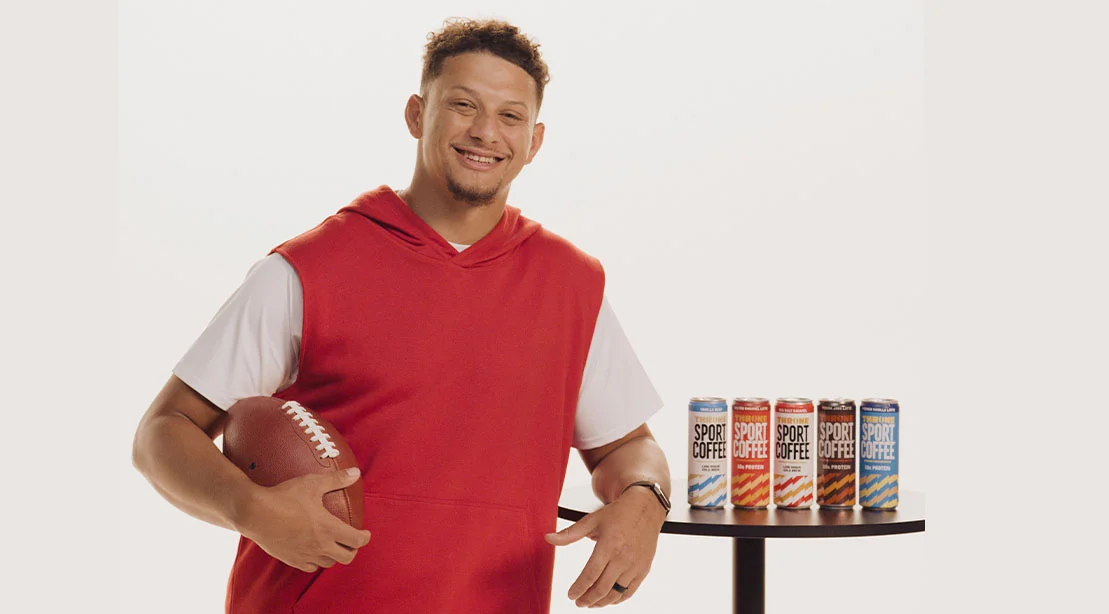
A major component of this strategy is a rigorous approach to hydration. Alongside a massive increase in water intake, Mahomes has identified specific supplements that align with his high-performance needs. This search for the "right" fuel led him to a significant partnership with Throne Sport Coffee.
Why Throne Sport Coffee?
For Mahomes, caffeine is not just a morning ritual; it is a tactical performance tool. He had spent years trying to drink coffee in its healthiest form—black, without additives—but often struggled with the trade-off between health and flavor.
When he discovered Throne Sport Coffee, the benefits were twofold: the product was not only palatable, but it also addressed his stringent requirements for health, specifically regarding sugar content and NSF certification.
"I could feel it on a day-to-day basis," Mahomes says. "I was like, man, I’ve got to get more of this. I have to be a part of this somehow."
By investing in the brand, Mahomes has aligned himself with a product that avoids the typical "caffeine crash" associated with high-sugar alternatives. For a man balancing the physical demands of football, the mental strain of film study, and the responsibilities of fatherhood, avoiding energy spikes and subsequent crashes is essential to maintaining his high-performance output.
Learning from the Titans: Brady and LeBron
Mahomes’ desire for longevity is not a secret, and he is not shy about studying those who have successfully redefined the boundaries of professional athletic endurance. He frequently cites Tom Brady and LeBron James as the gold standards for career extension.
"You’ve seen guys like Tom Brady and LeBron James be able to extend their careers and play at a high level," Mahomes notes. "You learn from guys like that. You ask them questions and figure out what got them to where they are."
However, his goal is not merely to play for a long time. It is to play at an elite level until the very end. The fear of "hanging on" or being a shadow of his former self drives him to keep searching for the marginal gains that prevent physical decline. "As I get older, it’s going to be harder to recover," he says. "So what can I do to get that edge? That’s stuff I have to continue to get better at."
Implications: The Blueprint for Future Generations
The implications of Mahomes’ disciplined approach reach far beyond his own career. He is setting a new standard for the modern quarterback—one where the "game" is 24 hours a day.
His advice to young athletes is simple, though difficult to execute: "You can have all the physical talent in the world, but if you’re not mentally ready to go, if you’re not mentally prepared to play the position, it doesn’t matter."
By prioritizing consistency over hype, data over intuition, and recovery over aesthetic vanity, Mahomes has created a roadmap for sustained success. The "extra step" that he speaks of is not a giant leap; it is the sum of thousands of small, disciplined decisions made when no one is watching.
As he continues to evolve, incorporating new technology and refining his nutritional intake, the message to the rest of the league remains clear. Patrick Mahomes is not resting on the laurels of his championships. He is methodically building the infrastructure required to dominate for another decade. The league is currently witnessing not just a generational talent, but a generational professional who has turned the art of being a quarterback into a precise, unrelenting science.
The arena is open, the training is ongoing, and by all indications, the best of Patrick Mahomes is yet to come.