









Introduction: Redefining the “Life-Saving” Narrative
For years, the phrase "my ostomy bag saved my life" felt like a sentence that didn’t belong to me. In the medical zeitgeist, ostomies are frequently tethered to definitive, high-stakes pathologies: the aggressive progression of Crohn’s disease, the emergency of acute diverticulitis, or the stark reality of colon cancer. These are conditions with clear, quantifiable markers—lesions that can be biopsied, tumors that can be imaged, and inflammation that can be tracked in a lab report.
My reality, however, was anchored in the nebulous, often dismissed territory of Ehlers-Danlos Syndrome (EDS). Because my gastrointestinal (GI) dysfunction lacked the "obvious" pathology that traditional medicine is trained to identify, I spent years trapped in a cycle of gaslighting—both from the medical community and, eventually, from myself.
Today, two years post-surgery, I am reclaiming that narrative. This is not just a story of medical intervention; it is an examination of what happens when a patient is forced to become the primary investigator of their own anatomy. Whether you are a patient navigating the systemic complexities of EDS or a medical provider seeking to understand why standard treatments fail, this exploration of my "stoma-versary" offers a roadmap for the invisible.
Understanding the Surgical Intervention
Before discussing the implications of my journey, it is critical to demystify the procedure itself. An ostomy is a surgical diversion of the body’s waste-processing system. By creating an opening—a stoma—in the abdominal wall, waste is rerouted from the digestive tract into an external, medical-grade collection pouch.
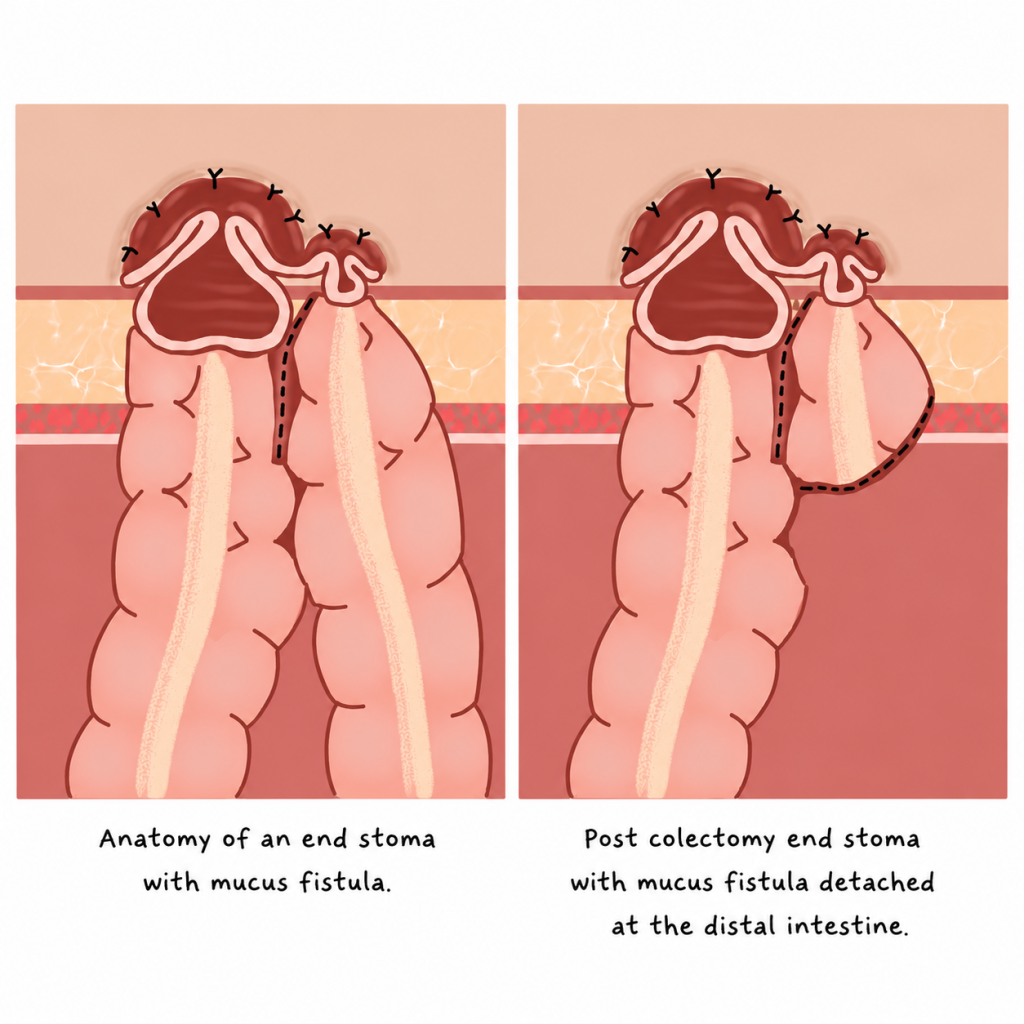
The medical landscape of ostomies is nuanced:
- End Ileostomy: The procedure I underwent. The end of the small intestine is brought to the abdominal surface, and the colon is subsequently removed.
- Loop Ostomy: Frequently utilized for temporary diversions, where a loop of the bowel is surfaced.
- End Stoma with Mucus Fistula: A complex configuration where the large intestine remains in the body, but a primary stoma is created for waste exit.
My choice to move toward a permanent end ileostomy was not made in a vacuum. It was the conclusion of a lifetime of systemic failure.
The EDS Connection: A Multisystemic Cascade
Ehlers-Danlos Syndrome (EDS) is a group of connective tissue disorders that functions as the "scaffolding" of the body. When that scaffolding is faulty, the resulting instability affects more than just "bendy" joints; it impacts the integrity of blood vessels, skin, and, most crucially for me, the gastrointestinal tract.
For many with EDS, the GI tract is a site of chronic, debilitating dysfunction. My own history was a decades-long chronicle of "just constipation." This phrase, often offered by clinicians as a benign dismissal, masks the reality of severe dysmotility. From the stifling silence of middle school bathrooms to the social isolation of college, my GI symptoms dictated the boundaries of my world. I tried every pharmacological intervention available—prokinetics, high-fiber diets, aggressive laxative regimens—all of which failed to address the underlying structural failure of my digestive system.

Chronology of a Diagnostic Odyssey
The road to a diagnosis was not a linear path; it was a grueling gauntlet of diagnostic tests and physician dismissals. The "cascade of testing" was intended to find answers, but for too long, it only yielded more questions.
The Search for Answers
I underwent exhaustive motility studies, transit-time assessments, and various imaging protocols. At each juncture, I found myself in the position of "patient-advocate," often needing to educate the specialists on the intersection of connective tissue disorders and autonomic dysfunction.
When a specialized GI clinician finally validated my experience, the testing revealed a startling reality: my digestive tract was physically unable to process waste due to anatomical displacement—a condition known as visceroptosis, where the internal organs essentially "drop" or lose their structural support.
The Turning Point
When my colorectal surgeon suggested a permanent ostomy, the psychological weight of the word "permanent" was immense. The anxiety was a multifaceted beast:
- The Practicality: Would the appliance leak? Would I be tethered to a new, visible source of odor?
- The Social Stigma: How would this change my relationships, my clothing choices, and my sense of self-attraction?
- The Mental Health Toll: As someone with pre-existing OCD, the fear of "contamination" was a significant barrier to acceptance.
However, the defining moment of clarity came when I compared these fears to the reality of my daily life. I wasn’t just struggling; I was deteriorating. Choosing the surgery wasn’t an act of surrender—it was an act of survival.
Supporting Data and Medical Implications
The recovery from my colectomy was, as expected for an EDS patient, non-linear. The removal of seven feet of colon was a ten-hour procedure that required me to continue advocating for my care while still in the hospital bed.
However, the physiological relief was immediate. The chronic bloating, the heaviness that had been a constant, suffocating companion for decades, vanished. My body, for the first time in my life, functioned in a way that didn’t feel like a constant, uphill battle against my own biology.
Official Responses and Advocacy
Since my surgery, my focus has shifted from mere survival to advocacy. I launched a small business creating custom ostomy bag covers, transforming a medical necessity into an expression of identity. But the impact has reached far beyond aesthetics.
Earlier this year, I traveled to Kenya with Campaign 52, a global initiative focused on providing ostomy education and resources in underserved medical environments. Seeing the lack of resources globally only reinforced the urgency of my work. The isolation I felt when I started my journey—when my support group had fewer than 100 members—is a systemic failure we must address.
Implications for Patients and Providers
If you are a patient living with EDS and treatment-resistant GI symptoms, I want to be clear: you are not imagining your pain. The medical field has a historical tendency to dismiss symptoms that cannot be easily measured by standard metrics. "Just constipation" is a term that serves to minimize the human cost of chronic illness.
For medical providers, the takeaway is equally vital. When a patient presents with a lifetime of GI dysfunction that refuses to respond to standard interventions, it is time to look at the structural, connective tissue-based possibilities. Investigate visceroptosis. Consider the systemic nature of EDS. Stop treating the symptoms in isolation and start looking at the patient as a whole, interconnected system.
Conclusion: The Life on the Other Side
Living with an ostomy is not without its challenges. Leaks occur. Skin irritation is a reality. Grief is a frequent, if unwelcome, visitor. But there is a life to be lived on the other side of the surgery—a life that is not defined by the limitations of a malfunctioning body, but by the resilience of the person inhabiting it.
If you are currently standing on the precipice of this decision, I see you. The fear is valid, but so is the hope. I can say, with the clarity of two years of experience, that my ostomy did not just "fix" my digestion; it returned my life to me.
Disclaimer: The experiences described in this article are those of the author and may not reflect the experiences of all people with EDS, gastrointestinal dysmotility, visceroptosis, or ostomies. Discussion of diagnostic testing, surgical interventions, and treatment outcomes is provided for educational purposes only and should not be interpreted as medical advice. Readers should consult their healthcare team regarding their individual circumstances.