For decades, patients living with hypermobile Ehlers-Danlos syndrome (hEDS) have faced a clinical paradox: they suffer from debilitating, widespread pain and autonomic dysfunction, yet their diagnostic tests—ranging from MRIs to standard electromyography (EMG)—frequently return "normal" results. This disconnect between the patient’s subjective reality and the objective clinical findings has historically led to diagnostic delays, medical gaslighting, and a lack of effective treatment pathways.
However, a groundbreaking study published in Scientific Reports in August 2026 is fundamentally shifting the medical understanding of this condition. By focusing on the microscopic architecture of the nervous system, researchers have confirmed that the pain experienced by those with hEDS is not "all in their heads"—it is, quite literally, written in their nerves.
Main Facts: The Small Fiber Connection
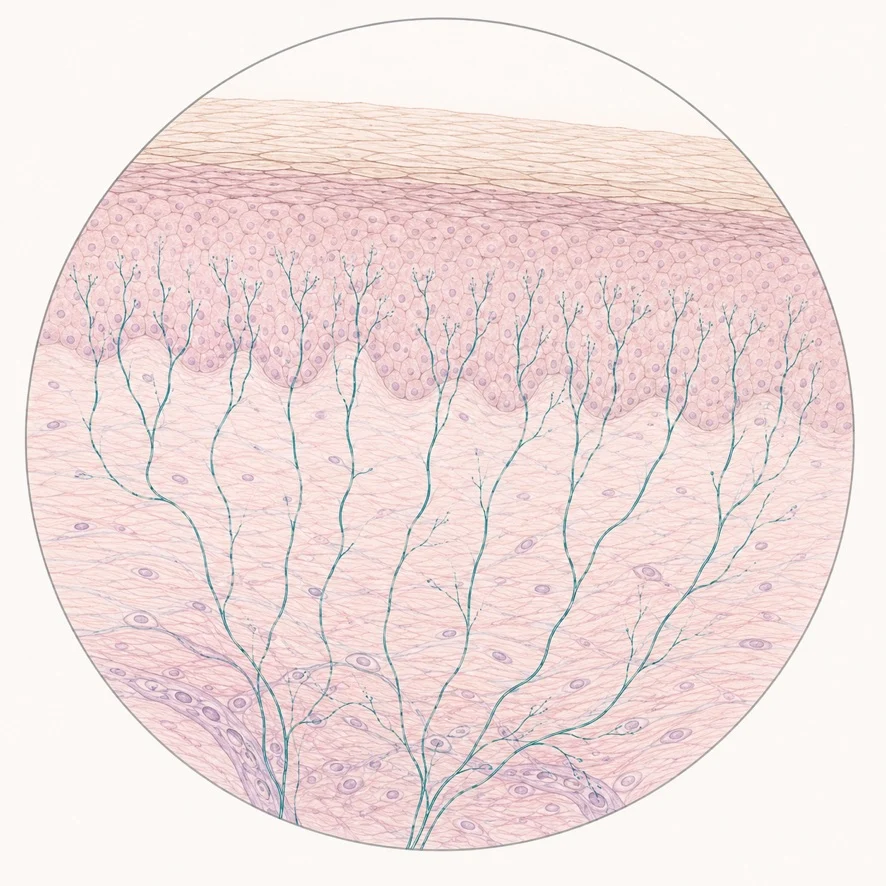
The core of the research centers on Small Fiber Neuropathy (SFN). While the human nervous system relies on large nerve fibers for motor control and coordination, the small fibers are the body’s "sensors" and "regulators." They govern our perception of pain and temperature, and they command the autonomic nervous system—the unconscious control center for heart rate, digestion, sweating, and blood pressure.
When these small fibers degenerate, the result is SFN, which manifests as a burning, "pins-and-needles" sensation that often lacks a clear external cause. The study, conducted by a team of researchers in Italy, provides the first systematic comparison between patients with hEDS-associated SFN and those with idiopathic SFN (iSFN)—a form of neuropathy that occurs without a known connective tissue disorder.
The findings are stark: hEDS patients do not just have "some" neuropathy; they exhibit a distinct neurological profile characterized by earlier symptom onset, more widespread pain, and a significantly higher prevalence of autonomic failure compared to their counterparts.
A Chronology of Discovery and Symptom Progression
The study highlights a troubling timeline for the hEDS community. When tracking the history of the 73 participants, researchers uncovered a significant gap in disease management.
- Early Onset: Patients in the hEDS/SFN group reported the first signs of neuropathic pain at an average age of 19. In contrast, those with idiopathic SFN did not typically report symptoms until age 35.
- The "Lost Years": This 16-year discrepancy suggests that individuals with hEDS are often living with active, undiagnosed nerve degeneration for nearly two decades before receiving medical validation.
- Chronic Degeneration: The researchers identified an unusual pattern of nerve fiber health. In many hEDS patients, biopsies revealed a cycle of degeneration (nerve loss) alternating with "clusters of fiber regrowth." This suggests that the body is in a constant, futile battle to repair itself, potentially explaining why pain in hEDS is so often episodic and volatile.
Supporting Data: Why hEDS Is Different
The research relied on a rigorous methodology involving 35 hEDS patients and 38 iSFN controls. The data gathered through sensory testing, autonomic function evaluation, and skin punch biopsies provided the following evidence:
1. Widespread Pain Patterns
While both groups reported burning sensations, the hEDS cohort experienced more generalized pain. Notably, 34% of hEDS/SFN patients reported perineal pain—a symptom entirely absent in the control group. Researchers hypothesize that the tissue laxity inherent to hEDS may cause physical nerve displacement, leading to unique regional pain patterns that are not seen in standard neuropathic conditions.
2. The Autonomic "Smoking Gun"
The most significant finding relates to the autonomic nervous system. The study found that 51.5% of the hEDS/SFN group suffered from Postural Orthostatic Tachycardia Syndrome (POTS), compared to 0% in the iSFN group.
Historically, POTS in hEDS was attributed solely to the "stretching" of blood vessels due to faulty collagen. However, this study suggests a neurological origin: the nerve fibers themselves are failing to regulate the body’s involuntary systems. Reduced sweat production, severe gastrointestinal motility issues, and urinary urgency were also significantly more prevalent in the hEDS group, pointing to a systemic failure of the small fibers tasked with maintaining homeostasis.
Official Implications for Clinical Practice
The medical community is now faced with a call to action. If small fiber neuropathy is a core feature of hEDS, then the current "wait and see" approach to managing hEDS pain is clinically insufficient.
Standardizing Diagnostic Pathways
The study authors strongly advocate for the inclusion of formal autonomic testing and skin biopsies as a standard part of the diagnostic battery for hEDS. Currently, many clinicians dismiss autonomic symptoms as secondary or psychological. This research provides the hard data needed to force a shift in diagnostic criteria, allowing physicians to identify SFN early and intervene before the damage becomes irreversible.
Tailoring Treatment
Recognizing that SFN is a major driver of hEDS pain opens the door to targeted treatments. Instead of relying solely on physical therapy to manage joint laxity, clinicians may now pivot toward:
- Neuropathic Pain Management: Utilizing medications specifically designed for nerve pain rather than general anti-inflammatories.
- Autonomic Support: Treating POTS and gastrointestinal issues as symptoms of neurological degradation, rather than just "co-morbidities."
- Preventative Monitoring: Because the study shows the body attempting to repair itself, early intervention may potentially support these regenerative processes, slowing the overall trajectory of the disease.
Conclusion: A New Horizon for Patients
For the thousands of individuals who have been told their tests were "normal," this research serves as a profound vindication. It confirms that the pain of hEDS is objective, measurable, and systemic.
By moving the conversation from "joint instability" to "systemic neurological involvement," the scientific community is finally aligning with the lived experience of patients. The path forward involves a multidisciplinary approach where rheumatology, neurology, and cardiology converge. As we look toward the future of hEDS care, these findings offer a blueprint for better diagnosis, more effective symptom management, and, perhaps most importantly, the validation that patients have sought for generations.
The message to the medical community is clear: when an hEDS patient reports burning pain and dizziness, do not look for a "normal" result. Look for the fibers beneath the skin.
Key Takeaways for Patients and Providers:
- Early Detection Matters: Neuropathic pain in hEDS often begins in the late teens; early testing can prevent decades of diagnostic uncertainty.
- Neurological, Not Just Mechanical: hEDS is not merely a "joint issue." It is a complex syndrome that involves the small nerve fibers responsible for critical life functions.
- POTS and SFN: There is a clear, measurable link between POTS and peripheral nerve fiber loss in hEDS, necessitating a neurological assessment for those with tachycardia.
- Requesting the Right Tests: Patients are encouraged to ask their specialists about skin punch biopsies and formal autonomic reflex testing to quantify their symptoms.
Reference: Scientific Reports (2026). "Systemic Small Fiber Neuropathy in Hypermobile Ehlers-Danlos Syndrome: A Comparative Analysis of Sensory and Autonomic Nerve Fiber Loss."