










For decades, patients living with hypermobile Ehlers-Danlos syndrome (hEDS) have navigated a medical landscape often characterized by skepticism. While the hallmark symptoms of hEDS involve joint hypermobility, tissue fragility, and chronic musculoskeletal pain, a vast constellation of systemic issues—burning sensations, internal organ dysfunction, and profound fatigue—has frequently been dismissed as "functional" or psychosomatic. Because standard electromyography (EMG) and nerve conduction studies often return normal results for these patients, their lived experience of agony has lacked objective, measurable evidence.
A groundbreaking study published in Scientific Reports in August 2026 is poised to change this narrative. By comparing patients with hEDS to those with idiopathic small fiber neuropathy (iSFN), researchers have identified a distinct, measurable, and systemic neurological signature unique to the hEDS population. The findings provide long-overdue validation for millions of patients, suggesting that small fiber neuropathy (SFN) is not merely a comorbidity in hEDS, but a core, structural element of the condition.
The Main Facts: Defining the Neurological Gap
Small fiber neuropathy involves damage to the unmyelinated or thinly myelinated nerve fibers that transmit pain and temperature sensations, while also regulating the autonomic nervous system. Unlike large fibers, which control movement and can be evaluated by standard nerve conduction studies, small fibers are microscopic. Their dysfunction manifests as "invisible" symptoms: burning pain, heat intolerance, dizziness, gastrointestinal distress, and erratic heart rate.
The Italian study conducted a comprehensive comparative analysis of 35 patients with hEDS/SFN and 38 patients with idiopathic SFN (iSFN). The research utilized a rigorous multi-modal approach:
- Sensory Testing: Standardized assessments of temperature and pain perception.
- Autonomic Evaluation: Detailed testing of involuntary bodily functions.
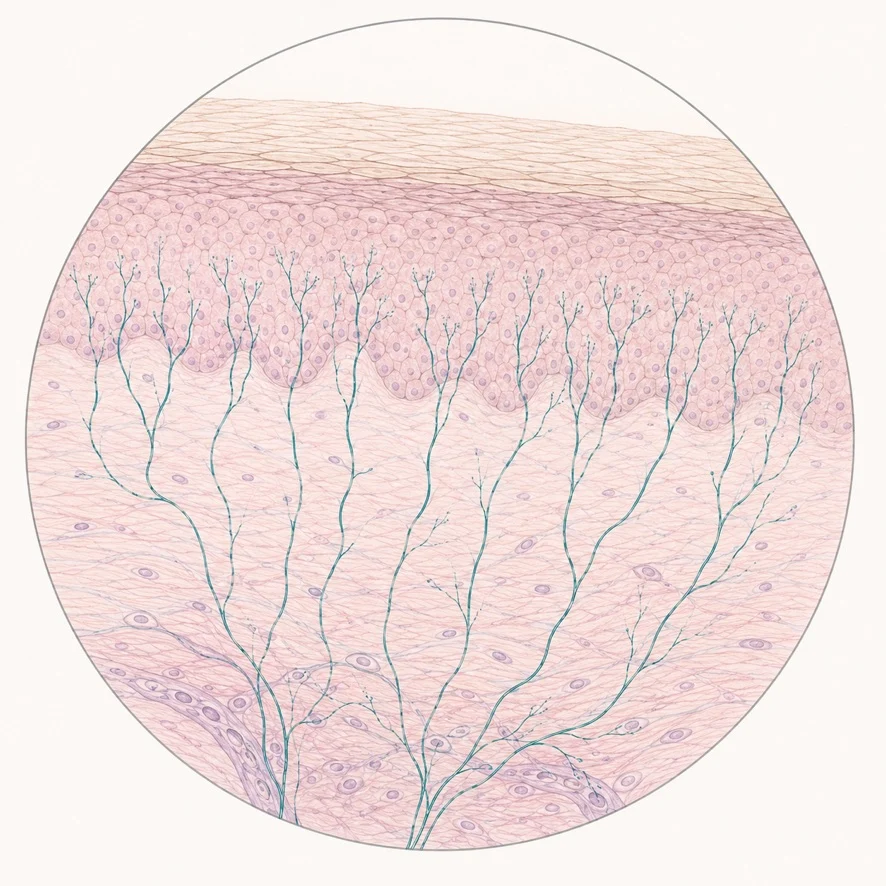
- Skin Punch Biopsy: The gold-standard diagnostic tool for SFN, which allowed researchers to count intraepidermal nerve fiber density (IENFD) and observe structural nerve damage at a microscopic level.
The core revelation is that hEDS patients suffer from a significantly more aggressive and widespread form of nerve involvement than those with idiopathic cases. The study effectively bridges the gap between "subjective pain" and "objective pathology."
Chronology: A Lifelong Progression of Symptoms
One of the most compelling aspects of the study is the demographic timeline it establishes. The data reveals that hEDS/SFN is a condition of early onset.
- Age 19 (Average): Patients with hEDS/SFN reported the onset of their neurological symptoms at an average age of 19.
- Age 35 (Average): In contrast, the control group (iSFN) did not report the onset of symptoms until their mid-30s.
This 16-year discrepancy is profound. It indicates that individuals with hEDS are likely enduring neurological decline during their formative years—a time when they should be at their peak physical health. The study suggests that many patients with hEDS live for decades with undiagnosed nerve involvement, which may explain why, by the time they seek neurological care, their condition is often entrenched and complex. This long, unrecognized disease duration may also explain the systemic nature of the symptoms, as the nervous system undergoes years of cumulative "wear and tear" that goes untreated by clinicians who are focused exclusively on joint-related complaints.
Supporting Data: Autonomic and Sensory Insights
The study’s data highlights a clear divergence between general SFN and the specific neurological footprint of hEDS.
The Autonomic Crisis
The autonomic nervous system (ANS) controls the "automatic" functions of life. In the hEDS group, the ANS was significantly more compromised.
- POTS Prevalence: Perhaps the most startling statistic is the link to Postural Orthostatic Tachycardia Syndrome (POTS). While 51.5% of the hEDS/SFN group suffered from POTS, the condition was entirely absent in the control group.
- Beyond Blood Vessels: Previously, POTS in hEDS was often attributed solely to blood vessel laxity (the "stretchy veins" theory). This study suggests a neurogenic component: the nerve fibers themselves are failing to regulate heart rate and blood pressure effectively.
- Gastrointestinal and Urinary Dysfunction: The hEDS cohort experienced significantly higher rates of reflux, slowed motility (gastroparesis), and urinary urgency, indicating that the autonomic fibers innervating the viscera are as affected as those in the skin.
Microscopic Evidence of Regeneration Failure
The skin biopsies provided a visual narrative of the nervous system’s struggle. While both groups showed fiber loss, the hEDS group displayed a specific, chaotic pattern:
- Degeneration: Widespread loss of sensory fibers.
- Failed Repair: Clusters of fiber regrowth were interspersed with areas of damage.
This "degeneration-regeneration" cycle is a critical finding. It suggests that the nervous system in hEDS is in a state of chronic, low-grade injury, constantly attempting to repair itself but failing to sustain healthy nerve density. This ongoing process may explain why hEDS patients report "fluctuating" pain that shifts in intensity and location.
Official Implications for Clinical Practice
The implications of this research are transformative for both patients and healthcare providers. For the medical community, the study serves as a directive to move beyond the traditional "orthopedic-only" approach to hEDS.
A New Standard for Diagnosis
The authors of the study argue that systematic autonomic assessment should be a baseline requirement for any patient presenting with hEDS symptoms. Relying on normal EMG results to rule out neurological involvement is now scientifically indefensible. The study advocates for:
- Widespread implementation of skin punch biopsies as a routine diagnostic tool for hEDS patients presenting with chronic, unexplained pain.
- Integration of specialized autonomic testing (such as Tilt Table Tests) to identify the neurogenic underpinnings of POTS and related dysautonomias.
Shift in Management Strategies
Understanding the neurological dimension of hEDS allows for more targeted therapeutic interventions. If a patient’s pain is rooted in small fiber neuropathy, management can shift from purely mechanical interventions (like physical therapy or bracing) to pharmacological and neurological treatments designed to stabilize the nervous system, reduce neuropathic firing, and support autonomic function.
Conclusion: A Step Toward Validation
For the hEDS community, this research is more than a collection of data points; it is a profound validation of their experience. The "invisible" symptoms that have led many to feel gaslit by the medical establishment are now documented in the pages of Scientific Reports.
The findings confirm that the pain of hEDS is real, physical, and localized at the microscopic level. By moving the conversation from the joints to the nervous system, we are entering a new era of care for connective tissue disorders—one where patients are no longer told that their tests are "normal," but are instead met with evidence-based diagnostic paths that finally acknowledge the complexity of their reality.
As we move forward, the challenge for the medical community is to ensure that these diagnostic tools become accessible to all, ensuring that the next generation of patients does not have to wait until adulthood for their neurological suffering to be acknowledged and treated.
Key Takeaways for Patients and Providers
- Neurological Involvement is Common: Small fiber neuropathy is a hallmark, not a coincidence, of hEDS.
- Early Onset Matters: Neurological symptoms in hEDS often begin in the late teens, far earlier than in typical cases of SFN.
- Autonomic Dysregulation is Systemic: The correlation between hEDS, SFN, and POTS suggests a neurogenic mechanism that requires specialized autonomic management.
- Biopsy is Essential: Skin punch biopsies provide objective evidence of nerve damage where other tests fail.
- Validation: The cycle of nerve degeneration and attempted regrowth offers a biological explanation for the fluctuating and widespread nature of hEDS-related pain.
Study Referenced: Scientific Reports – August 2026
Author: Jacqueline Moltzau Anderson, PhD, University of California