










By Brooke Quinn, MSc (Oxon), RPSGT, CSSC
In the sterile, quiet atmosphere of a clinical sleep lab, the reality of sleep medicine is starkly different from the colorful, gamified dashboards of popular wellness apps. As sleep technologists, we sit before monitors displaying raw, unfiltered data: electroencephalograms (EEG) charting brain waves, electrooculograms (EOG) tracking eye movements, and electromyograms (EMG) monitoring chin muscle tone. We supplement these with airflow, respiratory effort, oxygen saturation, and heart rhythm analysis. We score this data in 30-second epochs, categorizing them into standardized stages: Wake, N1, N2, N3, or REM.
However, even with standardized rules, sleep is rarely a collection of perfectly discrete boxes. It is a fluid, biological process characterized by subtle signal overlaps and complex transitions. When a recent class-action lawsuit accused Oura of misleading consumers regarding the accuracy of its sleep-stage tracking, the discourse in the medical community fractured. To some, this was a long-overdue indictment of the "wellness-tech" fiction; to others, it was an unfair critique of a device never intended to function as a clinical diagnostic tool. The truth, as is often the case in medical technology, lies in the gray area between marketing promise and scientific capability.
The Chronology of a Conflict: From Data to Docket
The tension between consumer wellness devices and clinical medicine has been simmering for years, but it reached a boiling point with the filing of Surber v. Oura, Inc. (No. 3:26-cv-08686). The plaintiffs argue that Oura’s marketing claims—specifically the promise of "95% sleep staging accuracy"—are deceptive. They contend that the average consumer, hearing this statistic, equates it to clinical-grade diagnostic precision, a standard the device cannot meet.
This legal battle serves as a focal point for a broader, ongoing debate. Since the proliferation of wearable sensors, the gap between what users believe their devices are measuring and what the sensors are actually capable of capturing has widened. As the lawsuit moves through the court system, it has forced a necessary, albeit uncomfortable, public reckoning regarding the transparency of algorithmic health metrics and the responsibility of manufacturers to educate their user base.
The Fundamental Distinction: Inference vs. Measurement
To understand why "accuracy" is such a contentious metric, one must first understand the fundamental difference between clinical measurement and wearable inference.
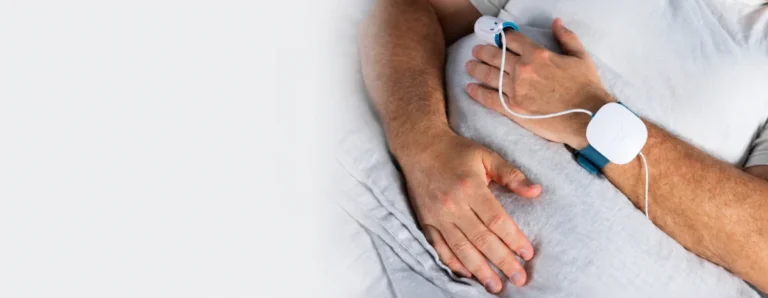
A clinical polysomnogram (PSG) relies on direct physiological signals, most notably brain activity via EEG. An Oura Ring, by contrast, does not "see" the brain. Instead, it utilizes photoplethysmography (PPG) to measure pulse-wave data, alongside sensors for skin temperature and movement. The device then processes this information through proprietary algorithms to infer sleep stages.
Inference is not inherently a fabrication. Sleep stages are reflected in systemic physiological changes: the heart rate slows, breathing becomes rhythmic, body temperature drops, and gross motor movement ceases during certain stages. However, these are proxies, not direct observations. The validity of these estimates depends on rigorous validation against PSG—the gold standard—rather than on the sophistication of the hardware alone.
Critically, the "analytical task" determines the success of the device. Distinguishing between sleep and wakefulness is a relatively binary, easier task for an algorithm. Separating light sleep, deep sleep, and REM is a significantly more complex, nuanced, and error-prone undertaking. When manufacturers aggregate these different tasks under a single "accuracy" umbrella, they obfuscate the technical reality of how the device performs.
Dissecting the "Accuracy" Myth
The lawsuit’s characterization of Oura’s data as being "comparable to a coin flip" is an oversimplification, but it highlights a legitimate frustration with how statistics are used in marketing. Peer-reviewed research, such as the 2024 study in Sensors, indicates that wearable devices can achieve 90% to 96% agreement with PSG when simply distinguishing between "asleep" and "awake."

The controversy arises when that high percentage is used to describe four-stage sleep classification. In that context, agreement often drops to the 76%–79% range. To a data scientist or a clinician, the difference between 95% and 76% is massive; to a consumer, both numbers sound like a "very accurate" device.
Furthermore, the problem of "averaging" cannot be ignored. An overall accuracy figure can be artificially inflated if a device is exceptionally good at identifying the longest stage (usually N2 sleep) while failing to detect the more transient, yet clinically vital, stages of REM or light sleep. A 2025 study of sleep-lab patients revealed that while a device might show a promising "group average" for total sleep time, the individual variance could be staggering—ranging from nearly an hour of underestimation to over an hour and a half of overestimation. For an individual patient, a group average is not only useless; it is misleading.
Official Responses and Scientific Standards
In its public response, Oura has sought to clarify its position, emphasizing that its validation studies align with standard industry practices. The company argues that its marketing is based on legitimate scientific literature and that the "95%" figure is explicitly linked to its sleep-versus-wake performance.
However, the medical establishment—led by organizations like the American Academy of Sleep Medicine (AASM)—has long maintained a cautious stance. Their 2018 position statement remains highly relevant: consumer sleep technology can enhance the patient-clinician dialogue, but it must never be used as a replacement for validated clinical diagnostic instruments.
The AASM’s guidance provides a template for the future: treat these devices as tools for engagement, not as final arbiters of health. When a patient brings their phone to a consultation, the goal is not to prove the app wrong, but to understand what the patient is trying to learn.
Clinical Implications: Navigating the Data-Patient Interface
When patients present wearable data in the clinic, the most effective approach is one of "curated curiosity." We must ask: What is the clinical question behind the data?
- The "Why" Behind the Data: Is the patient tracking because they are suffering from excessive daytime sleepiness, or is it a symptom of "orthosomnia"—the unhealthy obsession with achieving "perfect" sleep metrics?
- Longitudinal Utility: The true power of wearables lies not in a single night’s score, but in long-term trends. A sudden, persistent shift in sleep timing or duration is a legitimate talking point. It can help bridge the gap between a patient’s subjective experience and their actual sleep-wake patterns.
- Managing Expectations: Clinicians must be prepared to translate the data’s limitations. If a patient is distressed because their ring reports they didn’t get enough "Deep Sleep," the clinician has a duty to explain that this is an estimation, not a physiological deficit to be "fixed."
Toward a New Standard of Transparency
The solution to this conflict is not to ban wearables or to dismiss their data, but to improve the standard of communication surrounding them. Manufacturers, researchers, and publishers all play a role in this evolution:
- For Manufacturers: Marketing claims should clearly delineate the boundaries of the technology. If a product is for "wellness," the distinction between wellness and clinical diagnosis should be as prominent as the accuracy percentage. Furthermore, performance statistics should be transparently broken down by task, age group, and health condition.
- For Researchers: We must move beyond the "headline accuracy" metric. Reporting sensitivity, specificity, confusion matrices, and limits of agreement provides the granular detail needed for true validation. A device that works perfectly for a healthy 25-year-old may fail completely for an older patient with sleep apnea or those on medication.
- For Consumers: A greater emphasis on health literacy is required. Consumers should understand that these devices are "estimates of trends," not "measurements of truth."
Conclusion: Useful Does Not Mean Certain
The legal fate of Oura and other wearable manufacturers will likely be decided by a judge, but the broader societal lesson is already clear. We are entering an era where biological data is becoming democratized, and that is a positive development—provided we maintain a clear understanding of the tools we are using.
An Oura ring, or any similar device, does not need to be a clinical-grade EEG to be "useful." It can provide a low-burden, continuous, and longitudinal window into a person’s life that a single, one-night sleep study simply cannot match. Its value is found in the conversation it sparks between patient and doctor.
Trust in health technology is not built by claiming absolute certainty where none exists. It is built by making the boundaries of the data visible. When we stop asking these devices to be perfect and start using them for what they are—sophisticated tools for longitudinal observation—we turn the chaos of "big data" into the clarity of better patient care. The future of sleep medicine lies not in choosing between the clinic and the wearable, but in finding a way to integrate the two.