





Artificial Intelligence has firmly established itself as the primary engine driving investment in the digital health and life sciences sectors. According to the latest data from Silicon Valley Bank, AI-related ventures accounted for nearly half of all healthcare investment activity in 2025. While this capital infusion is unprecedented, a critical question remains: are we building a more efficient system, or are we building a better one?
For most of the AI boom, innovation has been concentrated on the "plumbing" of healthcare—administrative and operational tasks such as ambient clinical notetaking, automated scheduling, and revenue cycle management. While these tools are essential for addressing unsustainable costs and provider burnout, they represent an evolution in delivery rather than a revolution in outcomes. Now, the industry is reaching an inflection point, with visionary founders and investors pivoting toward "signal-catching" AI—technologies designed to intercept the body’s earliest warning signs to fundamentally alter the human lifespan and healthspan.
The State of the Industry: A Shift in Investment Focus
The current landscape of healthcare AI is defined by a massive concentration of resources. As AI adoption accelerates at a velocity far surpassing previous technological shifts, the primary focus has been on productivity.
By optimizing the back-office functions that consume roughly 30% of healthcare spending, AI is successfully reducing the administrative burden on clinicians. However, critics argue that this focus ignores the more profound potential of the technology. The true promise of AI lies in its capacity to process vast, multidimensional datasets that the human mind cannot interpret, enabling the detection of disease years before clinical symptoms manifest.
Chronology of a Crisis: Why We Need a New Approach
The history of healthcare progress over the last two decades tells a sobering story. While global life expectancy has ticked upward, the improvements are largely attributed to reduced infant mortality. If that metric is isolated, progress slows to a crawl—roughly 1.5 years per decade—a rate slower than much of the 20th century.
- The Early 2000s: Initial focus on Electronic Health Records (EHR) digitizes the industry, creating the data lake that would eventually fuel AI.
- 2010–2020: Expansion of wearables and digital tracking, yet clinical outcomes remain largely stagnant.
- 2023–2024: The generative AI boom takes hold, focusing heavily on operational efficiency, scribing, and coding automation.
- 2025–Present: The "Signal-Catcher" era begins. Academic medical centers and startups start publishing landmark validation studies proving that AI can detect disease long before traditional clinical thresholds.
The gap between our potential lifespan and our actual longevity is widening. Former U.S. Surgeon General Dr. Rich Carmona has noted that a healthy baby born today has the biological potential to reach 120 years, yet current life expectancy sits closer to 80. By the time we reach adulthood, we are effectively forfeiting one-third of our potential life.
Supporting Data: The Case for Predictive Medicine
The failure to catch signals early is arguably the costliest aspect of modern medicine. When diseases like pancreatic cancer, kidney failure, or fetal hypoxia are diagnosed at stage 3 or 4, the prognosis is often grim, and the cost of care is astronomical.
The evidence that AI can change this trajectory is mounting. A landmark validation study published in the journal Gut by the Mayo Clinic revealed that an AI model could detect pancreatic cancer on routine abdominal CT scans up to three years before a clinical diagnosis was possible.
Consider the current state of maternal health: despite increased spending, maternal mortality in the U.S. is higher today than it was twenty years ago. Severe complications and C-section rates continue to climb. These statistics underscore that "making the plumbing better" is not enough. We are witnessing a crisis in outcomes that requires a fundamental change in how we monitor biological signals.
The "Signal-Catcher" Model: A New Frontier
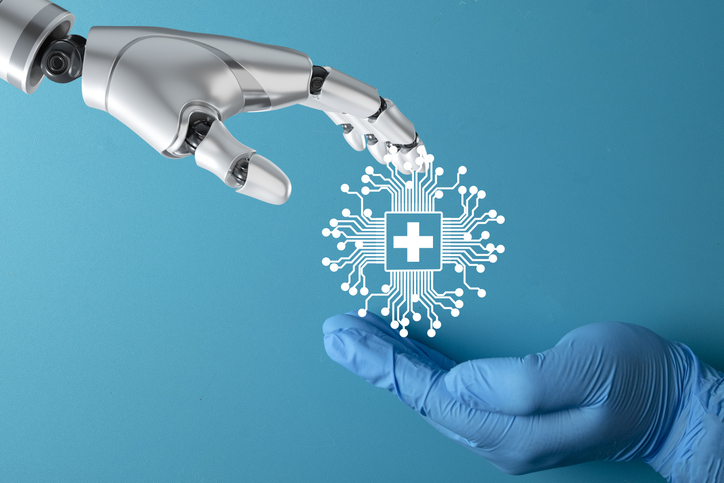
The new model for company creation focuses on what industry experts call "signal catchers." These are AI platforms that stand in a field of biological "noise," intercepting faint, previously invisible patterns that indicate the onset of disease.
The Eye as a Window to Health
Retinal imaging has long been a diagnostic tool, but AI is expanding its utility. By analyzing patterns in the microvasculature of the eye, AI can now provide non-invasive assessments of cardiovascular risk, diabetic retinopathy, and even early signs of neurodegenerative conditions like Alzheimer’s.
Advanced Fetal Monitoring
Current fetal monitoring is often reactive, leading to high rates of unnecessary C-sections and, occasionally, missed instances of fetal distress. AI-enhanced monitoring uses predictive algorithms to interpret heart rate variability and other signals in real-time, providing obstetricians with the confidence to intervene only when necessary, thereby reducing brain injuries and birth complications.
Voice as a Biomarker
The human voice is a complex acoustic signal containing hundreds of features. AI is now being trained to detect subtle shifts in pitch, cadence, and breath support that correlate with early-stage respiratory, neurological, or mental health conditions. By turning a routine telehealth call into a diagnostic screening, the voice becomes one of the most accessible biomarkers in medicine.
Official Perspectives and Expert Consensus
Industry leaders are increasingly vocal about the need for this shift. Murray Brozinsky, a partner at Aegis Ventures, argues that we are transitioning from an era of "healthcare delivery evolution" to "clinical outcome transformation."
"Our bodies have always sent us signals," Brozinsky notes. "But we haven’t had the sensory apparatus to detect them nor the intelligence to understand them."
The consensus among venture studios and academic researchers is that medical breakthroughs historically follow a pattern of closing the sensory gap. Just as the stethoscope allowed doctors to hear what was once silent and the X-ray allowed them to see what was once hidden, AI is serving as the new "sensory apparatus" for the 21st century.
Implications: The Age of Anticipatory Medicine
The transition toward anticipatory medicine will have massive implications for the healthcare ecosystem:
- Shift in Payer Models: If insurers can identify chronic conditions three years before they manifest, the economic incentive shifts from "fee-for-service" to "value-based prevention."
- Redefining the Clinical Visit: The doctor’s office will move away from being a place where we go once we are sick, toward a hub where data-driven prognosis determines personalized healthspan maintenance.
- Ethical and Privacy Challenges: As we gain the ability to "see" the future of a patient’s health, the industry must grapple with the ethics of predictive diagnosis. Knowing a patient will develop a condition in three years creates a burden of responsibility for providers to ensure that this information is used to empower, not alarm, the patient.
- Democratization of Care: By utilizing non-invasive methods like voice or retinal scans, sophisticated diagnostics can be deployed in resource-constrained environments, potentially closing the health-equity gap that has persisted for decades.
Conclusion: Closing the Gap
We are currently on the cusp of an age of anticipatory medicine. We have spent the last decade building the digital infrastructure required to support this shift, and the last two years proving that AI can function within the complexity of human biology.
The ultimate goal of healthcare must be the expansion of both lifespan and healthspan. If we continue to treat AI solely as an administrative tool, we will have missed the greatest opportunity in the history of medicine. However, if we leverage this technology to catch the "signals in the noise," we can finally move past marginal improvements and begin to change the fundamental shape of human health. The technology is here; the challenge now lies in our willingness to move beyond the plumbing and start catching the killers before they do their damage.