








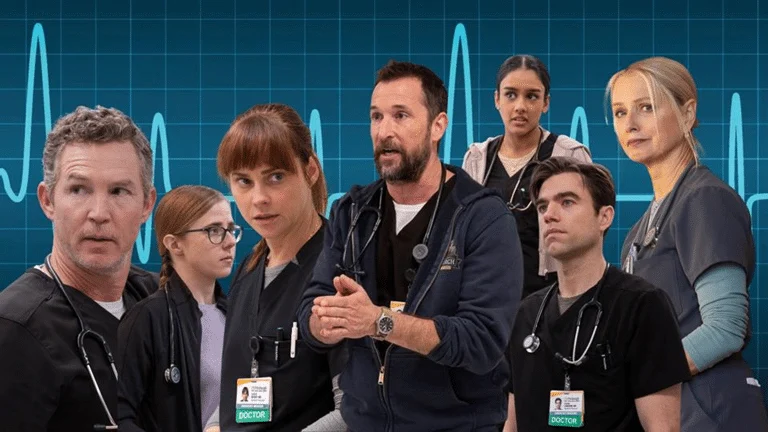
If you haven’t yet dived into the high-stakes, adrenaline-fueled world of HBO Max’s The Pitt, you are missing one of the most poignant cultural touchstones in contemporary television. Set within the frantic, often claustrophobic confines of a Pittsburgh emergency department, the medical drama has garnered acclaim not just for its gritty aesthetic or its technical precision—such as its unflinching portrayal of "clamshell" thoracic surgeries—but for its startling, often uncomfortable accuracy regarding the state of American healthcare.
While many medical dramas rely on soap-opera theatrics, The Pitt distinguishes itself by functioning as a mirror to a system struggling under the weight of an aging population, provider shortages, and systemic inequality. For those who study the infrastructure of aging, the show is more than entertainment; it is a case study in the harsh realities facing older adults today.
The Reality of the Caregiver Crisis
One of the most profound elements of The Pitt is its recurring focus on the "caregiver burden." Television has historically struggled to depict the invisible labor required to sustain a family member with chronic illness, often reducing it to a B-plot. The Pitt treats it as a primary driver of the human condition.
Throughout the first and second seasons, we witness the quiet desperation of an adult daughter navigating the mounting needs of her aging mother. The exhaustion is palpable; in one memorable scene, the daughter goes missing for hours, only to be found asleep in her car—a desperate, stolen moment of respite from the relentless cycle of caregiving.
This is not mere filler. It is a mirror held up to the 63 million Americans currently providing unpaid care for spouses, elderly parents, or relatives. According to data from the Caregiver Action Network, one in five of these caregivers is simultaneously managing a full-time career. The physical and psychological toll is staggering: high rates of clinical depression, anxiety, and the neglect of one’s own health are common outcomes. When the show depicts a husband attempting to hold his family together through his wife’s terminal cancer, it isn’t just writing a script; it is documenting a national epidemic of burnout.
The Looming Geriatric Shortage
In a particularly sharp exchange, the show’s protagonist, Dr. Robby, advises a colleague, Dr. Mohan, to consider a geriatrics fellowship. The suggestion is framed as a slight—a "slower" or "easier" path—which serves as a biting critique of the medical field’s own internal biases.
The irony, of course, is that the need for geriatric expertise has never been more urgent. By 2030, every single member of the Baby Boomer generation will have reached the age of 65, meaning one in five Americans will be a senior citizen. Despite this, the United States is currently home to fewer than 7,000 board-certified geriatricians.
To put this in perspective: the country boasts over 60,000 pediatricians. The Department of Health and Human Services has projected a shortfall of nearly 27,000 geriatric providers—a deadline that has, for all practical purposes, already arrived. Even more troubling is the educational pipeline; only one in ten U.S. medical schools requires a clinical rotation in geriatrics, despite the reality that nearly every physician will spend the majority of their career treating older adults. The Pitt effectively illustrates this disconnect, highlighting how a system designed for acute, episodic care is woefully ill-equipped for the chronic, complex management required by an aging demographic.
The Chaos of the Overwhelmed ER
The narrative rhythm of The Pitt is defined by a waiting room that is perpetually at capacity and a staff stretched to the breaking point. In one telling moment, Dr. Langdon confesses to seeing 16 patients in a single morning, resulting in a cognitive lapse where he fails to recognize a patient he treated just four hours prior.
This is not a failure of character; it is a failure of system capacity. The American Medical Association (AMA) has consistently identified emergency medicine as the specialty with the highest rates of physician burnout. When an environment is this overwhelmed, older adults are the most vulnerable. They face longer wait times, a higher probability of "boomeranging" (being readmitted shortly after discharge), and a greater likelihood of adverse health outcomes. The show captures the dangerous reality where "charting" is pushed to the margins of a shift, and the human element of care is sacrificed on the altar of throughput.
Transportation and the "Last Mile" of Access
One of the most heartbreaking sequences in season two involves a patient named Vera. After being technically cleared for discharge, Vera realizes she has no means of transport. Her neighbor, who drove her in, is unable to drive at night, and the patient cannot afford a cab. It is a moment of systemic abandonment resolved only by a medical student, Dr. Whittaker, paying out-of-pocket for a ride-share and walking the patient to the ambulance bay to ensure she reaches home safely.
This is not an isolated television trope. Transportation is arguably the most persistent, underreported barrier to healthcare access for older Americans. An estimated 3.6 million Americans report missing or delaying medical appointments simply because they cannot get there. With 50% of older adults reporting that they fear they will have to miss future care due to lack of transport, the scene in The Pitt serves as a sobering reminder that a prescription is useless if the patient cannot get to the pharmacy or the clinic.
Financial Dread: The High Cost of Surviving
Perhaps the most visceral thread running through the show is the omnipresent shadow of financial insolvency. The Pitt doesn’t shy away from the cruel math of modern medicine. When patients ask, "Can I afford this?" they aren’t just expressing a worry; they are weighing their survival against their family’s financial future.
The show depicts the creative, often desperate "workarounds" doctors must employ to navigate the limitations of Medicaid and insurance coverage. In one devastating arc, a patient leaves the hospital early to spare his family the burden of medical debt, only to be readmitted in critical condition. His daughter’s subsequent turn to crowdfunding—a "Go Fund Me" campaign—to cover his bills is a stinging indictment of a system where life-saving care is treated as a luxury good.
Implications for the Future
The genius of The Pitt lies in its refusal to offer easy answers. It acknowledges that the dilemmas faced by its characters—caregiver burnout, the geriatrician shortage, and the spiraling costs of care—are not fictional constructs. They are the results of policy decisions made in the halls of Congress, in medical school curricula, and in corporate boardrooms.
As we stand on the precipice of the largest surge of older adults in American history, the "drama" on our screens is becoming the reality in our neighborhoods. We are currently deciding what the landscape of aging will look like for the next several decades. If we continue to prioritize volume over value, and acute efficiency over comprehensive care, we are setting the stage for a crisis that no amount of medical technology can solve.
The lessons from The Pitt are clear: our healthcare system is not merely a collection of hospitals and doctors; it is a reflection of our societal values. We must demand better support for caregivers, incentivize geriatric specialization, and address the socioeconomic barriers—like transportation and debt—that prevent the most vulnerable from receiving the care they deserve.
The show is a call to action. The drama is real, the stakes are high, and the time for meaningful, structural change is now. We must ensure that the decisions made today reflect a commitment to the dignity and health of those who have paved the way before us.
Katrin Werner-Perez serves as the Director of Health Programs at the Alliance for Aging Research, where she advocates for policy reforms that address the unique healthcare needs of the aging population.