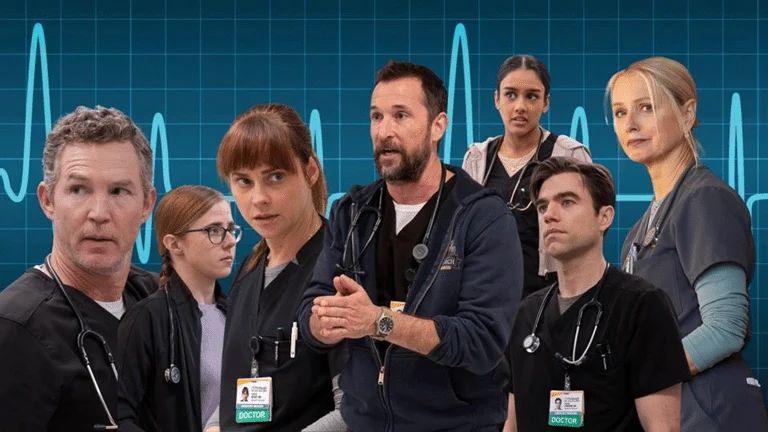
If you haven’t yet immersed yourself in the high-stakes intensity of HBO Max’s The Pitt, you are missing one of the most poignant cultural touchstones in contemporary television. While the series is technically a medical drama set within the frantic, adrenaline-fueled confines of a Pittsburgh emergency department, its true narrative power lies not in its cliffhangers, but in its unflinching portrayal of a healthcare system pushed to its absolute breaking point.
As we move through the second season, the show abandons the polished, heroic tropes of early 2000s medical procedurals. Instead, it offers a gritty, surgically accurate examination of what it actually means to grow old—and to care for the aging—in the United States today. By balancing the "clamshell" thoracic surgeries and frantic trauma bays with the quiet, devastating realities of end-of-life planning, The Pitt has become an unexpected mirror for the American aging crisis.
The Main Facts: A Mirror to Reality
At its core, The Pitt functions as a sociological study wrapped in primetime drama. The series follows Dr. Robby and his team, but the true protagonists are the patients and their families, who often find themselves trapped in the machinery of a modern, under-resourced hospital.
Unlike other shows that utilize medical scenarios as mere background noise for interpersonal office romance, The Pitt treats the structural failures of the healthcare system as a primary antagonist. Whether it is the exhaustion of a daughter caring for an aging parent or the bureaucratic nightmare of discharging a patient who has no means to get home, the show captures the "social determinants of health"—the non-medical factors that influence health outcomes—with frightening precision.
Chronology of the Caregiver’s Burden
The narrative arc of the show’s first two seasons highlights a steady, grinding progression of caregiver burnout. We see this through several recurring threads that weave throughout the series:
- The Breaking Point (Season 1): One of the most haunting storylines involves a mother-daughter duo. The daughter, tasked with the escalating needs of her aging mother, reaches a state of total emotional and physical depletion. In a moment of desperation, she vanishes for hours, only to be found asleep in her car—a brief, desperate attempt to escape the crushing weight of her responsibilities.
- The Systemic Disconnect (Season 2): As the show progresses, the focus shifts to the institutional barriers. We see the introduction of "financial dread" as a recurring character. Patients are depicted weighing the cost of life-saving procedures against the potential for generational debt.
- The Finality of Failure: In a particularly devastating episode, a patient leaves the hospital against medical advice, driven by the fear of bankrupting his family. When he inevitably returns in a more critical, terminal state, the reality of the American "GoFundMe" culture for medical expenses is laid bare. It is a cycle of tragedy that repeats in real-time across the country every day.
Supporting Data: The Reality Behind the Fiction
While the drama is fictional, the statistics underlying the show’s themes are grounded in a sobering reality. The Alliance for Aging Research and various healthcare advocacy groups have long pointed to the issues The Pitt dramatizes as urgent national priorities.
The Caregiving Crisis
According to the Caregiver Action Network, more than 63 million U.S. adults are currently serving as primary caregivers for spouses, elderly parents, or relatives with special needs. Approximately one in five of these caregivers is simultaneously managing a full-time job. This "sandwich generation" phenomenon leads to profound health consequences: these caregivers suffer from higher rates of depression, anxiety, and their own chronic physical diseases, often because they prioritize the health of their loved ones over their own preventive care.
The Geriatrician Shortage
One of the most poignant moments in the show involves a dismissive comment about a geriatrics fellowship, which the characters treat as a "slower" or "easier" path. In reality, this reflects a dangerous systemic misunderstanding. By 2030, every single baby boomer will have reached the age of 65 or older. This demographic shift represents a "silver tsunami" for which the U.S. medical system is woefully unprepared.
- Current Reality: The U.S. has only about 7,000 board-certified geriatricians.
- The Comparison: In contrast, there are over 60,000 pediatricians.
- The Projection: The U.S. Department of Health and Human Services has projected a shortfall of nearly 27,000 geriatric providers—a deadline that has effectively arrived, yet remains unaddressed by current workforce pipelines. Only one in 10 medical schools currently requires a clinical rotation in geriatrics.
The Emergency Room Bottleneck
The show’s portrayal of the "perpetually overwhelmed" waiting room is supported by data from the American Medical Association. Emergency medicine currently leads all medical specialties in physician burnout. When a department is in crisis, older adults are the most vulnerable demographic. They face longer stays, higher rates of "boomerang" admissions (where a patient is discharged only to be readmitted shortly after), and poorer overall health outcomes.
Official Responses and Professional Perspectives
Healthcare professionals and policy experts have praised The Pitt for its bravery in highlighting these systemic failures. The consensus among those working in health policy is that the show accurately identifies the "last-mile problem" of healthcare.
As Dr. Langdon’s character admits to seeing 16 patients in a single morning, he highlights the erosion of the physician-patient relationship. In the current model, "charting" and administrative tasks often consume more time than clinical care. Experts argue that until the reimbursement structures for geriatric care change—moving away from high-volume, short-visit models—the physician-burnout cycle seen in The Pitt will continue to accelerate.
Furthermore, the show’s focus on transportation—where a medical student must pay out-of-pocket for a ride-share for an elderly patient—is not an anomaly. It is a critical, underreported barrier to access. Research indicates that 3.6 million Americans miss or delay healthcare appointments annually due to a lack of reliable transportation. For the elderly, who may suffer from mobility issues or vision loss, this makes the hospital a "dead end" rather than a place of healing.
Implications: The Future of Aging in America
The implications of the crises depicted in The Pitt are profound. We are at a crossroads where the decisions made by Congress, hospital administrators, and academic medical boards will determine the quality of life for the largest generation of older adults in American history.
If the status quo persists, we can expect:
- Increased Economic Instability: As families are forced to choose between work and caregiving, the national labor force will continue to shrink, and personal bankruptcies related to medical debt will rise.
- Degraded Health Outcomes: Without a robust geriatric workforce, our current system will continue to treat the symptoms of the elderly rather than providing the specialized, preventive, and holistic care they require.
- Social Erosion: The "invisible" work of family caregivers will continue to be unrecognized, leading to a public health crisis of mental health issues among the very people keeping the aging population stable.
The Pitt is more than just a binge-worthy drama; it is a wake-up call. It forces the viewer to confront the fact that we are all either current caregivers, future patients, or both. The challenges of an aging population are not abstract policy problems to be solved in the distant future; they are happening right now, in the waiting rooms, in the cars of exhausted daughters, and in the quiet, desperate moments of families trying to navigate a system that is struggling to keep up.
As we look toward the future, the question posed by The Pitt remains: Are we building a system that honors the dignity of our aging population, or are we simply waiting for the system to collapse? The answer will define the next chapter of American healthcare. Let’s make sure those decisions are the right ones.
Katrin Werner-Perez is the Director of Health Programs at the Alliance for Aging Research, an organization dedicated to accelerating the pace of scientific discoveries and improving the lives of older adults.