











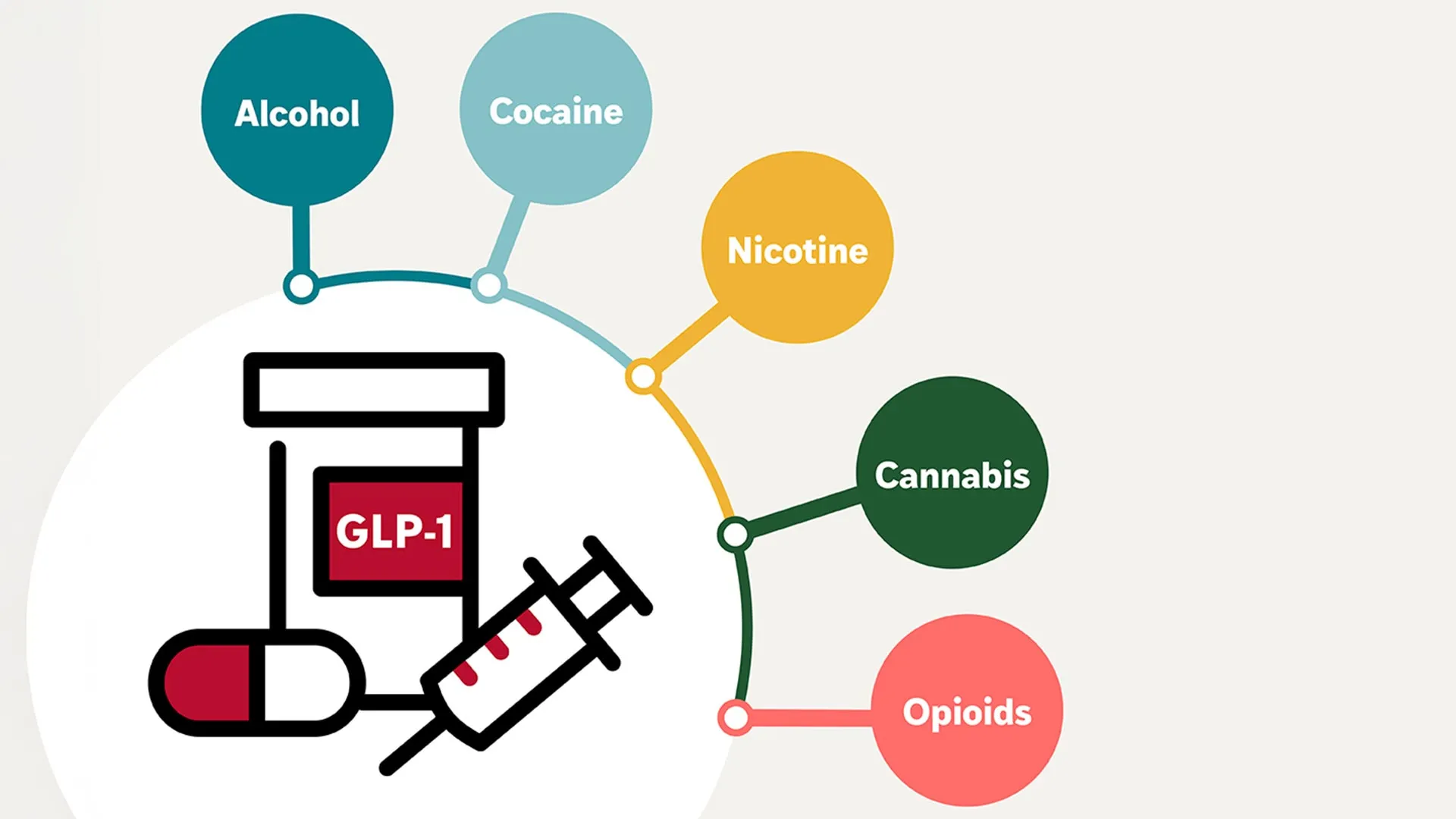
The pharmaceutical landscape has been seismically altered by the rise of glucagon-like peptide-1 (GLP-1) receptor agonists. Drugs such as Ozempic, Wegovy, Mounjaro, and Zepbound—originally engineered to manage the metabolic complexities of type 2 diabetes and chronic obesity—have become household names, celebrated for their ability to suppress appetite and facilitate significant weight loss. However, a groundbreaking new study from the Washington University School of Medicine in St. Louis suggests that these medications may possess a far more profound therapeutic utility: the potential to act as a universal brake on the biological mechanisms of addiction.
Published in the peer-reviewed journal The BMJ, the research indicates that GLP-1 medications are associated with a significant reduction in the risk of developing substance use disorders (SUDs) across a wide spectrum of substances, including alcohol, nicotine, cannabis, cocaine, and opioids. Perhaps more critically, the data suggests that for those already struggling with addiction, these drugs may serve as a life-saving intervention, linked to dramatic decreases in emergency room visits, hospitalizations, and fatal overdoses.
The Chronology of a Medical Discovery
The journey toward this discovery was not linear. It began with the anecdotal observations of patients and clinicians alike. As millions of individuals began utilizing semaglutide and liraglutide for metabolic health, a consistent, albeit unexpected, pattern emerged: patients reported a sudden, unexplained loss of interest in behaviors that had previously dominated their daily lives. Many described a vanishing desire for cigarettes, alcohol, and even compulsive shopping or gambling.
From Anecdote to Empirical Inquiry
Prior to this latest study, the scientific community had seen glimpses of this phenomenon in smaller, observational cohorts. Researchers had noted potential links between GLP-1 treatment and decreased alcohol and cannabis use, as well as a reduction in opioid-related complications. However, these earlier investigations were largely siloed, focusing on individual substances rather than the broader neurological landscape of addiction.
The Washington University team, led by senior author Dr. Ziyad Al-Aly, sought to move beyond these anecdotal reports. They aimed to determine whether the "quieting" effect described by patients was systemic—meaning it operated across multiple forms of addiction—and whether it could provide a measurable shield against the most catastrophic outcomes of substance use, such as death and acute toxicity.
A Massive Data Set: Examining 600,000 Veterans
To conduct this robust analysis, researchers tapped into the extensive electronic health records of 606,434 U.S. veterans diagnosed with type 2 diabetes. The scale of the study provided the statistical power necessary to draw meaningful conclusions about a complex, multi-variable health issue.
The cohort was divided into two distinct streams:
- The Prevention Group: 524,817 participants who did not have a documented substance use disorder at the onset of the study.
- The Treatment Group: 81,617 participants who already possessed a clinical diagnosis of a substance use disorder.
Over a three-year follow-up period, the team compared those taking GLP-1 receptor agonists (specifically semaglutide, liraglutide, or dulaglutide) against a control group of patients taking SGLT2 inhibitors, a different class of diabetes medication. This design allowed researchers to isolate the effects of the GLP-1 mechanism rather than simply measuring the general benefits of diabetes management.
Supporting Data: The Statistics of Success
The results, as published in The BMJ, were striking in their consistency and magnitude. Among the 524,817 participants who began the study without an addiction, those prescribed GLP-1 medications showed a 14% lower risk of developing a substance use disorder compared to their counterparts on other diabetes treatments.
Breakdown of Risk Reduction by Substance:
- Opioids: 25% lower risk
- Nicotine: 20% lower risk
- Cocaine: 20% lower risk
- Alcohol: 18% lower risk
- Cannabis: 14% lower risk
Translating these percentages into human outcomes, the researchers estimated that this reduction equates to approximately seven fewer new substance use disorder diagnoses per 1,000 GLP-1 users.
Impact on Existing Addiction
The findings were even more compelling within the "Treatment Group"—those already battling addiction. In this demographic, GLP-1 therapy was associated with a dramatic reduction in acute health crises:
- Drug-related deaths: 50% reduction
- Overdoses: 40% reduction
- Emergency department visits: 30% reduction
- Hospitalizations: 25% reduction
In practical terms, this suggests that for every 1,000 patients with existing addiction who are placed on GLP-1 therapy, there are 12 fewer instances of serious, life-threatening addiction-related events.
Official Responses and Scientific Context
Dr. Ziyad Al-Aly, a clinical epidemiologist and the Chief of the Research and Development Service at the VA Saint Louis Health Care System, emphasized the novelty of these findings. "In addiction medicine, a lot of treatments target just one thing," Al-Aly stated. "A nicotine patch helps with smoking but not alcohol. There is no medication that works across addictive substances, let alone all of them."
According to Al-Aly, the strength of the GLP-1 mechanism lies in its lack of specificity to a single substance. By targeting the biology of craving itself, the drugs appear to address the underlying neurological impulse that drives individuals toward various forms of addiction. This discovery is especially vital given the current lack of pharmacological treatments for certain addictions, most notably stimulants like methamphetamine.
The Neurology of "Drug Noise"
The biological hypothesis behind these results is rooted in the brain’s reward system. GLP-1 receptors are found in high concentrations in areas of the brain that govern reward processing and motivation. Researchers believe that by modulating these pathways, GLP-1 drugs may be dampening the "reward signal" that addictive substances typically trigger.
Just as these medications are famous for eliminating "food noise"—the relentless, intrusive thoughts about eating that plague many individuals with obesity—they may also be eliminating "drug noise." This persistent, internal preoccupation with obtaining and using a substance appears to be significantly muted by the presence of these agonists.
Clinical and Public Health Implications
The implications of this study are profound, potentially shifting the paradigm of how addiction is treated in the United States and globally.
1. A Dual-Benefit Therapeutic Approach
For millions of patients, particularly those with comorbid conditions, the potential for a single medication to treat both metabolic disease and substance use disorder is a game-changer. It offers a streamlined approach to care that could improve adherence and simplify treatment plans for patients struggling with the mental and physical toll of multiple chronic conditions.
2. The Need for Randomized Controlled Trials (RCTs)
While the observational data from the VA health system is compelling, researchers and public health officials alike acknowledge that this is only the beginning. The next necessary step is the implementation of large-scale, randomized, placebo-controlled clinical trials. Such studies are required to establish causality beyond doubt and to specifically measure the impact on mortality and long-term recovery outcomes.
3. Addressing the Public Health Crisis
With the ongoing opioid crisis and rising rates of substance-related morbidity, the prospect of an existing, FDA-approved class of drugs offering a defensive buffer is highly significant. If clinical trials confirm these findings, it could offer a new, scalable tool for public health departments to combat addiction on a population level.
4. Ethical and Practical Considerations
As with any medication, the expansion of GLP-1 use for addiction must be managed carefully. Cost, accessibility, and potential side effects remain hurdles. Furthermore, the researchers were clear to note that these findings are preliminary and represent a specific population (veterans with diabetes). The application of these drugs to the general population—including those without diabetes—remains a subject for future inquiry.
Conclusion: Quieting the Roar
The research from Washington University serves as a hopeful indicator that we may be standing on the precipice of a new era in addiction medicine. By focusing on the shared biological pathways of craving rather than the specific chemical profile of a substance, GLP-1 medications offer a promising avenue to address one of the most stubborn and destructive health challenges facing modern society.
As Dr. Al-Aly concluded, the goal is not merely to manage symptoms but to target the common biological signal that drives addiction. By moving from "food noise" to "drug noise," GLP-1 receptor agonists may finally be providing a way to quiet the roar of addiction, offering a quieter, more stable path forward for millions of people.
Funding for this study was provided by the U.S. Department of Veterans Affairs. The authors confirmed that the funding bodies played no role in the study design, data collection, analysis, or the decision to publish. The findings and conclusions presented are those of the researchers and do not necessarily represent the views of the Department of Veterans Affairs or the U.S. government.