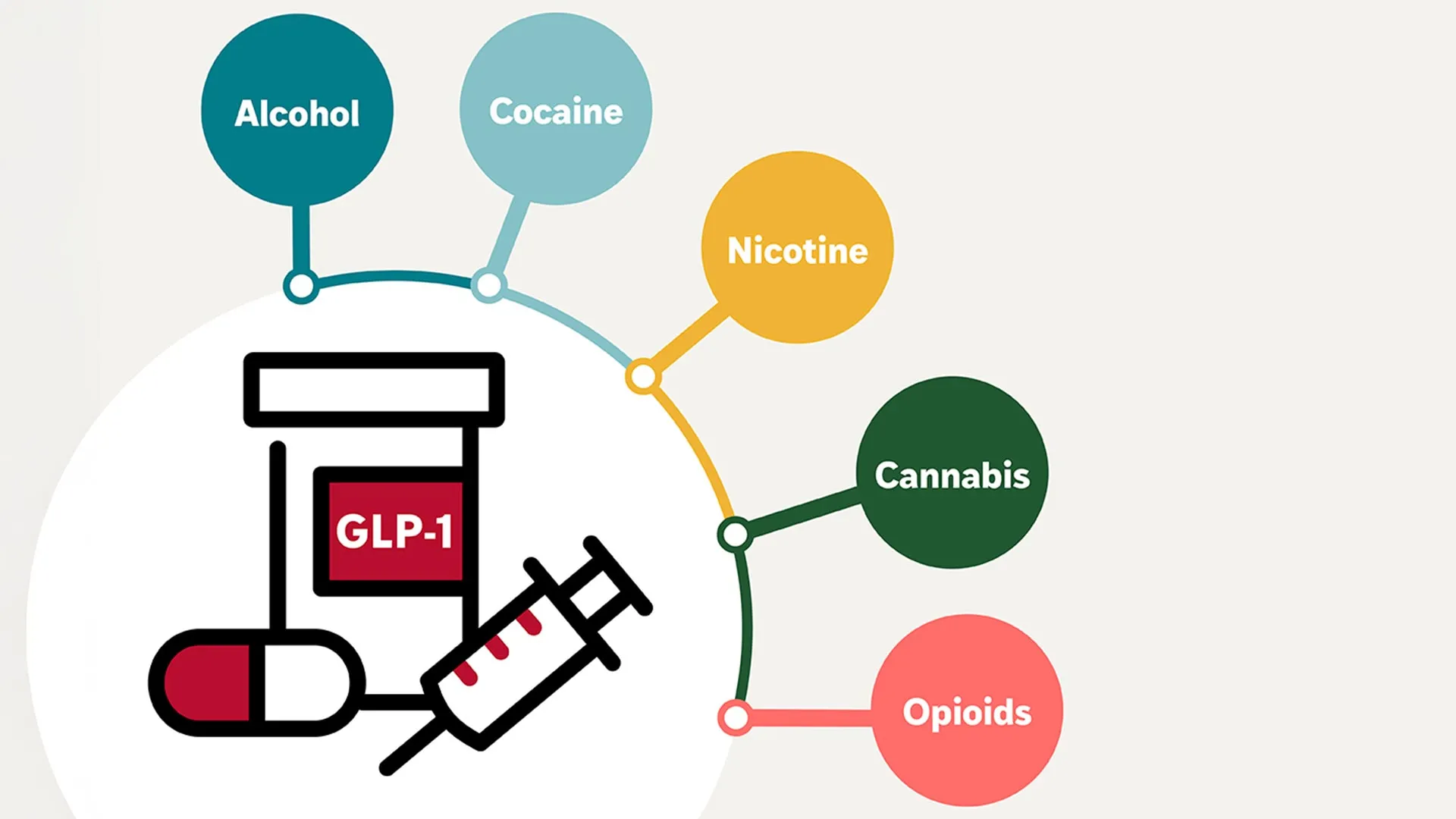
In a medical landscape that has long struggled to find a “silver bullet” for substance use disorders, a new, transformative possibility has emerged from an unlikely source. GLP-1 receptor agonists—a class of drugs including Ozempic, Wegovy, Mounjaro, and Zepbound—have already redefined the treatment of type 2 diabetes and obesity. Now, groundbreaking research suggests these medications may possess a secondary, equally profound capability: the power to quiet the relentless cravings that drive addiction across a wide spectrum of substances.
A comprehensive study conducted by researchers at the Washington University School of Medicine in St. Louis and the VA Saint Louis Health Care System has found that these medications are associated with significantly lower risks of developing substance use disorders (SUDs). Furthermore, for patients already struggling with addiction, the drugs appear to act as a powerful buffer, leading to fewer overdoses, hospitalizations, and drug-related fatalities. The findings, published in the prestigious journal The BMJ, offer a glimmer of hope for a public health crisis that has remained stubbornly resistant to traditional pharmaceutical interventions.
The Evolution of a Scientific Discovery: A Chronology
The potential for GLP-1 drugs to treat addiction was not discovered in a laboratory under a microscope, but rather in the quiet, anecdotal reports of patients.
The Anecdotal Roots
In the early days of the widespread rollout of semaglutide and liraglutide for weight loss, physicians began noting a curious trend. Patients who had previously struggled with compulsive behaviors—such as constant snacking or “food noise”—reported that the medication not only helped them shed weight but also dampened their desire for other vices. Specifically, individuals reported a sudden, unprompted loss of interest in alcohol and nicotine. These patient narratives served as the catalyst for the scientific community to look closer.
Early Observational Signals
Following these initial reports, researchers conducted smaller observational studies. These early investigations identified specific links between GLP-1 therapy and reduced risks of alcohol and cannabis use disorders. Some data even suggested a decrease in opioid-related overdoses among diabetics taking these medications. However, these studies were often limited in scope, focusing on a single substance or a small patient population. The scientific community remained cautious, needing more robust, large-scale data to determine if this “quieting” effect was a consistent, broad-spectrum phenomenon.
The Landmark Veterans Study
To address these gaps, the Washington University team launched an ambitious analysis of electronic health records. By reviewing data from 606,434 U.S. veterans diagnosed with type 2 diabetes, the researchers were able to create a massive, high-fidelity data set. The study compared patients who began taking GLP-1 medications (such as semaglutide, liraglutide, or dulaglutide) against those taking SGLT2 inhibitors—another class of diabetes drugs that do not possess the same neurological profile. This design allowed researchers to isolate the effects of the GLP-1 class specifically, providing the most comprehensive look at the drugs’ impact on addiction to date.
Supporting Data: The Power of the Numbers
The scale of the Washington University study provides compelling evidence that the effects of GLP-1 agonists are both systemic and significant. The researchers categorized the participants into two distinct cohorts: those without a pre-existing substance use disorder and those already diagnosed with one.
Preventing the Onset of Addiction
Among the 524,817 participants who did not have an addiction diagnosis at the start of the study, the protective effect of GLP-1 medications was striking. Compared to patients on other diabetes treatments, GLP-1 users saw a 14% reduction in the risk of developing any substance use disorder over a three-year period.
The reduction in risk was consistent across every major substance examined:
- Alcohol: 18% lower risk
- Cannabis: 14% lower risk
- Cocaine: 20% lower risk
- Nicotine: 20% lower risk
- Opioids: 25% lower risk
Statistically, this translates to seven fewer new cases of substance use disorder per 1,000 GLP-1 users—a significant outcome in public health terms.
Mitigating Serious Consequences
For the 81,617 participants who entered the study already living with an addiction, the results were even more dramatic. The presence of GLP-1 medication in their treatment regimen acted as a protective shield against the most lethal consequences of substance misuse. Over three years, the group taking GLP-1s experienced:
- A 30% reduction in emergency department visits.
- A 25% reduction in hospitalizations.
- A 40% reduction in overdoses.
- A 50% reduction in drug-related deaths.
When distilled down to individual outcomes, the researchers estimated 12 fewer serious, addiction-related health events for every 1,000 users. These numbers suggest that the medication is not just preventing the onset of addiction but is actively helping to manage the severity of the disease in those already afflicted.
The Biological Perspective: Addressing the "Drug Noise"
To understand why a diabetes drug would have such a profound impact on the brain, one must look at the underlying biology of addiction. Senior author Dr. Ziyad Al-Aly, a clinical epidemiologist at WashU Medicine, posits that the secret lies in the drug’s ability to target the biological roots of craving.
The Reward Pathway
GLP-1 receptors are not localized only in the pancreas; they are found throughout the brain, particularly in areas associated with reward, motivation, and impulse control. When a person consumes a substance—whether it is sugar, alcohol, or an opioid—the brain releases dopamine, reinforcing the desire to repeat the behavior. GLP-1 medications appear to interfere with this signaling pathway.
Quieting the Roar
Dr. Al-Aly distinguishes between the specific treatments currently available for addiction and the broad, systemic impact of GLP-1s. “In addiction medicine, a lot of treatments target just one thing,” Dr. Al-Aly explained. “A nicotine patch helps with smoking but not alcohol. There is no medication that works across addictive substances, let alone all of them.”
The brilliance of GLP-1s, according to the research, is that they do not act against a specific chemical target like alcohol or nicotine. Instead, they act against the craving itself. By blunting the physiological signal that drives the individual to seek out a substance, the drugs “quiet the roar” of addiction. This effectively treats the common biological denominator of all substance use disorders.
Implications for the Future of Medicine
The implications of these findings are seismic. If these results are confirmed through future randomized clinical trials, the medical community could be on the precipice of a new era in behavioral health.
A Dual-Benefit Approach
For patients suffering from chronic conditions like obesity or type 2 diabetes—who are also at a higher statistical risk for substance use disorders—GLP-1 medications could become a primary tool in their clinical management. The ability to treat both a metabolic disease and an addiction with a single medication would simplify care, improve patient adherence, and potentially save thousands of lives.
Filling a Therapeutic Void
Perhaps the most urgent implication concerns substances for which there are currently no FDA-approved pharmaceutical treatments, such as methamphetamine. While behavioral therapy remains the gold standard, the addition of a pharmacological “safety net” that reduces the intensity of cravings could be the difference between recovery and relapse for millions of Americans.
A Call for Clinical Trials
Despite the promising nature of the observational data, Dr. Al-Aly and his team are clear that this is only the beginning. The research team is now calling for rigorous, double-blind, placebo-controlled clinical trials specifically designed to test GLP-1 drugs as addiction treatments. Such trials would be critical in measuring direct effects on overdose rates and drug-related mortality, moving the conversation from observational correlation to clinical causation.
Conclusion: From Food Noise to Drug Noise
The surge in popularity of GLP-1 medications has been defined largely by the mirror and the scale. However, the study from Washington University suggests that the true value of these drugs may eventually be found in the mind. By successfully quieting the persistent “food noise” that plagues those with obesity, these drugs may have inadvertently revealed a way to quiet the “drug noise” that devastates the lives of those with substance use disorders.
As we look toward the future, the integration of these metabolic treatments into the field of addiction medicine could represent one of the most significant shifts in public health strategy in decades. If we can target the common biological signal of addiction rather than chasing individual substances, we may finally be able to offer a more effective, holistic approach to healing the brain’s reward system.
Disclaimer: This research was funded by the U.S. Department of Veterans Affairs. The authors note that the study funders played no role in the design, collection, analysis, or interpretation of the data. The findings presented here do not necessarily reflect the official views of the Department of Veterans Affairs or the U.S. government.