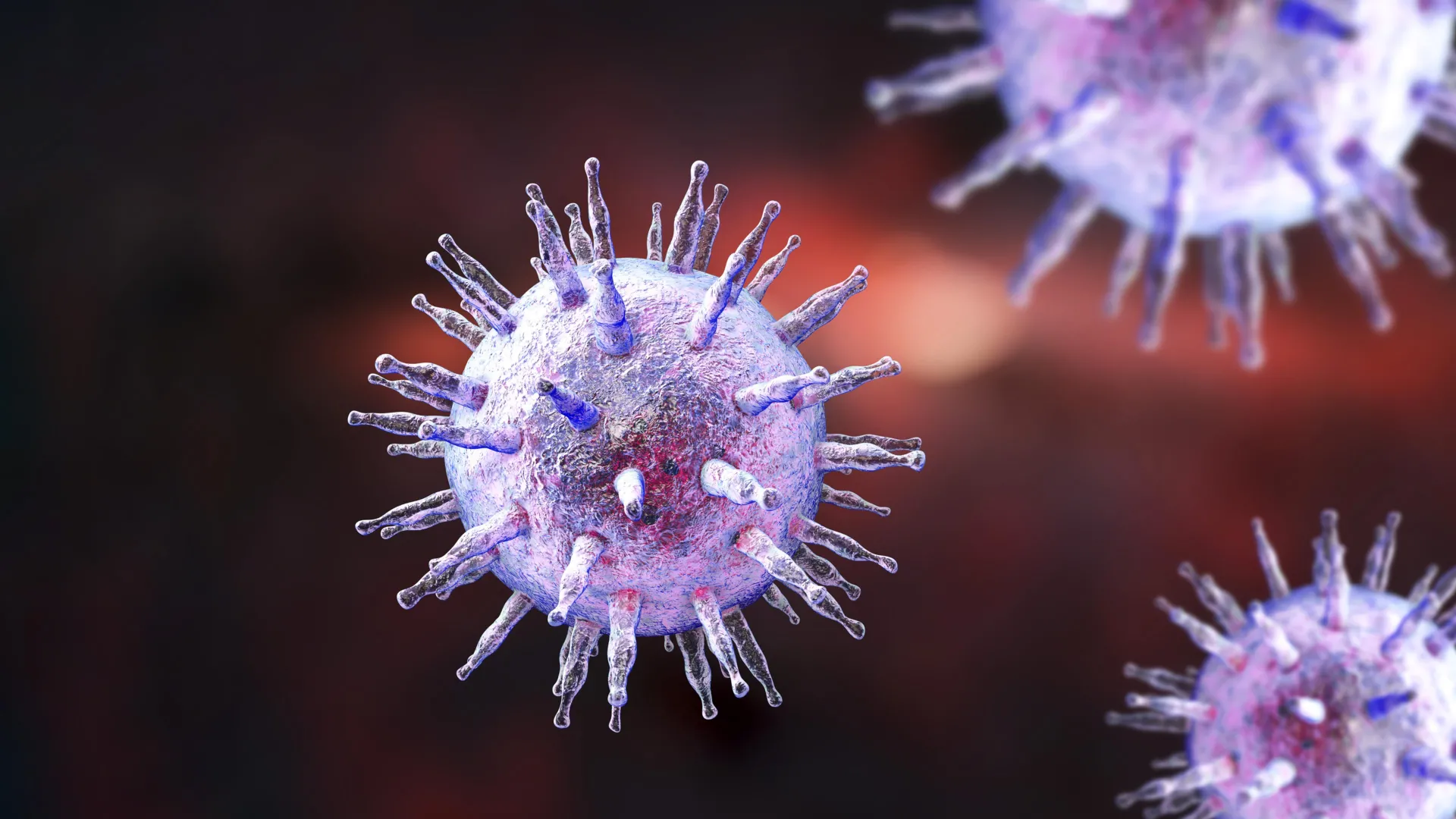
In a landmark development for global health, researchers at the Fred Hutchinson Cancer Center have announced a significant breakthrough in the decades-long effort to neutralize the Epstein-Barr virus (EBV). This pervasive pathogen, which infects approximately 95% of the global population, has long been associated with a spectrum of serious health conditions, ranging from infectious mononucleosis to various cancers and debilitating neurodegenerative diseases.
By utilizing sophisticated mouse models engineered to replicate the human immune response, the team has successfully identified and tested monoclonal antibodies capable of blocking the virus’s primary entry points into human cells. The findings, recently published in the journal Cell Reports Medicine, provide a promising roadmap for the development of preventative therapies that could eventually safeguard millions—particularly those who are immunocompromised.
The Nature of the Adversary: Understanding the EBV Challenge
Epstein-Barr virus is notoriously difficult to combat. A member of the herpesvirus family, EBV is characterized by its ability to remain latent in the host for life. While most individuals carry the virus without significant symptoms, the pathogen is a known driver of multiple malignancies, including Burkitt lymphoma, Hodgkin lymphoma, and gastric cancers. Furthermore, emerging research has suggested a compelling link between EBV and autoimmune conditions such as multiple sclerosis.
The primary obstacle in creating an effective vaccine or therapeutic has been the virus’s uncanny ability to infiltrate human B cells. "Finding human antibodies that block Epstein-Barr virus from infecting our immune cells has been particularly challenging because, unlike other viruses, EBV finds a way to bind to nearly every one of our B cells," explains Andrew McGuire, PhD, a biochemist and cellular biologist in the Vaccine and Infectious Disease Division at Fred Hutch. Because the virus has evolved to exploit nearly every available entry mechanism, scientists have struggled to find a “chokepoint” that can be blocked without triggering adverse immune reactions.
Chronology of the Discovery: From Engineered Mice to Clinical Promise
The path to this discovery was paved by the integration of cutting-edge immunological technology and rigorous molecular biology.
1. The Engineering Phase
Recognizing the limitations of traditional research models, the Fred Hutch team employed specialized mice engineered to produce human antibodies. This allowed researchers to observe how a human-like immune system would respond to the virus, bypassing the limitations of animal-derived antibodies, which are often rejected or neutralized by the human body.
2. Identifying the Targets: gp350 and gp42
The researchers focused their attention on two critical viral glycoproteins: gp350 and gp42.
- gp350: Acts as the virus’s “key,” facilitating the initial attachment to the surface of human B cells.
- gp42: Functions as the “door opener,” allowing the virus to fuse with the cell membrane and inject its genetic material.
3. The Screening and Validation
Using their proprietary technology, the team screened for antibodies that could specifically neutralize these proteins. The result was the identification of two antibodies targeting gp350 and eight targeting gp42. In final testing, the gp42-targeting antibody demonstrated extraordinary efficacy, providing complete protection against infection in the mouse models.
4. The Path Forward
Following the validation of these candidates, the project has moved into the intellectual property phase, with Fred Hutch filing claims to protect the discovery. Current efforts are focused on industry partnerships to facilitate the transition from laboratory bench to clinical trials.
Supporting Data: Why This Strategy Works
The strength of the Fred Hutch study lies in its granular understanding of the virus’s mechanism. By isolating antibodies that target the gp42 protein, the team effectively "locked the door" before the virus could enter the host cell.
In the experimental trials, the gp42-targeting antibody provided complete protection against EBV in the test subjects. While the gp350-targeting antibodies showed only partial protection, their inclusion in the research has provided critical mapping data regarding the virus’s structural weak points. This data is now being shared with the broader scientific community to inform the next generation of vaccine designs.
Crystal Chhan, a pathobiology PhD student in the McGuire Lab, noted the broader significance of the methodology: "Not only did we identify important antibodies against Epstein-Barr virus, but we also validated an innovative, new approach for discovering protective antibodies against other pathogens. As an early-career scientist, it was an exciting finding and has helped me appreciate how science often leads to unexpected discoveries."
Official Responses and Expert Perspectives
The research community has received the findings with significant optimism, viewing them as a "missing piece" in the puzzle of viral immunology.
"There’s momentum to advance our discovery to a therapy that would make a huge difference for patients undergoing transplant," Dr. McGuire stated in a press release. His sentiment reflects the urgency of the situation, particularly for patient populations for whom EBV is not just a latent risk, but an immediate threat to survival.
The implications for transplant medicine are perhaps the most profound. Dr. Rachel Bender Ignacio, an associate professor and infectious disease physician at Fred Hutch and the University of Washington School of Medicine, emphasizes the clinical necessity of this research. "Post-transplant lymphoproliferative disorders (PTLD), most of which are EBV-associated lymphomas, are a frequent cause of morbidity and mortality after organ transplantation," she explains. "Preventing EBV viremia has strong potential to reduce the incidence of PTLD and limit the need to reduce immunosuppression, thereby helping preserve graft function while improving overall patient outcomes."
Implications: A New Era for High-Risk Patients
The potential clinical applications of this research are far-reaching, with the most immediate benefits targeted at transplant recipients.
The Transplant Dilemma
Each year, over 128,000 Americans undergo solid organ or bone marrow transplants. To prevent organ rejection, these patients must take powerful immunosuppressive drugs. Unfortunately, these drugs also dampen the body’s ability to keep latent viruses in check. For many, a dormant EBV infection can "wake up" under the pressure of immunosuppression, leading to uncontrolled viral replication and the development of PTLD.
Protecting the Most Vulnerable
The research team envisions a future where these monoclonal antibodies are administered as a prophylactic infusion. By providing a passive immunity boost, the therapy could act as a shield for transplant patients during their most vulnerable post-operative months. This would not only save lives but could also allow clinicians to maintain necessary levels of immunosuppression without the constant fear of EBV-driven complications.
Broader Public Health Goals
Beyond the transplant ward, this discovery lays the groundwork for a long-sought EBV vaccine. By identifying the specific proteins that the human immune system can use to effectively neutralize the virus, the researchers have provided the structural blueprints that vaccine manufacturers require. This could eventually lead to the eradication of the virus’s most harmful effects on the general population, potentially lowering the incidence rates of multiple sclerosis and various EBV-linked lymphomas.
Conclusion: A Significant Stride Forward
The achievement by the Fred Hutch Cancer Center represents more than just a successful experiment; it is a paradigm shift in how we approach the EBV threat. By moving from passive observation to active, targeted neutralization, the researchers have opened a door that has been closed for decades.
As the team moves toward safety testing in healthy adults and subsequent clinical trials, the medical community remains cautiously optimistic. If the success seen in animal models translates to human patients, the monoclonal antibody strategy could become a standard of care, transforming EBV from a ubiquitous and dangerous pathogen into a manageable—and perhaps preventable—condition. For the thousands of patients whose lives are currently dictated by the risks of post-transplant complications, this discovery offers the most tangible hope yet for a future free from the shadow of Epstein-Barr.