











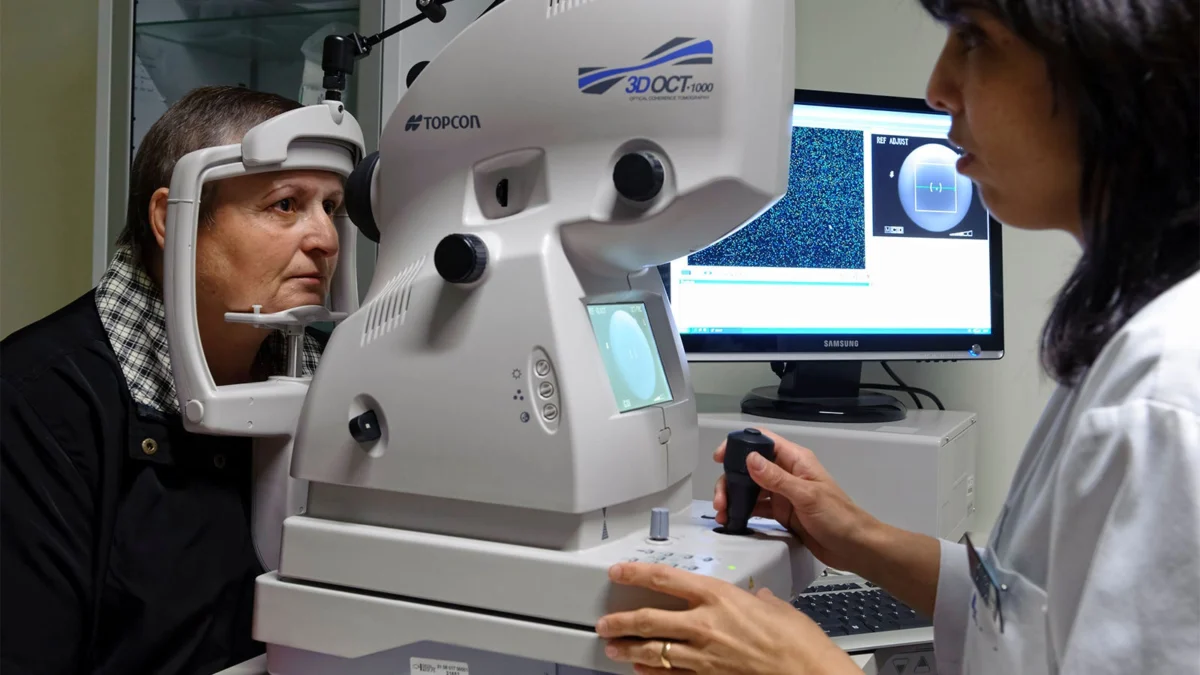
As the global population ages, the prevalence of age-related macular degeneration (AMD)—the leading cause of permanent vision loss in the developed world—has reached a critical inflection point. Among its forms, neovascular or "wet" AMD presents the most urgent clinical challenge, requiring frequent, lifelong monitoring and intensive anti-VEGF (vascular endothelial growth factor) therapy to prevent irreversible retinal damage.
A landmark randomized trial published in JAMA Network Open has injected new data into the long-standing, often contentious debate regarding the scope of practice for optometrists. The FENETRE trial suggests that, under the right conditions, community-based optometrists may be capable of monitoring patients with quiescent wet AMD as effectively as hospital-based specialists. This finding arrives at a time when U.S. optometrists are aggressively lobbying for expanded legislative authority, creating a complex intersection of clinical evidence, professional turf wars, and the urgent need for systemic healthcare efficiency.
The FENETRE Trial: A Shift in Monitoring Paradigms
The FENETRE trial, led by Konstantinos Balaskas, MD, of the University College London Institute of Ophthalmology, sought to determine if the burden of chronic retinal monitoring could be safely distributed from overburdened hospital settings to local community practices.
Methodology and Study Design
The study enrolled 704 adults, aged 55 and older, all of whom had been successfully treated for wet AMD and were currently in a "quiescent" phase—meaning their disease was stable following anti-VEGF therapy. Participants were randomized into two groups: one monitored in a traditional hospital setting by multidisciplinary teams (including fellows, trainees, and nurses under the supervision of consultant ophthalmologists), and another monitored by specially trained, independent community optometrists.
The monitoring cadence was set at every two months over a one-year period, with the primary clinical objective being the timely detection of disease reactivation that would necessitate a return to active treatment.
Key Findings
The results provided compelling evidence for the efficacy of community-based care:
- Safety and Sensitivity: The trial met its noninferiority criteria. False-negative decisions—where disease progression was missed—were actually lower in the community cohort (3.8%) compared to the hospital cohort (7.8%).
- The "Safety-First" Approach: While the hospital group had fewer false positives (3.5% versus 8.4% in the community), researchers noted that the higher false-positive rate among optometrists reflected a "safety-first" bias. These optometrists were more likely to refer patients for a "suspicious" finding, ensuring that no potential reactivation went unchecked.
- Conclusion: The authors concluded that with specific training, community optometrists could provide a level of care comparable to hospital-based clinics, potentially relieving the immense volume pressure currently placed on ophthalmology departments.
The U.S. Context: A Legislative Battlefield
While the FENETRE trial was conducted in the United Kingdom—a system defined by national credentialing and a single-payer framework—its implications have reverberated loudly in the United States. Here, the relationship between optometrists and ophthalmologists is characterized by a high-stakes struggle over "scope of practice."
The Evolution of Optometric Scope
In the U.S., the definition of an optometrist’s medical authority varies significantly from state to state. While optometrists have long been the primary providers for routine vision correction, they have spent the last two decades successfully lobbying for the right to perform more invasive medical procedures.
As of 2024, at least 16 states have granted optometrists the authority to perform certain ophthalmic laser procedures, such as YAG capsulotomy and selective laser trabeculoplasty (SLT). Proponents, led by the American Optometric Association (AOA), argue that these expansions improve patient access, particularly in rural or underserved areas where ophthalmologists are scarce.
The Resistance
The push for expansion has faced fierce opposition from the American Academy of Ophthalmology (AAO) and state-level ophthalmological societies. The conflict often centers on the difference in training: ophthalmologists are medical doctors (MDs or DOs) who complete a four-year residency focused on surgical and complex medical management, whereas optometrists (ODs) complete four years of doctoral-level study specifically in optometry. Critics argue that allowing optometrists to perform surgical or invasive procedures threatens patient safety and risks "fragmenting" care.
Official Responses: A Divide in Interpretation
The publication of the FENETRE results triggered immediate responses from across the industry, highlighting the polarization regarding the role of non-physician providers in specialized eye care.
The AOA Perspective
Teri Geist, OD, president of the American Optometric Association, welcomed the study as a validation of the profession’s clinical competency. "This study supports a larger role for doctors of optometry in monitoring appropriately selected patients with dormant neovascular AMD," Geist stated. She emphasized that the data refutes concerns about clinical negligence, noting that the community optometrists’ tendency toward higher referral rates should be viewed as a protective mechanism for the patient, not a failure of skill.
The Ophthalmological Caution
In an accompanying commentary, Sally S. Ong, MD, and medical student Isaiah J. Miller of Wake Forest University School of Medicine took a more guarded approach. While they acknowledged the strain on current eye care systems, they warned against using the FENETRE trial as a "blank check" for broader scope expansion.
"The results of this trial must not be overinterpreted to promote unsupervised clinical decision-making by optometrists outside an integrated care pathway to perform intravitreal injections," Ong and Miller wrote. They pointed out that the study relied on a highly specific group of "specially chosen and trained" optometrists in a U.K.-based system that does not map perfectly onto the decentralized, fragmented U.S. medical landscape.
Implications for the Future of Eye Care
The FENETRE trial serves as a microcosmic example of a larger trend in medicine: the "task-shifting" model. As chronic conditions like AMD, glaucoma, and diabetic retinopathy continue to increase in frequency, the current supply of ophthalmologists is projected to be insufficient to handle the demand.
Efficiency and Access
Proponents of the study argue that the status quo is unsustainable. Mark T. Dunbar, OD, of the Bascom Palmer Eye Institute, noted that the current burden of monitoring on retinal specialists is enormous. "It makes sense for optometrists to monitor patients with wet AMD for signs of worsening," he argued. With modern technology, such as optical coherence tomography (OCT), the ability of an optometrist to capture high-quality retinal imagery is no longer in doubt; the debate now rests on the interpretation and subsequent clinical workflow.
The Line in the Sand: Intravitreal Injections
Despite the potential for shared monitoring, the prospect of optometrists performing intravitreal injections—the standard-of-care delivery method for wet AMD drugs—remains a major point of contention. While legislative attempts to authorize this (such as the failed 2025 Minnesota bill) have struggled to gain traction, the mere existence of these bills has poisoned the well between the two professions.
Ophthalmologists remain steadfast in their stance that the administration of drugs directly into the vitreous cavity is a high-risk procedure that requires the surgical background of an ophthalmologist. Optometrists, meanwhile, argue that such characterizations are "scare tactics" intended to protect market share rather than patient health.
Conclusion: A Collaborative Path Forward?
The FENETRE trial demonstrates that clinical roles are not static. As diagnostic technology improves and chronic disease burdens mount, the integration of community providers into complex care pathways appears not only possible but likely necessary.
However, the path to a broader scope of practice for optometrists in the U.S. remains fraught with legislative hurdles and professional distrust. For any model of shared care to succeed, it will likely require more than just the findings of a single trial; it will require a fundamental shift toward "integrated care pathways"—where communication between the optometrist and the retinal specialist is seamless, automated, and standardized.
Until then, the FENETRE results provide a significant, if partial, victory for those advocating for a more flexible healthcare system. The question remains whether that victory will be used as a bridge to collaboration or as a weapon in an ongoing legislative war. One thing is certain: as the number of patients with wet AMD continues to climb, the current system must evolve, and the optometrist’s role in that evolution is likely to grow, whether the ophthalmology community welcomes it or not.