20 May, 2026
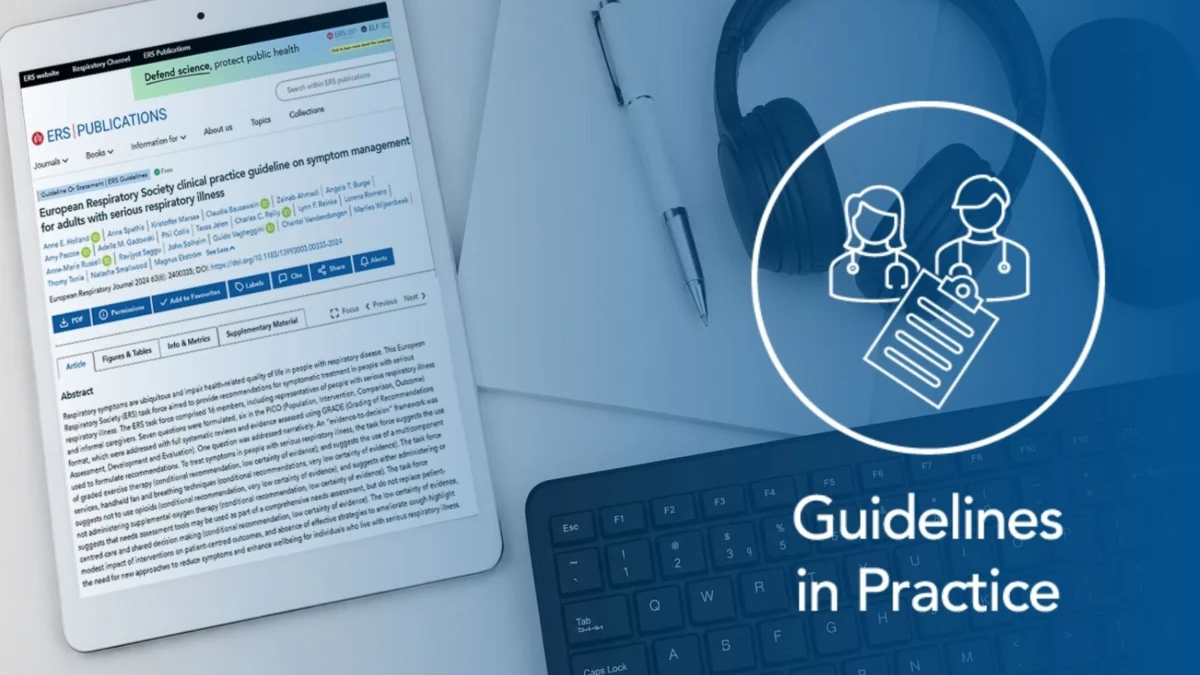
The European Respiratory Society (ERS) has officially unveiled Guidelines in Practice, an innovative podcast series designed to move beyond the static text of medical documentation and into the dynamic, often challenging landscape of real-world clinical application. By bridging the gap between rigorous evidence-based development and the bedside experience, the ERS aims to foster a more nuanced understanding of how clinical practice guidelines (CPGs) truly shape the trajectory of patient care in respiratory medicine.
Main Facts: A New Frontier in Medical Education
The podcast series represents a strategic pivot in how professional medical societies disseminate knowledge. Rather than providing a technical re-reading of guideline content—which is already accessible through traditional academic journals—Guidelines in Practice focuses on the human element of medicine. Each episode features a dialogue between a member of the original task force responsible for a specific guideline and an external expert who offers an objective, clinical perspective.
The core mission of the podcast is to dissect the “implementation gap.” While guidelines are meticulously crafted based on the latest systematic reviews and meta-analyses, the translation of these recommendations into daily hospital or clinic routines is rarely straightforward. By focusing on case studies, anecdotal evidence, and practical hurdles, the ERS is providing a platform for clinicians to share the "how-to" of medical practice, not just the "what."
Chronology: From Publication to Practice
The journey of an ERS guideline is extensive, often spanning several years of literature review, expert consensus, and peer-reviewed refinement. However, the ERS recognizes that the publication date is only the starting line.
- Pre-2025: The ERS establishes task forces to identify critical gaps in respiratory care. These groups begin the intensive process of synthesis, grading evidence, and formulating actionable recommendations.
- Early 2026: The ERS Strategic Committee identifies a need for more accessible, high-engagement content to support clinicians who may find dense academic papers difficult to integrate into time-pressured environments.
- May 20, 2026: The official launch of the Guidelines in Practice series. The first episode is released, targeting the ERS clinical practice guideline on symptom management for adults with serious respiratory illness.
- Future Outlook: The ERS plans to release subsequent episodes on a quarterly basis, covering a range of topics from asthma management to advanced interstitial lung disease protocols, ensuring that the podcast library grows alongside the Society’s evolving clinical output.
Supporting Data: Why Implementation Matters
Medical literature is inundated with clinical trials and systematic reviews, yet studies consistently show that "evidence-based practice" is notoriously slow to permeate clinical settings. Data suggests that it can take up to 17 years for research findings to be integrated into routine clinical practice.
The ERS initiative seeks to shorten this timeline. By inviting experts to discuss the barriers—such as resource constraints, institutional policies, and patient-specific complexities—the podcast serves as a diagnostic tool for the medical community. The first episode, focusing on symptom management for adults with serious respiratory illness, addresses a critical area where evidence is robust but implementation is often hampered by the emotional and physical demands of palliative care.
In this episode, listeners are presented with a real-world perspective that highlights how palliative care strategies are not merely academic concepts but are essential, life-altering tools for patients facing life-limiting respiratory conditions. The focus on storytelling allows for a more profound retention of information compared to the rote memorization of clinical algorithms.
Official Responses: Insights from the ERS Leadership
The launch of the podcast has been met with enthusiasm from the highest echelons of the European respiratory community. Prof. Winfried Randerath, the ERS Guidelines Director, emphasized that the series is designed to humanize the often-clinical nature of medical standards.
“ERS guidelines are produced by task forces on specific topics in respiratory medicine in order to guide respiratory professionals in their clinical practice,” Prof. Randerath stated. He noted that the true value of these documents lies in their utility at the point of care. “ERS guidelines have significant impact on clinical practice, and it will be fascinating to hear first-hand about this impact from the professionals who are implementing the guidance they provide. I look forward to listening to, and taking part in, engaging discussions as part of this new series.”
The inaugural episode features an expert exchange that exemplifies this vision. Prof. Natasha Smallwood, Director of Respiratory Medicine at the Alfred Hospital in Melbourne, Australia—and co-chair of the symptom management guideline—engages in a high-level discussion with Prof. Irene Higginson, a world-renowned palliative care physician and expert in the field based in London, UK. Their conversation moves past the technical jargon of the guideline to explore the ethical, practical, and psychological challenges of providing symptom relief to those with advanced respiratory disease.
Implications: The Evolution of Clinical Education
The implications of the Guidelines in Practice series are far-reaching. By creating an audio-based, narrative-driven educational resource, the ERS is effectively lowering the barrier to entry for busy clinicians.
Enhancing Accessibility
Respiratory specialists, nurses, and allied health professionals often work in high-stress environments where long-form reading is secondary to immediate patient needs. A podcast allows for learning during commutes, between clinical shifts, or during administrative downtimes. This "on-the-go" education is essential for modern medical practitioners.
Fostering a Global Community
The podcast format naturally encourages a global dialogue. By pairing international experts—such as the Australia-UK collaboration seen in the first episode—the ERS is fostering a sense of shared responsibility and collective learning. It allows for the cross-pollination of ideas, where a clinician in a rural setting can learn how a major metropolitan hospital in a different hemisphere navigated the same clinical guidelines.
The Feedback Loop
Perhaps the most significant implication is the potential for a feedback loop. As clinicians engage with these podcasts, the ERS can gather insights into which guidelines are working well and which are facing implementation hurdles. This feedback can be used by future task forces to refine how they draft guidelines, potentially leading to more user-friendly, practical recommendations in future publications.
Conclusion: A New Standard for Medical Knowledge
The launch of Guidelines in Practice marks a maturation of the ERS’s outreach strategy. It acknowledges that the future of medicine is not just about the discovery of new evidence, but the effective, empathetic, and efficient application of that evidence in the real world.
As the series continues, it promises to serve as a vital repository of professional wisdom, capturing the nuances of clinical decision-making that rarely make it onto the pages of peer-reviewed journals. By prioritizing the "practice" in Guidelines in Practice, the ERS is empowering clinicians to provide better, more evidence-based care to the patients who need it most.
For those interested in staying at the forefront of respiratory medicine, the first episode is currently available for streaming on the ERS Respiratory Channel. Listeners are encouraged to explore the channel further to access a comprehensive library of on-demand content and stay updated on upcoming live events, which continue to set the gold standard for global respiratory education.
By integrating the rigor of scientific documentation with the agility of digital media, the ERS is ensuring that its guidelines remain living documents, breathing with the pulse of modern medicine. As we look toward the future of respiratory care, initiatives like Guidelines in Practice will undoubtedly play a pivotal role in ensuring that the best evidence leads to the best outcomes, one episode at a time.