











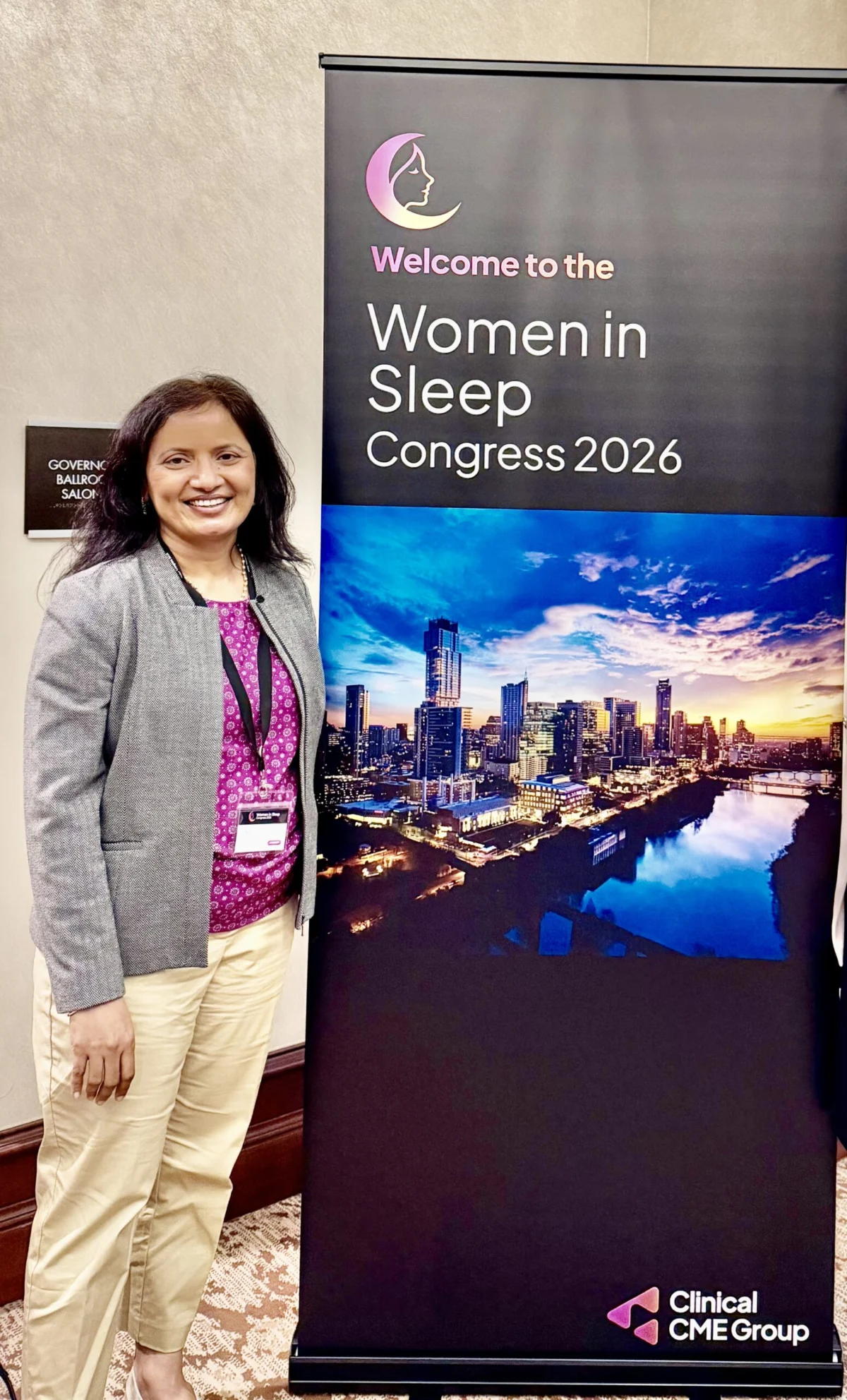
In the high-stakes environment of modern obstetrics, where clinicians are trained to monitor every vital sign from fetal heart rates to maternal blood pressure, a silent, frequently overlooked threat has long persisted: obstructive sleep apnea (OSA). For years, sleep-disordered breathing during pregnancy was often dismissed as a benign byproduct of the gestational period—a temporary discomfort to be endured rather than a medical condition to be treated.
That narrative shifted dramatically in June 2026, when the American Medical Association (AMA) officially adopted a landmark policy, H-440.785, recognizing the severe risks of OSA during pregnancy and formally advocating for expanded education, research, and insurance coverage. The policy’s success is largely credited to the persistent, evidence-based advocacy of Dr. Vani Vallabhaneni, a Texas-based sleep and internal medicine physician whose mission to normalize sleep health in prenatal care has set a new national standard.
The Catalyst: A Startling Clinical Realization
The journey toward this policy began not in a boardroom, but in a candid conversation at a Texas Medical Association (TMA) event. During an exchange with an obstetrician-gynecologist, Dr. Vallabhaneni posed a fundamental question: "How are you treating sleep apnea in your pregnant patients?"
The answer she received was chilling. The colleague explained that while they would administer oxygen if a patient showed signs of hypoxia during labor, they rarely investigated the underlying cause of sleep-disordered breathing.
"It shocked me that this is happening in this day and age," says Dr. Vallabhaneni, medical director at Sleep 360 Sleep Diagnostic Center in Austin. "Here is a physician practicing in a highly resourced environment acknowledging that we may have pregnant women experiencing recurrent hypoxemia throughout their pregnancy, yet the breathing disorder is never identified. We were effectively allowing both the mother and the fetus to suffer from intermittent oxygen deprivation."
This realization became the spark for a multi-year advocacy campaign aimed at closing the gap between sleep medicine and obstetric care.
A Chronology of Advocacy: From Texas to the National Stage
The path to the AMA policy was a calculated exercise in medical diplomacy and scientific communication.
- 2024: Dr. Vallabhaneni began her research at the TMA TexMed Conference in Dallas. Focusing on the state’s maternal mortality crisis, she identified a total absence of formal guidance regarding OSA in pregnancy.
- April 2025: After conducting a rigorous literature review, Dr. Vallabhaneni drafted Resolution 311. She presented it before the TMA’s Council for Science and Public Health. Despite initial skepticism from colleagues who viewed pregnancy-related complications as "temporary" and therefore "benign," she successfully argued that "temporary does not mean unimportant." The resolution passed without dissent.
- June 2026: Following the success in Texas, the state delegation brought the initiative to the national level. The AMA House of Delegates formally adopted Policy H-440.785, marking a pivotal moment in public health.
Supporting Data: The Case for Clinical Intervention
The urgency behind Dr. Vallabhaneni’s mission is supported by a growing body of clinical evidence. Research indicates that OSA affects between 5% and 20% of pregnant women, a figure that continues to rise alongside increasing rates of obesity in childbearing-aged women.

The consequences of untreated OSA are not merely limited to poor sleep quality. Studies have consistently linked the condition to:
- Hypertensive disorders of pregnancy: Including preeclampsia and gestational hypertension.
- Metabolic dysfunction: Such as gestational diabetes.
- Adverse birth outcomes: Including preterm birth and increased rates of admission to the neonatal intensive care unit (NICU).
Mechanistically, the repeated upper airway obstruction characteristic of OSA triggers intermittent hypoxemia, sleep fragmentation, and activation of the sympathetic nervous system. These physiological stressors overlap dangerously with the pathways that drive preeclampsia.
Promisingly, recent interventions have shown that treatment can move the needle on patient outcomes. A 2024 systematic review and meta-analysis of CPAP treatment during pregnancy demonstrated a 35% reduction in the risk of gestational hypertension and a 30% reduction in the risk of preeclampsia. Furthermore, a randomized controlled trial involving 340 high-risk patients found that CPAP therapy significantly lowered diastolic blood pressure, reinforcing the idea that early detection is a modifiable factor in maternal mortality.
Official Responses and Expert Perspectives
The medical community has largely embraced the new policy as a long-overdue advancement. Dr. Bradford Holland, president of the Texas Medical Association, lauded the initiative, noting that it empowers physicians to implement real-world changes. "Our House of Delegates changed policy for the better. It is a testament to the idea that any physician can influence the standard of care through rigorous review and consensus," he said.
Dr. Bilgay Izci Balserak, an associate professor at the University of Illinois College of Nursing, emphasizes that this policy marks a shift in clinical culture. "Historically, sleep disturbances were regarded as normal," she notes. "The AMA policy encourages obstetricians, midwives, and nurses to recognize OSA as a genuine maternal health issue. It doesn’t claim that OSA is the cause of all pregnancy complications, but it does validate that we have a responsibility to reduce barriers to care."
The American College of Chest Physicians (CHEST) has further solidified this momentum with its October 2026 clinical practice guidelines, which now explicitly recommend screening pregnant patients for sleep-disordered breathing and providing guidance on the use of positive airway pressure (PAP) therapy.
Implications for Future Care Pathways
The implementation of these policies poses significant logistical challenges, but experts are optimistic about the technological solutions currently available.
Modernizing the Screening Process
Dr. Balserak argues for a "risk-informed" approach rather than universal screening. Clinicians are encouraged to move beyond standard questionnaires like the STOP-Bang—which may be skewed by the natural fatigue of pregnancy—and instead ask specific questions about habitual snoring, witnessed apneas, and daytime sleepiness that exceeds normal pregnancy exhaustion.

Telemedicine and Type 2 Home Sleep Testing
Dr. Vallabhaneni advocates for the use of Type 2 home sleep tests, such as the DormoVision X, to bypass the need for cumbersome in-lab sleep studies. "We can ship the device to the patient’s home, provide instructions, and manage the entire diagnostic and treatment initiation process through telemedicine," she explains. This approach significantly lowers the barrier to entry for expectant mothers who may have limited mobility or time.
Addressing Adherence with Alternative Therapies
Recognizing that CPAP can be difficult for pregnant patients to tolerate due to nasal congestion or nausea, researchers are investigating oral appliance therapy (OAT). Pilot studies led by Dr. Preetam Schramm and Dr. Emet Schneiderman at the Texas A&M University College of Dentistry are testing devices like the myTAP. Preliminary data shows significant improvements in sleep quality and a reduction in snoring, offering a viable alternative for patients who cannot tolerate traditional PAP masks.
The Postpartum Transition
The care continuum does not end at delivery. Longitudinal studies confirm that a significant portion of women diagnosed with OSA during pregnancy continue to suffer from the condition after birth. Current guidelines, including those from CHEST, mandate a reassessment period after the patient has recovered from childbirth and fluid retention has stabilized.
Conclusion: A New Standard of Care
The work of Dr. Vallabhaneni and her colleagues represents a paradigm shift in how the medical community views maternal health. By moving sleep apnea from the periphery to the center of obstetric care, the profession is taking a critical step toward reducing preventable maternal morbidity.
"The challenge is no longer whether obstructive sleep apnea matters in pregnancy; the challenge is building an infrastructure that makes evidence-based obstetric care a routine thing," Dr. Vallabhaneni says. Her vision is clear: the integration of OSA screening into electronic medical record workflows, better communication with obstetric anesthesiologists, and a renewed focus on long-term cardiometabolic health for mothers.
As the medical community begins to implement these national policies, the hope is that the "simple question" Dr. Vallabhaneni once asked—"How are you treating sleep apnea?"—will soon be met with a standard, comprehensive, and life-saving answer.