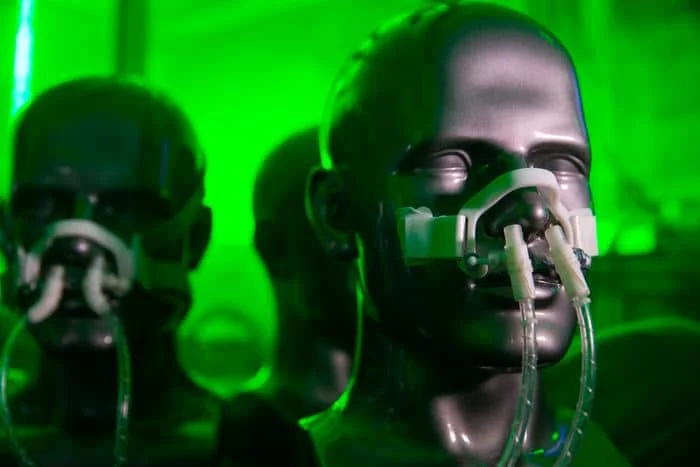
In a significant leap forward for sleep medicine, AcouFlow Therapeutics—a pioneering startup born from a strategic collaboration with the University of Cincinnati—has secured a prestigious grant from the National Institutes of Health (NIH). This funding injection is earmarked for a critical transition in the company’s development timeline: the engineering of a simplified, user-friendly, at-home version of the VortexPAP device.
For decades, the gold standard for treating obstructive sleep apnea (OSA) has been Continuous Positive Airway Pressure (CPAP) therapy. While clinically effective, traditional CPAP systems have long been plagued by low patient adherence, largely due to the physical discomfort of cumbersome, pressurized masks. The VortexPAP aims to dismantle these barriers, leveraging the principles of aerospace engineering to provide a "seal-less" alternative that promises to reshape the landscape of sleep health.
The Core Innovation: Aerodynamics in the Airway
At the heart of the VortexPAP lies a radical departure from conventional mechanical design. Traditional CPAP machines function by creating a closed, pressurized circuit between the machine and the patient’s lungs, requiring a silicone mask to be strapped tightly against the face. This often results in skin irritation, claustrophobia, and aerophagia (air swallowing).
The VortexPAP, by contrast, utilizes "vortex airflow"—a mechanism adapted from fluid dynamics research commonly used in the aerospace industry. By controlling the airflow through precise aerodynamic properties, the device creates a localized pressure zone in the upper airways. This allows the system to stabilize the airway without the need for a physical seal against the patient’s face.
The implications of this technology are profound. By removing the bulky, invasive interface, the device addresses the two most cited reasons for CPAP abandonment: physical discomfort and psychological distress. The interdisciplinary team, composed of experts in aerospace engineering, biomedical engineering, and sleep medicine, suggests that this approach may not only improve comfort but also allow for effective treatment at lower overall pressures, further mitigating the side effects associated with high-pressure air delivery.
Chronology of Development: From Laboratory to Living Room
The journey of the VortexPAP is a testament to the power of cross-disciplinary innovation. The project began as a theoretical exploration of whether fluid dynamics could solve the persistent clinical problem of airway collapse during sleep.
- Initial Conceptualization: The early phase focused on proving that vortex airflow could indeed provide the necessary pneumatic splinting to keep the pharyngeal airway open without a seal. These benchtop tests confirmed the viability of the aerodynamic theory.
- Clinical Validation (The Laboratory Phase): Moving from theory to practice, the VortexPAP was deployed in controlled sleep laboratory settings. Under the supervision of trained technicians, patients were monitored as they used the device. These studies were crucial in confirming that the device could effectively manage apnea-hypopnea index (AHI) scores in a supervised environment.
- The NIH Grant and Current Milestone: The recent NIH funding marks the transition from "clinical curiosity" to "commercial viability." The current project focuses on scaling down the complex laboratory equipment into a streamlined, patient-operable unit. This phase is designed to ensure that the device remains effective even when handled by the patient at home, without the constant intervention of clinical staff.
- Future Roadmap: The upcoming phase involves multi-site, longitudinal real-world testing. This is the "make or break" stage where the company intends to prove that the device is robust enough for daily, long-term use in the diverse environments of patients’ homes.
Expert Perspectives: A Milestone for Sleep Health
Dr. Liran Oren, an aerospace-biomedical engineer and research associate professor in the Department of Otolaryngology, Head & Neck Surgery at the University of Cincinnati College of Medicine, has been the public face of the project’s technical progress.
"It’s an important milestone toward our next goal," Dr. Oren noted in recent public communications. "We are moving toward testing the VortexPAP with many people, at multiple locations, and over a longer period of time, to demonstrate how well it works in everyday life."
The sentiment within the research community is one of cautious optimism. For years, the sleep medicine sector has been stagnant regarding interface technology, with incremental changes to straps and silicone cushions rather than fundamental changes to how air is delivered. The VortexPAP represents a rare "first-principles" redesign of the therapeutic delivery system, which many experts believe is necessary to move the needle on patient compliance.
Supporting Data: The Adherence Crisis in CPAP Therapy
The urgency behind the VortexPAP development is underscored by sobering statistics regarding CPAP adherence. According to historical data from the American Academy of Sleep Medicine, CPAP adherence rates are frequently cited as ranging between 40% and 60%. This means that nearly half of all patients prescribed the "gold standard" treatment either abandon the device entirely or use it so infrequently that they fail to receive the cardiovascular and cognitive benefits of therapy.
Factors Driving Non-Adherence:
- Interface Discomfort: A significant portion of patients report that the facial pressure and weight of the mask prevent them from falling asleep.
- Claustrophobia: The psychological barrier of having one’s nose and mouth encased in a mask is a primary driver of treatment discontinuation.
- Dermatological Issues: Prolonged skin contact with mask materials often leads to sores, rashes, and pressure ulcers, particularly in patients with sensitive skin.
- Noisy/Intrusive Airflow: Traditional masks often leak, causing high-pitched whistling sounds that disturb both the patient and their bed partner.
The VortexPAP addresses these by eliminating the mask interface entirely. By reducing the reliance on a high-pressure seal, the device inherently addresses the pressure-related discomfort that causes many patients to "crank down" the settings or stop using the machine.
Implications for the Future of Sleep Medicine
The potential market impact of the VortexPAP is immense. If the at-home testing phase proves successful, the device could move toward regulatory approval as a viable alternative for the millions of Americans suffering from moderate-to-severe OSA.
Broader Implications include:
- Expansion of Telehealth: Because the VortexPAP is designed to be more intuitive and less reliant on professional fitting, it aligns perfectly with the growing trend of remote sleep monitoring and telehealth-based sleep medicine.
- Cost Reduction: By simplifying the interface and reducing the need for recurring mask replacements, the device could lower the long-term cost of CPAP therapy for both insurers and patients.
- Increased Treatment Uptake: Patients who have previously refused CPAP therapy due to the "mask stigma" may be more willing to attempt therapy with a non-invasive, sleek, and quiet alternative.
However, challenges remain. The transition from a clinical prototype to a mass-produced medical device is fraught with regulatory hurdles. The FDA will require rigorous evidence that the vortex-based pressure delivery is as consistent and safe as the industry-standard seal-based systems across a wide range of patient demographics, including those with different facial structures, sleep positions, and severity levels of apnea.
Conclusion: A New Era for Sleep Therapy
The collaboration between the University of Cincinnati and AcouFlow Therapeutics highlights the necessity of bringing non-traditional industries into the fold of healthcare. By applying the rigorous, data-driven principles of aerospace engineering to the biological challenges of the human airway, the team behind VortexPAP is challenging the status quo.
As the team prepares for the next phase of expanded real-world testing, the entire sleep medicine community is watching with keen interest. If successful, the VortexPAP may well be the catalyst that finally solves the adherence crisis, allowing millions of individuals to reclaim their sleep, their health, and their quality of life. The move to an at-home version is more than just an engineering challenge; it is a critical step toward making effective, comfortable sleep therapy accessible to everyone, everywhere.
For now, the focus remains on refinement, safety, and the rigorous data collection necessary to prove that the "vortex" is the future of breathing easy while we sleep.