








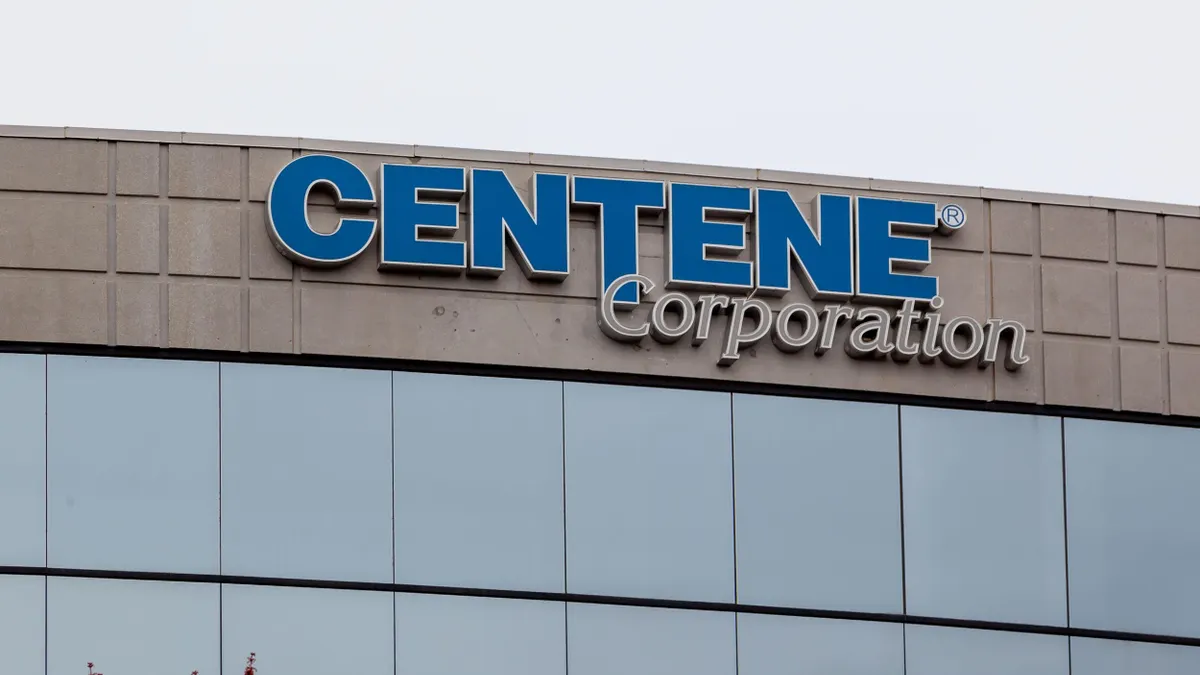
St. Louis, MO — June 16, 2026 — Centene Corporation, the nation’s largest provider of Medicaid and Affordable Care Act (ACA) health plans, has initiated a significant voluntary separation program affecting a substantial portion of its 61,000-person workforce. The move, characterized by the company as a strategic realignment rather than a total organizational overhaul, underscores the mounting pressure on major health insurers as they navigate a landscape defined by expiring subsidies, legislative budget cuts, and shifting regulatory requirements.
The Core Development: A Workforce Reorganization
In a internal communication obtained by Bloomberg, Centene CEO Sarah London informed staff that the company is offering voluntary buyouts to a wide swath of its employees. This decision comes as the insurer contends with a shrinking member base and a challenging fiscal environment.
"When our membership shifts, we need to shift our organization accordingly," London noted in her message to employees. While the company has not specified the exact number of staff it hopes will accept the packages, the breadth of the eligibility criteria suggests that Centene is looking to significantly trim its operational footprint to match its current membership volume.
Despite the scale of the offering, a company spokesperson emphasized that the program does not represent a wholesale transformation of the corporation. Instead, it is being framed as an efficiency measure designed to ensure the insurer remains agile in an era of heightened volatility.
Chronology: The Road to Contraction
The path to this moment has been paved by a series of cascading events over the past 24 months, which have fundamentally altered the business model for government-sponsored healthcare.
- 2023–2024: Following the end of the federal public health emergency, states began the massive undertaking of "redetermination"—re-verifying the eligibility of millions of Medicaid enrollees. This process, while necessary, resulted in significant attrition for major Medicaid players like Centene.
- Late 2025: The expiration of enhanced ACA subsidies, which were initially bolstered by pandemic-era legislation, proved to be a turning point. Without these federal payments to offset costs, premium prices for many Americans doubled, leading to a mass exodus from exchange plans.
- Summer 2025: A Republican-led Congress passed a significant reconciliation bill mandating deep cuts to Medicaid funding and introducing stringent work requirements. These policy shifts signaled a long-term contraction of the safety-net population.
- April 2026: During the company’s first-quarter earnings call, CEO Sarah London explicitly signaled that the company’s 2027 strategy would be heavily focused on margin improvement, explicitly citing the upcoming policy changes as a primary driver of the company’s fiscal planning.
- June 2026: Centene confirms the launch of a voluntary separation program to align corporate staffing levels with the realities of its reduced membership base.
Supporting Data: Membership Losses and Market Reality
Centene’s financial health is inextricably linked to its position in the Medicaid and ACA marketplaces. As of the first quarter of 2026, the company’s total at-risk membership stood at 26.3 million, a marked decline from the 27.9 million members reported at the same time last year.
The erosion of the customer base is most pronounced in the ACA exchanges, where Centene has seen a staggering 54% year-over-year decline in enrollment. Medicaid membership, the company’s traditional "bread and butter," has faced a more gradual, yet steady, 4% decline. While other business lines—such as Medicare prescription drug plans and employer-sponsored coverage—have seen growth, they have failed to compensate for the significant volume losses in the company’s core segments.
Industry analysts note that the remaining pool of enrollees in the ACA exchanges is skewing toward higher-risk, sicker individuals. This "adverse selection" creates a feedback loop: as healthy enrollees drop their coverage due to high premiums, the medical loss ratio for insurers increases, necessitating further premium hikes and leading to even more attrition.
Official Responses and Strategic Positioning
Centene’s leadership maintains that the buyouts are a proactive step toward long-term sustainability. "Centene is positioning the company to lead the future of healthcare—working to deliver a simpler and better experience for our members and partners while meeting the realities of today’s healthcare environment," the company spokesperson stated.
The focus, according to executive leadership, remains firmly on operational excellence and profitability. During the April investor call, London framed the forthcoming challenges—specifically the new Medicaid work requirements—not just as obstacles, but as variables in a complex equation the company is prepared to solve.

"As we look ahead to 2027, our goal is to continue to drive margin improvement forward," London told investors. This suggests that the current headcount reduction is likely the first step in a larger effort to streamline corporate overhead in anticipation of lower revenue streams from the government sector.
The Ripple Effect: Implications for the Healthcare Sector
The decision by Centene to initiate buyouts has far-reaching implications for the broader healthcare ecosystem, particularly for the tens of millions of Americans who rely on these programs.
The Impact of Medicaid Work Requirements
Perhaps the most significant looming threat to the company’s membership is the federal mandate for Medicaid work requirements, which is expected to take full effect in the coming year. Estimates suggest that approximately 5 million Americans could lose their Medicaid coverage due to these rules. Centene expects that roughly 20% of its own Medicaid population will be subject to these new requirements.
This creates a state-by-state patchwork of risk for the insurer. In states with stricter enforcement, Centene will likely see a faster decline in membership, requiring further local administrative adjustments.
The "Sicker and Smaller" Exchange Model
The expiration of ACA subsidies has forced a market correction. Insurers are now managing a "smaller and sicker" risk pool. For the average consumer, this means that insurance is becoming less of a universal safety net and more of a luxury product. If this trend continues, it could lead to a significant segment of the population becoming completely uninsured, shifting the burden of uncompensated care onto hospital systems and state-funded clinics.

The Future of Managed Care
Centene’s pivot highlights a transition in the managed care industry. For years, the industry thrived on volume-based expansion. Now, in the face of legislative budget tightening and the normalization of post-pandemic enrollment levels, the focus has shifted entirely to margin-based survival.
For the workforce, this means that the era of aggressive expansion in administrative and support roles is likely over. The industry is moving toward automation and high-efficiency models, where the primary objective is to maintain profitability on a smaller, higher-acuity member base.
Conclusion
Centene’s voluntary separation program is more than a simple cost-cutting measure; it is a clear indicator that the "era of growth" in government-sponsored healthcare has entered a period of recalibration. As the company prepares for the structural changes of 2027, its ability to navigate the tension between public service and private margin requirements will be a litmus test for the entire managed care sector. For now, employees and investors alike are watching to see if this reduction in force will be sufficient to stabilize the company’s position in an increasingly uncertain regulatory climate.