By Katie Riley, Vice President of Communications, Alliance for Aging Research
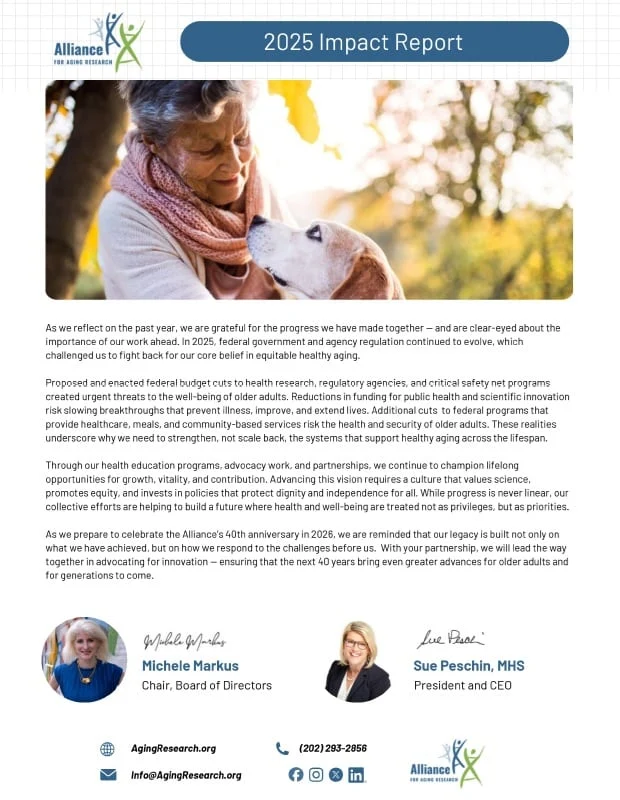
The landscape of aging in America is undergoing a profound transformation. As demographics shift and medical science pushes the boundaries of what is possible in the later stages of life, the organizations tasked with advocacy and education must be as dynamic as the populations they serve. This month, the Alliance for Aging Research reached a pivotal milestone in its history, officially releasing its 2025 Impact Report.
More than a mere collection of statistics, the 2025 Impact Report serves as a comprehensive roadmap of the organization’s strategic initiatives, leadership milestones, and the ongoing battle for equitable access to healthcare for older adults. As the Alliance celebrates its 40th anniversary, this document highlights a legacy of progress while simultaneously setting the stage for the advocacy challenges that lie ahead in an evolving federal regulatory environment.
Main Facts: A Year of Advocacy and Educational Excellence
The 2025 Impact Report offers a deep dive into the multifaceted work of the Alliance. It serves as a transparent look at the organization’s Board of Directors, its dedicated staff, and the award-winning programs that have become hallmarks of the Alliance’s mission.
At its core, the report emphasizes three primary pillars:
- Health Education: Providing older adults, caregivers, and clinicians with evidence-based information to make informed healthcare decisions.
- Policy Advocacy: Engaging with federal agencies and lawmakers to protect and expand the rights of seniors within the healthcare system.
- Strategic Partnerships: Leveraging a diverse coalition of industry, clinical, and community stakeholders to amplify the impact of research initiatives.
The interactive nature of this year’s report allows stakeholders to navigate through the Alliance’s accomplishments with ease, providing a digitized experience that mirrors the organization’s commitment to modernizing how we talk about aging.
A Chronology of Advocacy: The 2025 Regulatory Landscape
To understand the weight of the 2025 Impact Report, one must understand the environment in which the Alliance operated over the past twelve months. 2025 was a year characterized by intense federal scrutiny and rapid regulatory shifts that threatened to disrupt the continuity of care for millions of seniors.
- Early 2025: The Alliance mobilized early in the year to address proposed changes in federal agency guidelines that could have limited access to innovative treatments for chronic diseases.
- Mid-2025: As administrative regulations became increasingly complex, the Alliance launched a series of "Equity in Aging" forums, bringing together policymakers and patient advocates to ensure that the voices of the aging population remained at the center of the legislative conversation.
- Late 2025: The organization focused on finalizing its annual reporting, ensuring that the successes of the year—including legislative wins and the expansion of educational reach—were documented and shared with the broader community.
These milestones illustrate a proactive approach. Rather than merely responding to policy, the Alliance has worked to set the agenda, ensuring that aging remains a top priority in the national health discourse.
Supporting Data: The Quantitative Impact of the Alliance
Behind the mission statements are the metrics that define success. The 2025 Impact Report provides a wealth of data regarding the reach of the organization’s educational materials.
In 2025, the Alliance saw a significant uptick in engagement across its digital platforms. Key performance indicators highlighted in the report include:
- Educational Outreach: Millions of impressions across digital health education campaigns, focused on topics ranging from vaccine advocacy to the management of age-related cognitive decline.
- Stakeholder Participation: A record number of partners joined the Alliance’s advocacy coalitions, demonstrating a growing consensus on the importance of healthy aging.
- Fiscal Responsibility: The report provides a transparent breakdown of funding, demonstrating how contributions are directly channeled into programs that advocate for the dignity and health of older adults.
These figures represent more than just numbers; they represent millions of individual interactions where an older adult or a caregiver found the support they needed to navigate a complex healthcare system.
Official Responses: Reflections from Leadership
The release of the report was accompanied by a joint statement from the organization’s top leadership, underscoring the gravity of their mission.
"As we reflect on the past year, we are grateful for the progress we have made together—and are clear-eyed about the importance of our work ahead," stated Alliance Board Chair Michele Markus and Alliance President & CEO Sue Peschin.
The leadership team specifically highlighted the turbulence of the regulatory environment in 2025. "In 2025, federal government and agency regulation continued to evolve, which challenged us to fight back for our core belief in equitable healthy aging," they noted. This statement serves as a rallying cry, suggesting that while the organization has celebrated its successes, it remains on high alert regarding the potential for bureaucratic hurdles to diminish the quality of life for seniors.
Implications: Navigating the Next Forty Years
The publication of this report comes at a critical juncture. As the Alliance celebrates four decades of operation, the implications of its 2025 work are profound.
1. The Necessity of Equitable Aging
The report underscores that "equitable" is not just a buzzword. It is a fundamental necessity. In an era where healthcare costs are rising and access to innovation remains uneven, the Alliance’s work in 2025 proves that advocacy must be intentional. Future policy must account for the diverse needs of older adults, particularly those in underserved communities.
2. The Power of Digital Advocacy
The shift toward an interactive, web-based impact report signifies the Alliance’s commitment to accessibility. By providing both a digital experience and a downloadable PDF, the organization ensures that its message reaches a wide audience—from tech-savvy caregivers to policymakers requiring long-form documentation.
3. A Call to Sustained Action
The report is a reminder that the work of the Alliance is not a solo effort. It is a community endeavor. The organization’s gratitude toward its partners is a recognition that sustainable advocacy requires a broad base of support. As the Alliance looks toward the next decade, it is clear that the integration of research, education, and advocacy will be the foundation for success.
Conclusion: Join the Movement
The 2025 Impact Report is more than a year-end review; it is an invitation to participate in a movement. For those interested in the future of longevity and the ongoing fight for equitable healthcare, the report is an essential read.
You can access the full report via the 2025 section of the Financial Reports & Funding page. Whether you choose to explore the interactive web page or prefer the convenience of the PDF version, the insights within are critical for anyone invested in the health and wellbeing of older adults.
As the Alliance for Aging Research marks its 40th anniversary, the organization remains steadfast in its mission. The challenges of the future are significant, but as the 2025 Impact Report demonstrates, the foundation for addressing them has never been stronger. To stay connected, support our ongoing initiatives, and learn more about our vision for the next 40 years, please visit www.AgingResearch.org.
The Alliance for Aging Research continues to be the leading nonprofit organization dedicated to accelerating the pace of scientific research and improving the lives of older adults. Through this latest report, the organization reaffirms its position as a pillar of advocacy, education, and hope.