







In a landmark discovery that bridges the gap between evolutionary biology and pharmaceutical innovation, a team of international researchers has solved a biological puzzle that has perplexed the scientific community for decades. By uncovering the precise mechanisms bacteria use to manufacture complex, multi-variant cancer drugs, scientists have unlocked a "blueprint" for the next generation of oncology treatments.
The study, published in Nature Communications, details how bacterial enzymes coordinate their efforts to produce a family of potent anti-cancer compounds, including the FDA-approved drug Romidepsin (Istodax). By deciphering how these microscopic "assembly lines" function, researchers are now positioned to move from merely observing nature’s drug-making prowess to actively engineering it for clinical success.
The Mystery of Microbial "Mix and Match"
For decades, the pharmaceutical industry has looked to the natural world for inspiration. Bacteria, in particular, are masters of chemical synthesis, often producing sophisticated molecules that are far more complex than anything humans can synthesize from scratch in a laboratory. Among these are HDAC (histone deacetylase) inhibitors, a class of drugs that regulate gene expression to halt the growth of cancer cells, specifically in T-cell lymphomas.
While scientists have long understood that bacteria can produce multiple, closely related versions of these drugs—a process known as "combinatorial biosynthesis"—they remained baffled by the coordination required to achieve it. How do enzymes, which are usually highly specific, "know" when to swap components to create a variation of a drug without losing the molecule’s biological potency?
"For decades, we’ve known that bacteria can naturally produce multiple versions of powerful anti-cancer drugs, yet we had no idea how they achieved this," says Dr. Munro Passmore, first author and Research Fellow in the Department of Chemistry at the University of Warwick. "This work finally cracks that code. We’ve identified how the different enzymes communicate and cooperate to produce these drug variants, something that has eluded researchers because the system is so elegantly economical."
Chronology of a Scientific Breakthrough
The path to this discovery was not instantaneous. It required a multi-year effort to reconcile the genomic data of bacterial drug-producing pathways with their physical chemical outputs.
The Missing Link: FR-901375
The research centered on a compound known as FR-901375. While chemists have known about this molecule—a close cousin to the clinical drug Romidepsin—for over 30 years, the biological "factory" responsible for its production remained a mystery. It existed in the literature as an enigma: a potent compound with obvious medical potential, but no map to its manufacture.
Integrating Methodologies
To solve the mystery, the team employed an interdisciplinary "all-hands-on-deck" approach. By combining structural biology—which maps the three-dimensional shape of proteins—with biochemistry, genetics, and sophisticated computational modeling, the researchers began to see a pattern.
They focused on the "PKS-NRPS hybrids," massive protein complexes that act like industrial assembly lines within the bacterial cell. These complexes combine polyketide synthase (PKS) and nonribosomal peptide synthetase (NRPS) to string together amino acids and other building blocks into complex cyclic molecules called depsipeptides.
The "Docking Domain" Discovery
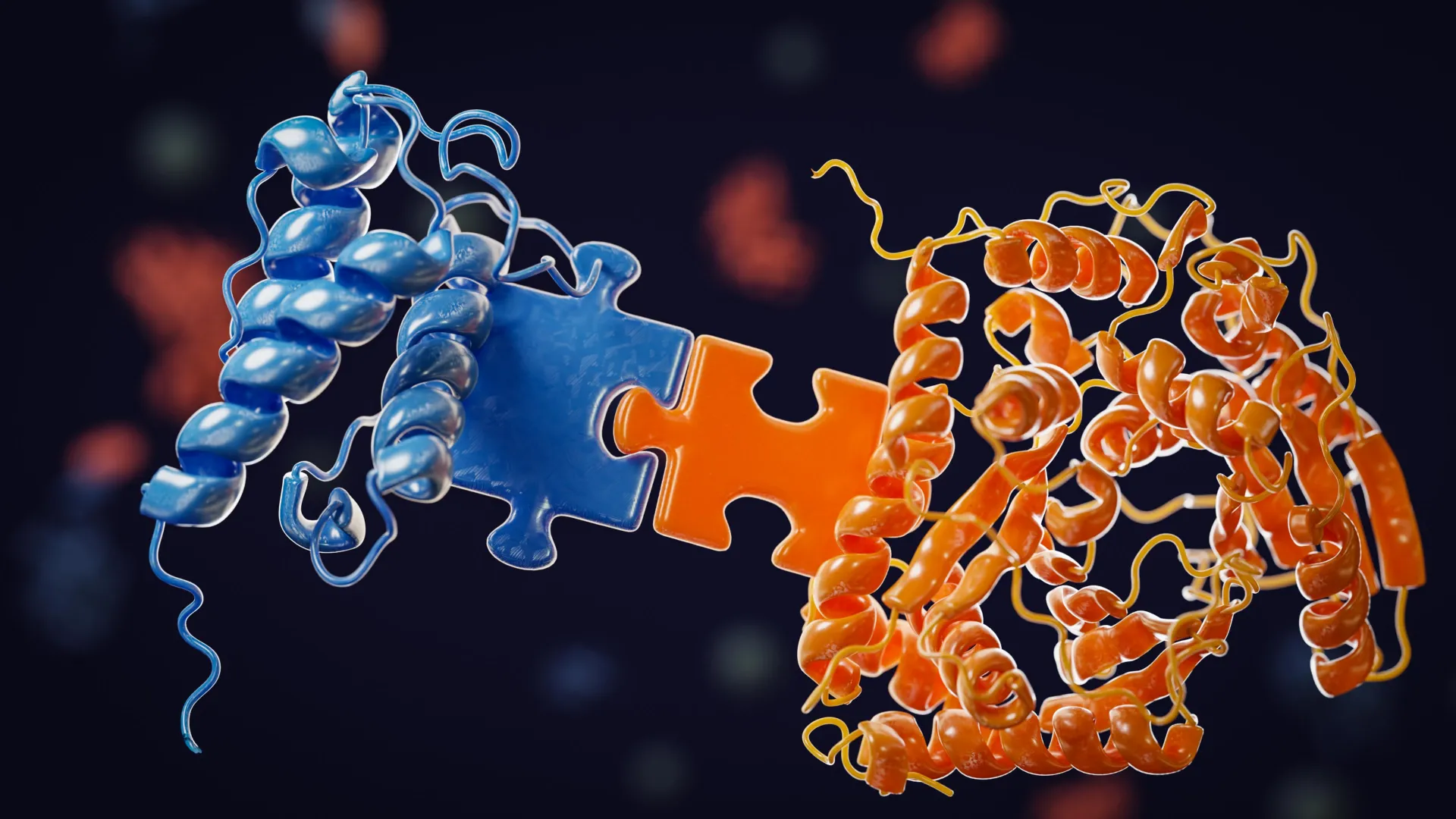
The turning point came when the team identified "docking domains." These small molecular regions act as physical connectors between the core drug-building machinery and the enzymes responsible for adding specific chemical components. The researchers discovered that these docking domains share a conserved connection point, allowing them to dock with multiple, different enzyme partners. This flexibility is the "secret sauce" that allows the bacteria to produce a variety of related molecules while maintaining the high precision required for the drug to remain active against cancer cells.
Supporting Data: The Anatomy of an Assembly Line
The efficiency of this system lies in its modularity. Inside the bacterial cell, the PKS-NRPS machinery operates much like an automated factory.
- The Core Scaffold: The PKS machinery builds the fundamental backbone of the depsipeptide.
- The Molecular Switch: The docking domains facilitate the attachment of auxiliary enzymes. Because these domains are "promiscuous"—meaning they can connect to several different enzyme variants—the bacterial cell can swap components in and out of the production line.
- The Result: The cell produces a "family" of related compounds rather than just one. This natural diversity is the bacterium’s way of adapting to its environment, but for humans, it represents a library of potential drug candidates with slightly different chemical properties.
By identifying the specific gene clusters responsible for this, the researchers have confirmed that these pathways likely evolved through gene duplication and recombination, a process that allowed bacteria to refine their drug-making capabilities over millions of years.
Official Responses and Strategic Implications
The implications of this discovery are profound, particularly for the future of synthetic biology and personalized medicine. By understanding the "evolutionary logic" of these bacterial factories, scientists are no longer limited to the compounds that bacteria produce by chance.
Prof. Greg Challis, Monash Warwick Alliance Professor of Sustainable Chemistry at the University of Warwick and Monash University, emphasizes that the discovery changes the paradigm of drug development.
"This research gives us a blueprint to do what nature does, but better and faster," says Prof. Challis. "By reverse-engineering nature’s evolutionary logic, we can now design synthetic pathways that generate new anti-cancer drug candidates with properties optimized for clinical use, such as superior potency, improved selectivity, and fewer side effects."
The team’s immediate goal is to establish an "expanded library" of candidates. If researchers can "program" these bacterial factories to incorporate specific modifications, they can create drugs that are tailored to hit specific cancer cell receptors more effectively than current standard-of-care treatments.
Why This Matters: The Future of Cancer Therapy
Current cancer treatments, particularly HDAC inhibitors like Romidepsin, are effective but often carry significant side effects because they impact both healthy and cancerous cells. The ability to "fine-tune" the chemical structure of these drugs through engineered biosynthesis could lead to a new generation of "smarter" therapeutics.
1. Enhanced Potency and Selectivity
By using the docking domain blueprint, scientists can create variants of known drugs that bind more tightly to cancer-specific proteins, potentially allowing for lower doses and reduced toxicity.
2. Overcoming Drug Resistance
Cancer cells are notoriously good at evolving resistance to standard therapies. By having a "library" of drug variants produced through this new synthetic method, researchers can rapidly iterate on drug structures, staying one step ahead of the cancer’s defensive mutations.
3. Accelerated Development Cycles
Traditionally, synthesizing complex molecules in a lab is an expensive, slow, and labor-intensive process. By hijacking the natural efficiency of bacterial machinery, the production of these complex compounds could become faster and more sustainable.
Conclusion: From Mystery to Manufacturing
The discovery of how bacteria coordinate their internal assembly lines marks the end of a decades-long search and the beginning of a new era in pharmaceutical manufacturing. By cracking the code of these molecular docking domains, Dr. Passmore, Prof. Challis, and their colleagues have provided the scientific community with a powerful new toolkit.
As the research moves from the laboratory bench toward potential clinical applications, the focus remains on the immense potential of synthetic biology to solve the most intractable problems in medicine. Nature has spent millions of years perfecting these chemical factories; humanity is now finally learning how to read the manual. With this newfound understanding, the quest to develop more effective, less toxic, and highly specialized cancer treatments has taken a monumental leap forward.