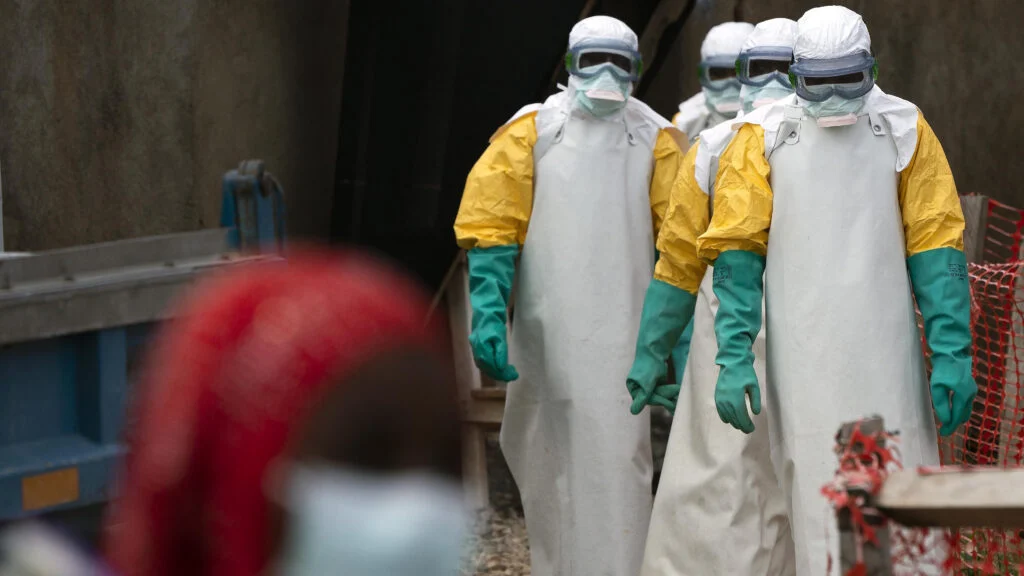
KINSHASA, DR CONGO — Africa’s public health infrastructure is once again on high alert as the Democratic Republic of Congo (DRC) grapples with a fresh outbreak of the Ebola virus. The emergence of the disease in the remote Ituri province has triggered an urgent cross-border mobilization, as health officials scramble to contain a pathogen that is as elusive as it is lethal. With 246 suspected cases and 65 confirmed deaths reported to date, the situation represents a volatile convergence of medical emergency, logistical nightmare, and regional security instability.
The Landscape of the Crisis: Main Facts and Current Situation
The latest surge in Ebola cases is centered primarily within the Mongwalu and Rwampara health zones of Ituri, a rugged and geographically isolated province in eastern Congo. The Africa Centres for Disease Control and Prevention (Africa CDC) confirmed that while the majority of cases remain classified as "suspected," 246 individuals have exhibited symptoms consistent with the virus. Of these, 65 have succumbed to the disease.
The Ebola virus remains one of the world’s most feared pathogens. It is highly contagious, transmitted through direct contact with infected bodily fluids—including blood, vomit, and semen. While the disease is rare, its clinical course is rapid and frequently fatal, causing severe hemorrhagic fever that can overwhelm the human immune system in a matter of days.
Crucially, preliminary laboratory analysis has cast a shadow of uncertainty over the medical response. Sequencing of 20 samples revealed that 13 tested positive for Ebola. However, initial indicators suggest the strain may deviate from the "Ebola Zaire" variant, which has historically dominated outbreaks in the region. This is a significant development, as the primary vaccine currently in the global stockpile—the Ervebo vaccine—is specifically calibrated to combat the Zaire strain. If the circulating virus is a different mutation, the efficacy of existing countermeasures may be diminished, necessitating a rapid shift in pharmaceutical strategy.
A Timeline of the Outbreak
The timeline of this crisis is defined by a slow discovery process followed by rapid regional escalation:
- Initial Detection: Following reports of localized mortality, the World Health Organization (WHO) dispatched a specialized team to Ituri last week to conduct epidemiological surveillance and collect biological samples.
- The Diagnostic Pivot: Initial field tests were inconclusive. However, a rigorous secondary analysis conducted on Thursday definitively confirmed the presence of the Ebola virus.
- The Spillover: By Friday, the crisis crossed international borders. Uganda’s Ministry of Health reported that a Congolese national had died in a Kampala hospital. Posthumous testing confirmed the patient was carrying the virus.
- Containment Measures: Upon the confirmation of the "imported" case, Ugandan authorities immediately initiated contact tracing. All individuals who had direct exposure to the deceased, including high-risk relatives, have been placed under quarantine. The body of the deceased was repatriated to the DRC under strict safety protocols to prevent further transmission.
Supporting Data and Technical Analysis
The logistical reality of fighting Ebola in eastern Congo cannot be overstated. Ituri is situated more than 1,000 kilometers from the capital, Kinshasa, and is defined by mountainous terrain, dense forests, and notoriously poor road networks.
Public health agencies have identified several "high-risk" factors that threaten to accelerate the spread of the virus:
- Mining Mobility: The Mongwalu area is a hub for artisanal mining, which draws transient populations from across the border. This constant flux of people makes contact tracing exceptionally difficult.
- Surveillance Gaps: Despite a robust history of fighting Ebola, the sheer remoteness of the affected health zones means that reporting delays are common.
- Laboratory Limitations: While the DRC has invested in regional diagnostic capabilities, the need to sequence the virus to identify the specific strain adds layers of complexity. Results confirming the exact nature of the current strain are expected within 24 hours, a critical window that will determine whether existing vaccine protocols remain viable.
Dr. Gabriel Nsakala, a professor of public health with extensive experience in the DRC’s past Ebola responses, notes that while the "institutional memory" of health workers is high, the delivery of equipment remains the primary hurdle. "People know what to do," Nsakala stated. "The bottleneck is not knowledge; it is the rapid deployment of resources to the most inaccessible corners of the province."
Official Responses and International Coordination
The international response has been swift but cautious. WHO Director-General Dr. Tedros Adhanom Ghebreyesus has officially signaled the organization’s commitment, announcing an initial injection of $500,000 to bolster the DRC’s response efforts.
"Congo has a strong track record in Ebola response and control," Dr. Tedros noted during a press briefing on Friday. "However, the convergence of this outbreak with ongoing insecurity requires a nuanced and highly coordinated approach."
The Africa CDC has taken the lead in regional diplomacy, convening an emergency coordination meeting involving health ministers and UN representatives from the DRC, Uganda, and South Sudan. The agenda for this summit is comprehensive, focusing on:
- Cross-Border Coordination: Synchronizing health checks at border crossings to prevent further importation of cases.
- Safe and Dignified Burials: Implementing community-based burial protocols that respect local traditions while ensuring that the deceased—who are highly infectious—are handled safely.
- Resource Mobilization: Ensuring a steady supply chain for PPE, laboratory reagents, and potential vaccines if a strain-matched serum becomes available.
Implications: A Nation Under Strain
The emergence of this outbreak carries profound implications for a country already stretched to its limit. The DRC, Africa’s second-largest nation by land mass, is currently navigating a period of acute instability. In the east, the M23 rebel group has occupied several key cities since early last year, creating a humanitarian vacuum. Furthermore, the Allied Democratic Force (ADF)—a militant group with ties to the Islamic State—remains highly active in the very regions currently struggling with the Ebola outbreak.
The intersection of armed conflict and public health crisis creates a "perfect storm." Conflict restricts the movement of medical personnel, complicates the delivery of vaccines, and prevents the implementation of safe, sustainable water and sanitation projects.
Furthermore, history serves as a sobering reminder of the stakes. Since the disease first emerged in the DRC in 1976, the country has faced 17 separate outbreaks. The 2018–2020 outbreak in eastern Congo resulted in over 1,000 deaths, serving as a precursor to the logistical challenges seen today. The 2014–2016 West African epidemic, which claimed over 11,000 lives, remains the global benchmark for the potential devastation an uncontained Ebola outbreak can cause.
As the DRC enters this new phase of uncertainty, the global community will be watching closely. The success of the current response hinges on three factors: the rapid identification of the viral strain, the security of the health zones, and the ability of regional neighbors to maintain a seamless, transparent, and cooperative border policy.
For the people of Ituri, who have already suffered through years of civil unrest, the arrival of Ebola is an additional burden they can ill afford. The next 72 hours will be decisive in determining whether this is a contained event or the beginning of a larger regional catastrophe.