










By Sydney Halleman
Published May 15, 2026
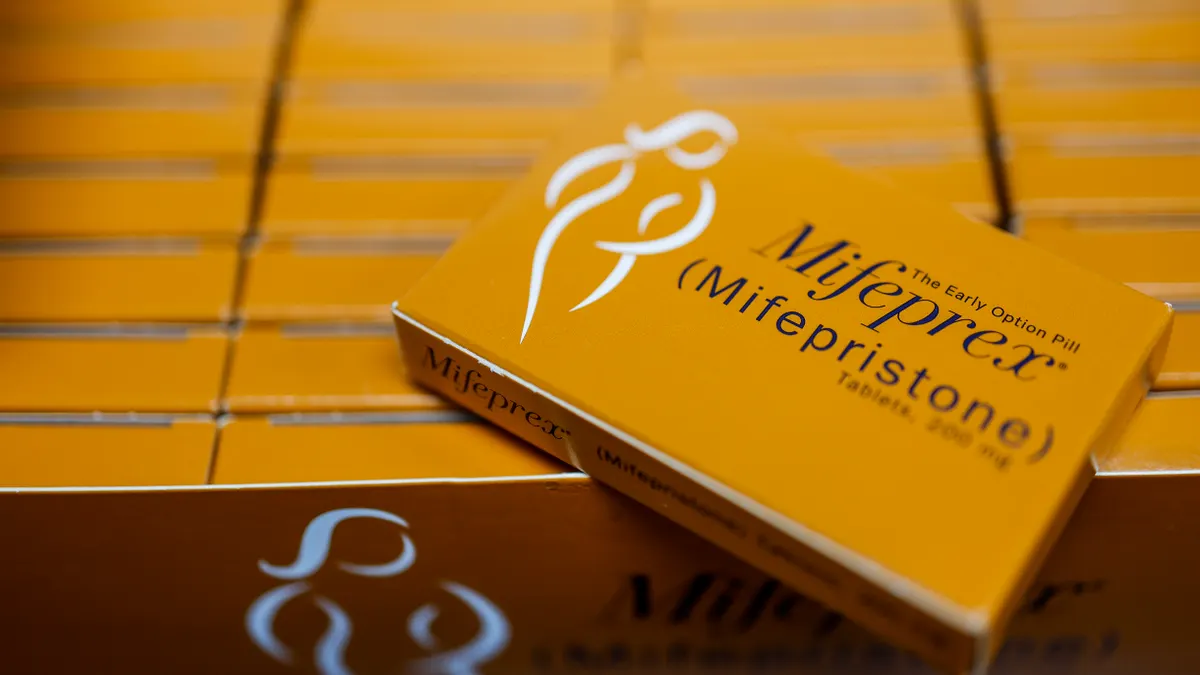
In a pivotal development for reproductive healthcare in the United States, the Supreme Court has issued an emergency order staying a lower court’s decision that would have significantly restricted access to mifepristone, the medication most commonly used for medical abortions. The ruling ensures that, for the time being, patients across the country can continue to access the drug via mail-order services and telehealth consultations, maintaining the status quo while the underlying litigation continues to wind through the federal court system.
The High Court’s decision arrived as a temporary reprieve for pharmaceutical manufacturers and reproductive rights advocates, who have spent months battling legal challenges aimed at rolling back FDA-approved access protocols. While the order provides immediate stability, the legal battle over the future of medication abortion remains far from settled.
The Core Conflict: A Summary of Recent Legal Action
The Supreme Court’s intervention follows a contentious ruling earlier this month by the 5th Circuit Court of Appeals. In a unanimous decision, the appeals court had moved to effectively dismantle the FDA’s 2021 policy changes, which had modernized access to mifepristone by allowing it to be prescribed through telehealth appointments and distributed via mail.
The 5th Circuit’s decision would have forced patients to undergo in-person medical visits to obtain the medication, a requirement that advocates argued would create insurmountable barriers for those living in rural areas, those with limited transportation, or those residing in states where abortion access is already heavily restricted.

By granting the emergency stay, the Supreme Court has blocked the implementation of the 5th Circuit’s mandate until the case is fully adjudicated or the Court decides to take up the matter on its merits. The High Court, adhering to its practice for emergency applications, provided no explanation for its reasoning, leaving the broader legal question—the authority of the FDA to regulate the distribution of medication—unresolved for now.
A Chronology of the Mifepristone Litigation
The current legal standoff is the latest chapter in a multi-year campaign to restrict abortion access following the 2022 overturning of Roe v. Wade.
- 2021: The FDA, responding to the exigencies of the COVID-19 pandemic and years of clinical data, officially removed the "in-person dispensing" requirement for mifepristone, allowing for mail-order delivery.
- October 2025: Louisiana Attorney General Liz Murrill initiated a lawsuit against the FDA, arguing that the agency’s flexibilities regarding mifepristone infringed upon state sovereignty and undermined the impact of Louisiana’s near-total abortion ban.
- Early May 2026: The 5th Circuit Court of Appeals ruled in favor of the plaintiffs, citing concerns regarding the FDA’s regulatory process and asserting that federal policy must yield to specific state-level restrictions on abortion access.
- May 2, 2026: Danco Laboratories and GenBioPro, the primary manufacturers of mifepristone, filed an emergency petition with the Supreme Court, warning that the appeals court ruling would trigger "regulatory chaos" and disrupt time-sensitive medical care for millions of Americans.
- May 15, 2026: The Supreme Court issues an emergency stay, effectively pausing the lower court’s order and preserving current access protocols.
Supporting Data: The Prevalence of Medication Abortion
The urgency of the current legal battle is underscored by the shifting landscape of abortion care in the United States. According to recent data from the Guttmacher Institute, medication abortion has become the primary method for terminating pregnancies in the country.
In 2023, medication abortion accounted for approximately 63% of all abortions in the United States, a significant increase from 53% in 2020. This trend reflects both the clinical safety profile of the drug and the increased convenience and privacy afforded by telehealth and mail-order options. Furthermore, the Guttmacher Institute notes that roughly one-fourth of all U.S. abortions now involve a telehealth component.
These figures illustrate the high stakes for the medical community. If the 5th Circuit’s ruling were to be reinstated permanently, it would effectively force a massive restructuring of the abortion care delivery system, potentially overwhelming clinics that lack the capacity to handle a surge in in-person visits.

Official Responses and Judicial Dissents
The Supreme Court’s decision was not unanimous. Justices Clarence Thomas and Samuel Alito issued a sharp dissent, characterizing the stay as a continuation of what they described as a "scheme to undermine" the Court’s previous ruling in Dobbs v. Jackson Women’s Health Organization.
Justice Thomas was particularly scathing in his assessment of the drugmakers’ position. "Applicants are not entitled to a stay of an adverse court order based on lost profits from their criminal enterprise," Thomas wrote, signaling a hardline judicial stance against the manufacturers. Justice Alito echoed these sentiments, arguing that the petitioners failed to demonstrate the level of irreparable harm required to justify an emergency stay.
In contrast, reproductive rights organizations hailed the ruling as a victory for patient health. "While it is good news that, for now, patients can continue to get this safe medication by mail and at pharmacies as they have for more than five years, we all know abortion opponents are continuing their unpopular and baseless attacks," said Julia Kaye, a senior staff attorney for the Reproductive Freedom Project of the American Civil Liberties Union (ACLU).
Implications for the Healthcare Sector and the Trump Administration
The political implications of this case are profound, particularly for the Trump administration, which finds itself in a precarious position. The administration is attempting to balance the demands of a staunchly anti-abortion base with the reality that public opinion polls—such as those from the Pew Research Center—consistently show that a majority of Americans support continued legal access to abortion.
In an unusual legal maneuver, the Trump administration declined to join the drug manufacturers in their emergency petition to the Supreme Court. However, the Department of Justice did defend the FDA in the underlying Louisiana suit, arguing that the state’s case was procedurally flawed because the FDA had already committed to a review of its internal regulations regarding mifepristone. This "middle-of-the-road" strategy appears designed to satisfy conservative critics while avoiding the political fallout of a direct, wholesale assault on FDA regulatory authority.

For the healthcare industry, the "regulatory chaos" cited by Danco and GenBioPro remains a genuine threat. Healthcare providers, pharmacists, and clinic administrators are currently operating in a state of high uncertainty. Any future ruling that forces a sudden change in prescribing protocols would likely lead to severe disruptions in the supply chain and could leave thousands of patients in the middle of a treatment cycle without access to their prescribed medication.
Conclusion: A Precarious Status Quo
As of mid-May 2026, the Supreme Court’s order provides a temporary floor for the legality of mail-order mifepristone. However, the legal environment remains highly volatile. With the 5th Circuit’s underlying ruling still active in the lower courts, the battle is expected to move toward a more substantive hearing.
For now, the focus shifts to how the FDA will proceed with its promised regulatory review and whether the Supreme Court will eventually be forced to issue a definitive ruling on the scope of the FDA’s authority in the face of state-level abortion restrictions. Until then, the millions of Americans who rely on medication abortion remain in a legal holding pattern, their access to care contingent on the evolving, and often unpredictable, decisions of the federal judiciary.