





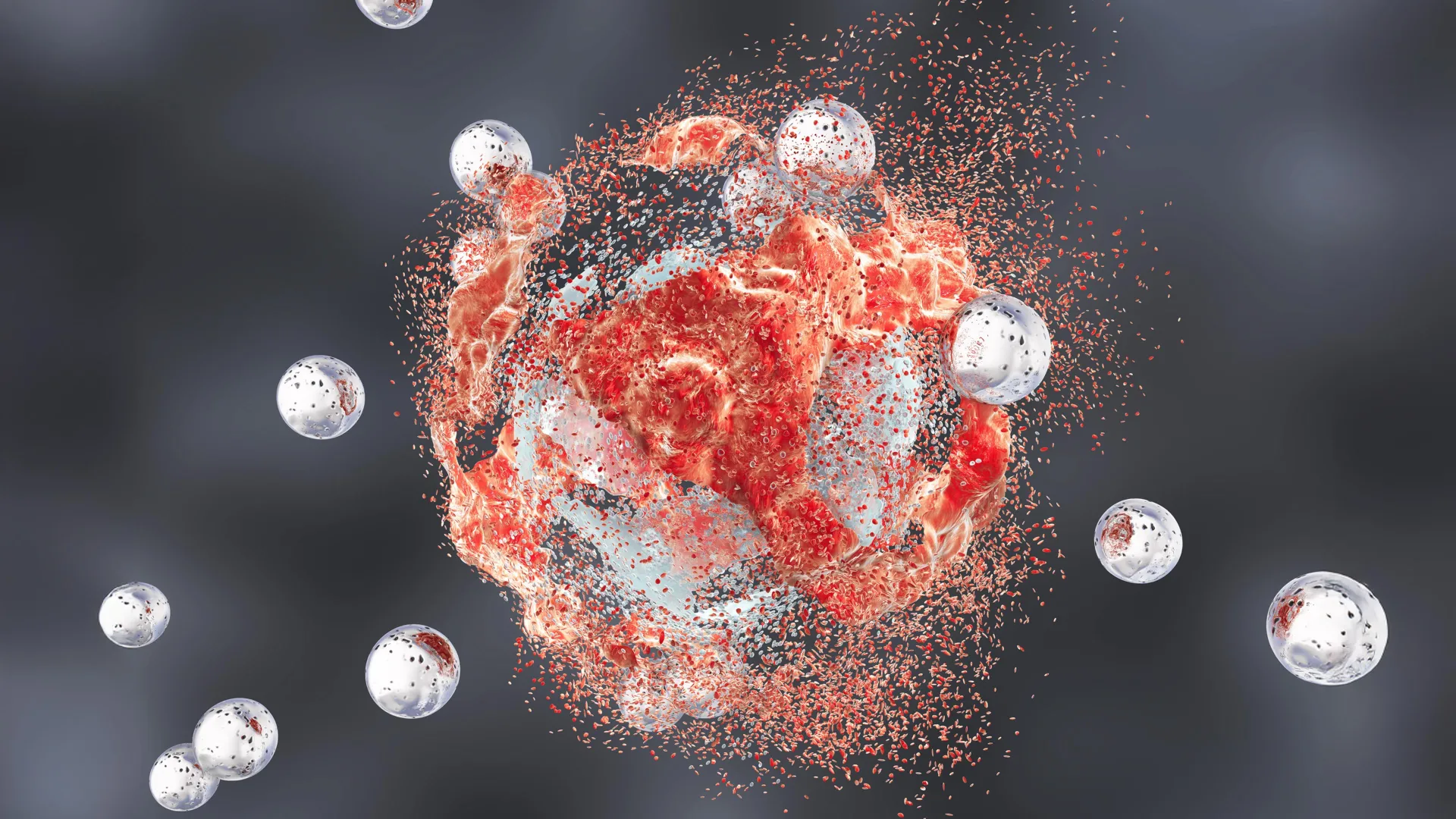
In the ongoing battle against aggressive prostate cancer, researchers at Weill Cornell Medicine and the Cornell Duffield College of Engineering have unveiled a groundbreaking therapeutic approach that could redefine the clinical landscape. By leveraging ultrasmall silica nanoparticles—originally designed for medical imaging—scientists have demonstrated a dual-action mechanism that simultaneously triggers the self-destruction of tumor cells and revitalizes the body’s dormant immune response.
The preclinical study, published in the June 15 issue of Cancer Research, offers a compelling vision for future oncological care: a "smart" delivery system that ignores healthy tissue while turning "cold," immune-resistant tumors into "hot," immune-active targets.
The Genesis of a Multimodal Weapon
The nanoparticles at the center of this discovery, known as "Cornell Prime dots" or C’ dots, are composed of amorphous silica—a naturally occurring form of silicon dioxide found in various food sources and the fossilized remains of microscopic marine organisms.
For years, these particles were primarily utilized as advanced diagnostic tools. Their small size and fluorescent core made them ideal for image-guided surgery, allowing surgeons to visualize tumor margins with unprecedented precision. However, as the research team—led by Dr. Michelle Bradbury and Dr. Ulrich Wiesner—delved deeper into the biological interactions of these particles, they uncovered a hidden therapeutic potential. The researchers found that C’ dots possess an intrinsic ability to selectively accumulate in tumor tissues, where they initiate a complex, multi-pronged attack.
Chronology of Discovery: From Imaging to Intervention
The development of this technology represents the culmination of a long-standing interdisciplinary collaboration between the laboratory of Dr. Bradbury, an expert in radiology and molecular imaging, and the laboratory of Dr. Wiesner, a pioneer in materials science and engineering.
- Initial Development: The C’ dots were first engineered to improve the clarity of medical imaging, successfully advancing to late-stage clinical trials for surgical guidance.
- The Serendipitous Finding: During routine testing, the team observed that these particles were not merely passive observers; they exerted a measurable, inhibitory effect on cancer cells.
- Mechanism Elucidation: Further investigation revealed that the particles could selectively damage malignant cells while leaving surrounding healthy cells largely intact, a discovery that shifted the research focus from diagnostic utility to therapeutic efficacy.
- Validation in Mouse Models: In recent studies, the team applied these particles to mouse models suffering from aggressive prostate cancer. The results were striking: not only did the particles disrupt tumor growth, but they also significantly increased the survival rate of the subjects when paired with existing immunotherapies.
The Science of Destruction: Ferroptosis and Immune Remodeling
The therapeutic power of the C’ dots lies in their ability to trigger a specialized form of cell death known as "ferroptosis." Unlike traditional apoptosis, which is often bypassed by resistant cancer cells, ferroptosis is driven by intense oxidative stress.
The silica nanoparticles act as carriers, gathering positively charged iron ions from the bloodstream and transporting them directly into the heart of the tumor. Once inside, these iron ions catalyze the oxidation of fatty molecules within the cell membranes. This process overwhelms the cell’s internal defenses, causing the membrane to break down and the cell to implode.
However, the innovation does not stop at direct cellular destruction. The researchers observed that the presence of the particles fundamentally altered the tumor microenvironment. Prostate tumors are notoriously "cold," meaning they often evade detection by the immune system. The C’ dots appear to "heat up" this environment, prompting a shift in the behavior of macrophages and T cells. These immune cells, previously suppressed or inactive, were observed transforming into potent, cancer-fighting agents. By disrupting the metabolic processes that allow tumors to hide, the nanoparticles effectively "unmask" the malignancy, making it susceptible to the body’s natural defenses.
Supporting Data: Survival Outcomes
The efficacy of the C’ dots was put to the test in rigorous survival studies. The researchers utilized mice with aggressive, late-stage prostate cancer to determine if the treatment could provide a durable response.
- Single-Agent Efficacy: When administered alone, the C’ dots provided a modest, yet significant, improvement in survival compared to the control group.
- The Power of Combination: The most dramatic results emerged when the nanoparticles were paired with an immune checkpoint blockade—a type of therapy designed to release the "brakes" on the immune system. In these cohorts, researchers observed complete or near-complete tumor remissions in 40% of the subjects, with some experiencing indefinite survival.
- Triple-Therapy Enhancement: When the team added a third agent—a CSF-1R blockade, which targets tumor-associated macrophages—the rate of complete remission climbed to 50%.
These findings are particularly significant given the historical difficulty in achieving durable, long-term responses in prostate cancer patients using standard immunotherapy alone.
Official Responses and Expert Perspectives
The research team remains cautiously optimistic about the potential to translate these preclinical findings into human clinical trials.
"We’re very encouraged by these results; a treatment that directly induces tumor-cell death while transforming the immune microenvironment, as this does, would represent a new clinical paradigm," said Dr. Michelle Bradbury, director of the Molecular Imaging Innovations Institute at Weill Cornell Medicine.
Dr. Ulrich Wiesner expressed his astonishment at the breadth of the particles’ impact. "It seems unreal—how is it possible that rather than a single pathway, we see all these effects happening simultaneously and only in tumors and not in healthy tissues?" Wiesner noted. He further speculated that the biological compatibility of silica, given its prevalence in the natural environment and human diet, may be the secret to its unique, low-toxicity profile.
Dr. Jedd Wolchok, director of the Parker Institute for Cancer Immunotherapy at Weill Cornell, emphasized the importance of the study’s findings for future immunotherapy development. "One of the most intriguing aspects of this work is the convergence of direct tumor cell killing with broad immune remodeling," he stated. "By creating conditions that support a more effective antitumor immune response, these particles may help unlock the full potential of immunotherapy in prostate cancer."
Implications for Future Cancer Therapy
The implications of this research extend far beyond prostate cancer. If the dual-action mechanism of C’ dots holds true in human clinical trials, it could signify the birth of a new class of "theranostic" agents—treatments that simultaneously diagnose and treat disease.
By targeting PSMA (Prostate-Specific Membrane Antigen), the particles ensure a high degree of specificity. The researchers noted that while some accumulation occurred in the spleen, there were no systemic signs of toxicity, suggesting a favorable safety profile for human application.
Challenges Ahead
While the results are promising, the transition from murine models to human patients is complex. Future research must address:
- Scaling and Manufacturing: Ensuring that the production of these nanoparticles can be standardized for large-scale clinical use.
- Long-term Safety: While short-term toxicity was negligible, longitudinal studies will be required to assess the long-term impact of silica accumulation in human organ systems.
- Broadening the Scope: The team is currently investigating whether this "ferroptosis-triggering" platform can be adapted to treat other types of solid tumors, potentially opening doors for treating cancers that are currently resistant to chemotherapy and radiation.
Conclusion
The collaboration between Weill Cornell Medicine and Cornell University represents a milestone in nanomedicine. By viewing the tumor not just as a cluster of cells to be killed, but as an ecosystem to be reshaped, the research team has moved closer to a therapeutic "holy grail": a treatment that is both highly targeted and systemically beneficial. As the team prepares for the next phase of development, the medical community remains watchful, hopeful that these tiny particles may indeed hold a massive impact on the future of cancer survival.
The research was supported by the Department of Defense (PC220534), the National Cancer Institute, the National Institutes of Health, and the Parker Institute for Cancer Immunotherapy. Drs. Bradbury and Wiesner are listed as inventors on patents related to this nanoparticle technology.