Empowering a Generation: MacKenzie Scott’s $20M Investment and the Rising Tide of Youth Mental Health Advocacy
on
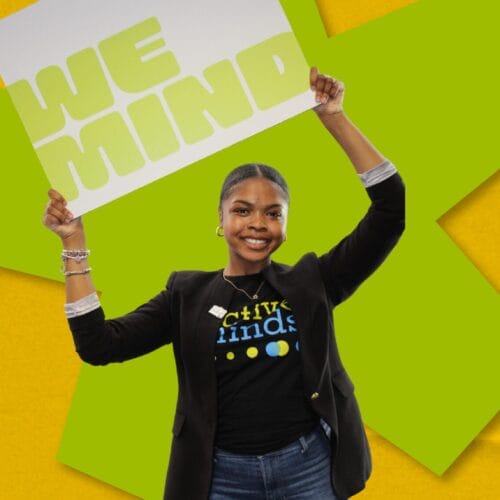
The landscape of American youth mental health is currently navigating a period of profound contradiction. While philanthropic investment is reaching record-breaking heights and youth-led advocacy is gaining unprecedented access to the halls of power, federal support systems are facing controversial retrenchments. At the center of this evolution is Active Minds, the nation’s premier nonprofit dedicated to mobilizing young adults as the primary architects of mental health culture change.
This comprehensive report examines the recent $20 million transformative gift from philanthropist MacKenzie Scott, the legislative push for the Campus Lifeline Act, and the urgent response to the closure of specialized federal crisis services for LGBTQ+ youth.
Main Facts: A Transformative Investment in Youth Leadership
In a move that signals a paradigm shift in how the private sector views mental health, philanthropist MacKenzie Scott recently announced a $20 million unrestricted gift to Active Minds. This contribution represents the largest single donation in the organization’s history and follows a previous $4 million gift in 2021. The "unrestricted" nature of the gift is particularly significant, allowing the organization to pivot quickly toward systemic solutions rather than being tethered to rigid, pre-defined project cycles.
Active Minds has already outlined a multi-year strategy to utilize these funds. The focus is centered on scaling a national infrastructure that prioritizes four pillars:
Community Building: Strengthening peer-to-peer networks.
Youth Mobilization: Training the next generation of leaders.
Funding Innovation: Investing directly in youth-led solutions.
Systemic Change: Translating the lived experiences of youth into federal and state policy.
However, this financial windfall arrives at a moment of crisis. Simultaneously, the 988 Suicide & Crisis Lifeline’s LGBTQ+ Youth Specialized Services program has been shuttered. This federal decision has removed the "Press 3" option, which previously connected LGBTQ+ callers with affirming, specialized providers. Since its inception in 2022, this subnetwork had served approximately 1.5 million young people, highlighting a growing friction between grassroots momentum and federal policy shifts.
Chronology: From Personal Tragedy to National Movement
The trajectory of Active Minds and the broader youth mental health movement is defined by several key milestones over the last two decades:
2001: The Catalyst. Alison Malmon, then a junior at the University of Pennsylvania, founded Active Minds following the suicide of her only sibling, Brian. The organization was born from the realization that student-to-student connection was the missing link in campus mental health.
2001–2020: Scaling the Chapter Model. Active Minds expanded from a single campus to a nationwide network, eventually reaching over 4.5 million youth and young adults through peer-led programs and education.
2021: Initial Philanthropic Surge. MacKenzie Scott issued her first $4 million gift, validating the organization’s peer-based model on a national stage.
September 2022: Federal Expansion. The 988 Lifeline launched specialized services for LGBTQ+ youth and veterans, recognizing that these populations face disproportionately high risks of suicide.
May 2025/2026: Legislative Mobilization. Active Minds advocates converged on Capitol Hill to champion the Campus Lifeline Act, a bipartisan bill designed to codify mental health resources into the student experience.
Present Day: The $20 Million Inflection Point. The announcement of Scott’s historic gift provides the capital necessary to sustain advocacy efforts in the wake of the 988 specialized service closure.
Supporting Data: The Magnitude of the Mental Health Challenge
The need for sustained investment is underscored by sobering statistics regarding youth well-being in the United States. According to data provided by Active Minds and The Trevor Project:
At-Risk Populations: LGBTQ+ youth are four times more likely to attempt suicide than their peers. The specialized 988 subnetwork was a response to this data, serving 1.5 million callers in less than three years before its closure.
The Reach of Advocacy: Active Minds currently impacts 4.5 million young adults. With the new $20 million investment, the organization aims to double its "Mental Health Advocacy Academy" and "Advocacy Institute" enrollments, which provide high school and college students with professional organizing skills.
Legislative Efficacy: The Campus Lifeline Act seeks to mandate the inclusion of the 988 Lifeline on the back of every newly issued student ID card across the country. Advocates argue this "zero-barrier" access is essential, as students in crisis are less likely to search for resources if they are not immediately visible.
Grassroots Fundraising: Beyond large-scale philanthropy, individual advocates like Jodi Johnson have demonstrated the power of community support, with Johnson raising over $3,500 through endurance athletics to support mental health treatment for Black and Caribbean American men.
Official Responses: Leaders and Advocates Speak Out
The reaction to these developments has been a mix of profound gratitude for private support and sharp criticism of federal policy changes.
Alison Malmon, Founder & Executive Director of Active Minds, described the Scott gift as a "defining moment." She stated:
"This gift allows us to make bold, long-envisioned investments in youth leadership and youth-led solutions to champion a new era of mental health. We are profoundly grateful to MacKenzie Scott for her trust in our mission."
Conversely, the closure of the 988 LGBTQ+ subnetwork drew a sharp rebuke from The Trevor Project. In a formal statement, the organization emphasized that suicide prevention should transcend political shifts:
"The loss of this program will be devastating. These services are based on risk levels, not identities. By getting rid of highly trained counselors with specialized skills, the Administration is putting these young Americans’ lives at risk."
On Capitol Hill, youth advocates are using their personal narratives to influence legislators. Ayaan Moledina, a 17-year-old advocate from Texas, told House staffers:
"You can’t make effective mental health policy for young people without young people. Students are the ones closest to the problem."
Amy Senkerik, a student at Arizona State University, echoed this sentiment, noting that her successful push to put 988 on digital IDs proved that "when we make help easier to find, we give people a better chance."
Implications: A New Era of Systemic Advocacy
The convergence of record-breaking philanthropy and the removal of federal lifelines marks a transition from "awareness" to "action-oriented" advocacy. The implications for the future of mental health in America are three-fold:
1. The Professionalization of Youth Advocacy
With the expansion of the Active Minds Mental Health Advocacy Academy and Institute, youth advocacy is no longer just about "sharing stories." It is becoming a professionalized pipeline. Leaders like Rohan Sajita, who distributed 5,000 mental health kits to underserved students, and Bria Murph, who is revamping campus spaces for social connectedness, represent a new class of "social entrepreneurs" in the mental health space.
2. The Shift Toward "Zero-Barrier" Resources
The Campus Lifeline Act represents a shift in strategy. Rather than asking students to seek out help, advocates are working to integrate help into the tools students already use—specifically student IDs. This "passive advocacy" ensures that the 988 number is present during a student’s most vulnerable moments, potentially saving lives through sheer proximity.
3. The Vital Role of Private Philanthropy in Filling Public Gaps
The MacKenzie Scott gift highlights a growing trend where private donors are stepping in to provide the "national infrastructure" that federal agencies may struggle to maintain due to political volatility. The $20 million will act as a hedge against policy shifts, ensuring that even when federal programs like the 988 LGBTQ+ subnetwork are cut, organizations like Active Minds and The Trevor Project have the capacity to maintain their own independent crisis services.
4. Reimagining the "Safety Net"
The upcoming Hill Day and Conference 2026 will serve as a litmus test for this new era. With over 200 youth advocates set to meet directly with legislators, the goal is to prove that youth are not just consumers of mental health services, but the most effective designers of them. As Varsha Penumalee, a member of the Student Advisory Committee, noted, the objective is to "drive systemic change" that addresses health inequities for marginalized communities.
Conclusion
The $20 million gift from MacKenzie Scott is more than a financial contribution; it is a mandate for youth to lead. As federal specialized services face uncertainty, the burden of care and advocacy is shifting toward peer-led, grassroots organizations. Through the Campus Lifeline Act and the professionalization of youth leadership, Active Minds is attempting to build a future where mental health support is not a luxury or a political variable, but a fundamental, visible, and accessible part of the American experience.