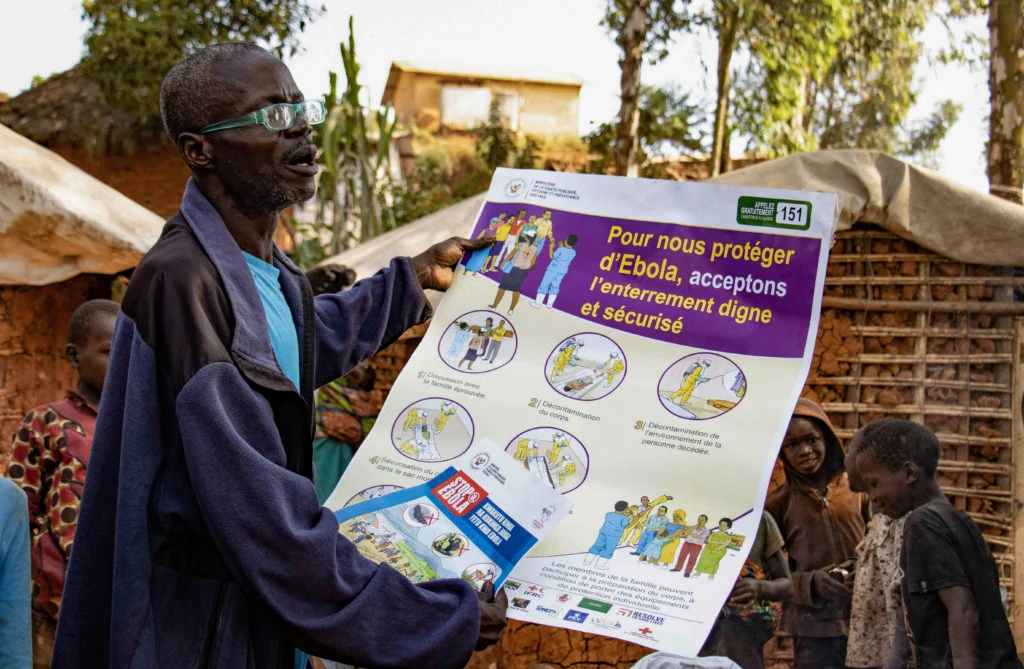
KINSHASA, Congo — The Democratic Republic of the Congo (DRC) is facing a daunting public health emergency as the latest Ebola outbreak continues to tighten its grip on the nation’s volatile eastern provinces. According to the latest data released by the Congolese Ministry of Health via the social platform X, the number of confirmed cases has surged to 782, with a death toll reaching 181.
While these figures represent a significant escalation, health experts warn that the true scale of the epidemic is likely much higher. The outbreak, which was officially identified on May 15, is believed to have been circulating in remote communities for weeks before detection. The lag in initial identification, coupled with a plummeting contact-tracing coverage rate—which has fallen to a concerning 56%—suggests that the virus is outpacing the current containment efforts.
The Bundibugyo Challenge: An Uncharted Path
Unlike the majority of the 16 previous Ebola outbreaks in the DRC, which were driven by the Zaire ebolavirus—a strain for which effective vaccines and therapeutics have been developed—this current crisis is caused by the Bundibugyo virus. This rare and lethal variant presents a unique set of challenges for international aid organizations and local health authorities.
Crucially, there are currently no approved vaccines or standardized medical treatments for the Bundibugyo strain. This medical vacuum leaves healthcare providers reliant on supportive care, such as hydration and symptom management, rather than the targeted antiviral protocols that have helped mitigate the mortality rates of past outbreaks. With 56 recoveries documented, the current case fatality rate stands at 23%, a figure that health officials fear could rise as the disease penetrates deeper into regions with limited access to sophisticated medical infrastructure.
A Chronology of the Outbreak
The emergence of this strain has followed a complex and frustrating timeline for epidemiologists.
- Mid-April: Retrospective analysis suggests that the virus began circulating in isolated, dense forest regions in early spring, largely unnoticed by central health authorities.
- May 15: The Congolese Ministry of Health officially confirms the outbreak, identifying the pathogen as the Bundibugyo virus.
- Late May – Early June: The virus spreads rapidly from the epicenter in Ituri to neighboring North Kivu and South Kivu provinces.
- Mid-June: The first cases are officially recorded crossing international borders into Uganda, triggering heightened surveillance protocols across the Great Lakes region.
- Present Day: Authorities struggle to maintain contact tracing as displacement and regional insecurity hinder the mobility of medical response teams.
Supporting Data: The Geography of Disruption
The outbreak is heavily concentrated in the Ituri province, which currently accounts for more than 90% of all confirmed cases. However, the geography of the crisis extends far beyond a single province. The intersection of the outbreak with ongoing humanitarian disasters has created a "perfect storm" for viral transmission.
The Displacement Crisis
According to data from the United Nations humanitarian office, nearly one million people have been displaced in the Ituri region due to protracted armed conflict. This mass movement of people—driven by the need to flee violence—is directly undermining the "ring vaccination" and contact-tracing strategies that have been successful in previous outbreaks. As thousands of people move through dense forests and across poorly maintained road networks, tracing chains of transmission has become a logistical impossibility.
The Artisanal Mining Factor
Adding to the complexity is the region’s economic reality. Thousands of artisanal miners move frequently between remote, informal work sites. Because these sites are often located in deep forest areas that can take days to reach, medical personnel are often unable to screen individuals before they move on to the next site, inadvertently carrying the virus into new, untouched communities.
Official Responses and Tactical Hurdles
The response to this outbreak has been fraught with structural and social obstacles. In addition to the lack of a vaccine, the humanitarian mission is facing an "infodemic"—a wave of skepticism and misinformation regarding the origin and treatment of the virus.
Resistance on the Ground
Reports indicate that health workers are increasingly facing hostility from local residents. Some community members, fueled by long-standing distrust of government intervention and international actors, have actively obstructed medical teams. In several hot spots, armed conflict between rival militias has forced aid organizations to pause operations entirely, leaving local populations vulnerable and without medical oversight.
International Tensions and Regional Policy
The crisis has also triggered diplomatic friction. Last month, U.S. officials announced plans to manage potential exposures among American personnel by utilizing a facility at the Laikipia Air Base in Kenya. The proposal, which involved a 50-bed quarantine facility, was intended to bypass the risks of repatriating infected individuals. However, the plan faced immediate backlash, culminating in public protests and legal challenges that eventually forced the Kenyan courts to halt the project. This incident underscores the heightened sensitivity surrounding Ebola, where fear often outpaces medical reality, even among international neighbors.
Implications for the Future
The current situation in the DRC serves as a grim reminder of the fragility of global health security. The convergence of three major factors—the lack of a targeted vaccine for the Bundibugyo strain, the destabilizing effect of mass displacement, and the breakdown of public trust—has created a scenario that experts describe as "highly volatile."
If the containment strategies cannot be stabilized, the implications are two-fold. First, the mortality rate is expected to climb as the virus reaches more vulnerable populations who have no access to the limited supportive care available. Second, the regional spread into Uganda and potentially further into East Africa poses a threat to international trade, cross-border stability, and the health security of the entire continent.
As the Congolese Ministry of Health continues its uphill battle, the international community faces pressure to provide not just financial aid, but to accelerate research into vaccines specifically targeting the Bundibugyo strain. Without a scientific breakthrough, the containment of this virus will rely entirely on the boots-on-the-ground efforts of health workers—a group that remains dangerously under-protected, under-resourced, and increasingly targeted by the very conflicts they are trying to navigate.
The coming weeks will be critical. The effectiveness of the next phase of the response will be measured not just in the number of cases identified, but in the ability of the government to restore the trust of the local population and secure the humanitarian corridors necessary to deliver life-saving care. For now, the people of eastern Congo remain caught between the shadow of an unpredictable virus and the chaos of an ongoing humanitarian crisis.