







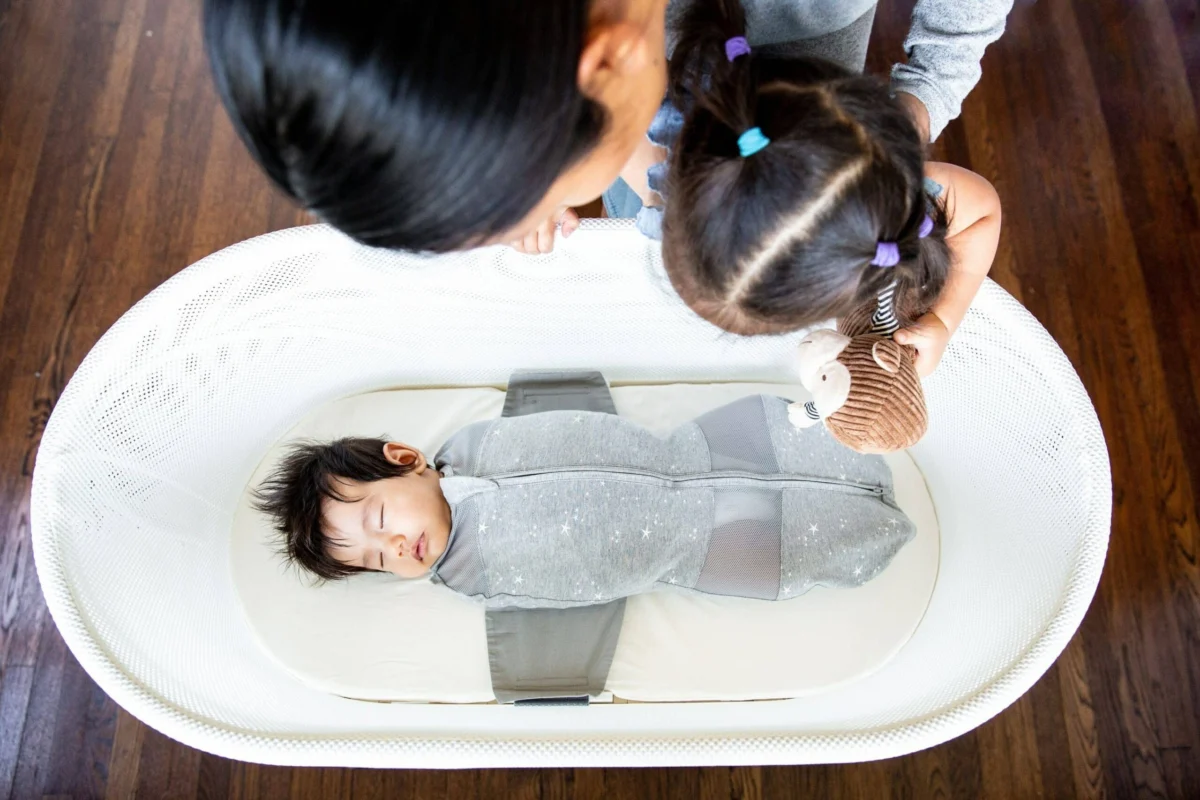
The landscape of infant sleep safety faced a significant regulatory shakeup this June as the U.S. Food and Drug Administration (FDA) issued a formal warning letter to Happiest Baby, Inc., the manufacturer behind the widely popular SNOO Smart Sleeper. The letter, dated June 15, 2026, details a series of critical compliance failures, ranging from the unauthorized introduction of new product dimensions to systemic shortcomings in quality control and mandatory safety reporting.
For many parents, the SNOO has been a household staple, marketed as a high-tech solution to improve infant sleep through its patented motion-responsive technology. However, the FDA’s findings suggest that in its pursuit of market expansion, the company may have bypassed essential safety protocols, potentially jeopardizing the health of its most vulnerable users.
Main Facts: The Nature of the Violations
The FDA’s investigation, which precipitated the warning letter, centered on two primary areas of concern: the unauthorized modification of device components and the failure to adhere to federal quality system regulations (QSR).
Unauthorized Product Expansion
The SNOO Smart Sleeper was originally cleared by the FDA through the de novo pathway for home use, specifically for infants up to six months old. That authorization was contingent upon the use of three specific sleep sack sizes: small, medium, and large. The FDA discovered that Happiest Baby introduced "X-Small" (4–8 lbs) and "X-Large" (23–25 lbs) sleep sacks without the requisite premarket notification (510(k)).
The agency argues that these size variations are not merely aesthetic; they are fundamental alterations to the device’s risk profile. The X-Small size carries a risk of compressing the infant’s chest, which could inhibit proper diaphragmatic movement. Conversely, the X-Large size creates a risk of fabric migration, where the material could ride up and obstruct an infant’s mouth or neck, creating a suffocation hazard.
The "Hospital Bundle" Controversy
Perhaps more concerning to regulators is the company’s push into clinical environments. Happiest Baby marketed a "SNOO Hospital Bundle," intended for use in neonatal intensive care units (NICUs) and other clinical settings. The FDA asserts that this transition—from a home-use device to a hospital-use device—represents a "major change in intended use."
The hospital environment introduces variables that the original home-use device was never tested for, such as the use of harsh, hospital-grade chemical cleaners that can degrade plastic and fabric components. Furthermore, the inclusion of a wheeled mobility cart, which allows for the transport of the device, introduces new mechanical risks, specifically regarding tipping or rolling, which have not been subjected to the rigorous safety testing required for clinical-grade medical equipment.
Chronology of Regulatory Friction
The path to this warning letter reflects a period of rapid growth for Happiest Baby, which appears to have outpaced its regulatory compliance infrastructure.
- Initial Authorization: The SNOO Smart Sleeper receives FDA de novo approval as an infant sleep system for home use, with strict labeling on approved accessories.
- Expansion Phase: Seeking to serve a broader demographic, Happiest Baby develops and distributes X-Small and X-Large sleep sacks and begins marketing the "Hospital Bundle."
- Inspection Window (Early 2026): FDA investigators conduct a routine, albeit thorough, inspection of the company’s manufacturing and administrative facilities.
- Identification of Failures: Investigators identify that the company has been bundling these unauthorized items without notifying the agency. They also uncover systemic flaws in how the company manages customer complaints and reporting of safety incidents.
- June 15, 2026: The FDA formally issues the warning letter, putting the company on notice and providing a public record of the identified violations.
Supporting Data: Quality System Failures
Beyond the physical modifications to the product, the FDA highlighted significant lapses in the company’s Quality Management System (QMS). According to 21 CFR Part 820, medical device manufacturers are legally obligated to maintain a robust system for tracking and responding to product complaints.
The Aggregation Problem
Investigators found that Happiest Baby had been grouping distinct customer complaints into broader categories. For instance, reports of mold developing on mattresses were bundled with reports of sleep sacks being sized incorrectly. By failing to evaluate each report as an individual data point, the company effectively obscured potential trends—such as a systemic manufacturing flaw—that would have triggered a mandatory investigation.
Reporting and Contamination Risks
The warning letter also detailed a failure to submit timely reports regarding the company’s refurbishing process. The firm had initiated a correction plan to address stained and soiled refurbished SNOO devices but failed to report this action to the FDA within the legally mandated 10-day window.
This is not merely a bureaucratic oversight; the FDA emphasizes that contaminated surfaces in a nursery environment are a significant vector for infection. Exposure to bodily fluids or residual bacteria on refurbished units can cause both localized skin infections and systemic health issues in infants, whose immune systems are still developing.
Official Responses and Next Steps
As of this writing, Happiest Baby, Inc. is under immense pressure to provide a comprehensive written response to the FDA. The agency has demanded a detailed plan outlining how the company intends to:
- Correct Current Violations: This includes the potential recall or re-labeling of the X-Small and X-Large sleep sacks.
- Cease Unapproved Marketing: The immediate halt of the SNOO Hospital Bundle marketing campaign until full clinical-grade clearance is achieved.
- Overhaul Quality Systems: The implementation of a new, granular complaint-handling process that ensures every safety-related incident is investigated independently.
- Prevention of Recurrence: A long-term commitment to regulatory training for company management to ensure that future product expansions adhere to the rigorous standards of the Federal Food, Drug, and Cosmetic Act.
The company has not yet released a public statement detailing the specific timeline for these corrections, but the FDA’s warning letter serves as a final "yellow card." Failure to address these points satisfactorily could lead to more severe consequences, including civil monetary penalties, seizure of inventory, or an injunction prohibiting the sale of the devices.
Implications: The Safety of the "Smart" Nursery
The situation with the SNOO highlights a broader, growing trend in the medical technology industry: the "consumerization" of medical devices. As technology companies enter the pediatric space, there is often a tension between the "move fast and break things" ethos of Silicon Valley and the slow, deliberate, safety-first mandate of federal regulators.
The Risk of "Smart" Features
When a product is marketed as "smart," parents may be lulled into a false sense of security, assuming that the device is inherently safer than a traditional, non-automated crib. However, the SNOO’s case demonstrates that even highly sophisticated algorithms cannot compensate for basic physical design failures. When dimensions are changed, or components are added (like mobility carts), the physical risk to the infant remains the primary concern.
The Burden on Parents
For the thousands of parents who currently own a SNOO, the FDA warning creates a significant dilemma. While the warning letter focuses on manufacturer compliance, it leaves parents asking: Is my child safe?
Medical experts advise parents to adhere strictly to the manufacturer’s original labeling, regardless of the marketing materials that may have accompanied the product. Specifically, parents should ensure they are using only the authorized sizes (Small, Medium, Large) for their child’s weight, and they should avoid using the device in any clinical setting unless it is explicitly cleared for that specific hospital use case.
A Regulatory Wake-up Call
The FDA’s action against Happiest Baby, Inc. should serve as a reminder to the entire infant sleep product industry. The agency’s focus on the "risk profile" of the product indicates that it will no longer accept minor, incremental changes to medical devices as "business as usual." Every change—from the size of a fabric sack to the addition of a wheel—must be backed by clinical evidence that proves it does not increase the risk of injury or death.
As we look toward the future of infant care, the integration of technology into the crib is inevitable. However, as this case demonstrates, that integration must be governed by a rigorous adherence to the law. The safety of the next generation of children depends on the willingness of manufacturers to prioritize regulatory compliance over speed-to-market. For now, the spotlight remains firmly on Happiest Baby to prove that they can meet the high bar set by the FDA and, more importantly, the high bar expected by the parents who trust them with their children’s safety.