









In a landscape defined by rapid technological innovation and evolving healthcare policy, Intuitive Surgical—the undisputed pioneer of robotic-assisted surgery—has delivered a second-quarter financial report that presents a complex narrative. While the company continues to demonstrate robust top-line growth and strong capital equipment demand, it is simultaneously grappling with the tangible, real-world impact of shifting U.S. healthcare economics.
On Thursday, Intuitive reported Q2 revenue of $2.89 billion, representing a 19% increase year-over-year, alongside a net income of $818 million—a 24% leap compared to the same period in 2025. However, despite these impressive fiscal metrics, the company’s stock faced immediate downward pressure, falling 12% to $354.26 in Friday morning trading. The primary catalyst for this investor skepticism was a noticeable deceleration in U.S. procedure growth, a trend that management attributes directly to the expiration of enhanced Affordable Care Act (ACA) premium subsidies.
Main Facts: A Tale of Two Markets
The core of Intuitive’s current challenge lies in the bifurcation between international success and domestic friction. While international markets remain a bright spot with a 20% growth rate in da Vinci procedures, the U.S. market—the company’s historical bedrock—saw growth moderate to 12%.
For a company that has spent two decades defining the robotic surgery market, this deceleration is not merely a statistical anomaly; it is a signal of broader macroeconomic sensitivity. The expiration of enhanced marketplace subsidies at the end of 2025 has altered the financial landscape for millions of Americans. With Congress opting not to extend these federal supports, many patients have seen their coverage shift toward plans with higher deductibles and out-of-pocket costs.
For Intuitive, this translates into a change in patient behavior. As CEO Dave Rosa noted during the earnings call, the softening of procedure volume is most evident in surgeries that are elective or can be deferred. When patients are forced to navigate higher insurance costs, their willingness to schedule non-emergency, robotically assisted procedures appears to be waning.
Chronology of the Quarter
The quarter was defined by a series of strategic maneuvers and market reactions:
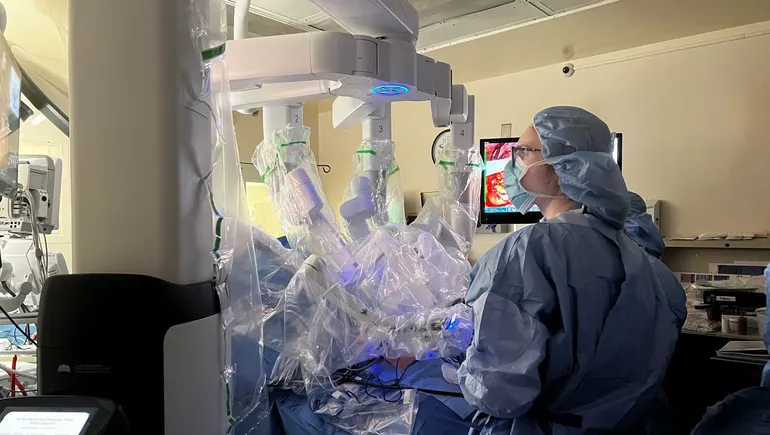
- Early 2026: Intuitive entered the year with high expectations, bolstered by the momentum of its next-generation platform, the da Vinci 5.
- Mid-Quarter: The impact of the expired ACA subsidies began to materialize in clinical settings. Healthcare providers reported that patients were increasingly cautious about scheduling procedures, a sentiment that Intuitive’s leadership began to hear directly from their hospital customers.
- Late Q2: The company solidified its global footprint with regulatory clearance for the da Vinci 5 in India, signaling its commitment to expansion in emerging markets.
- Earnings Day (Thursday): Intuitive released its Q2 results, confirming the divergence between strong capital placements and moderate procedure volume.
- Friday Morning: Investors reacted to the "tricky" outlook, resulting in a significant single-day sell-off of the company’s stock.
Supporting Data: The Numbers Behind the Story
Despite the concerns regarding procedure volume, the data suggests that hospitals remain deeply committed to Intuitive’s ecosystem. The appetite for capital investment has not waned, which provides a critical buffer against the current volatility in procedure counts.
Key Performance Indicators:
- Revenue: $2.89 billion (Up 19% YoY)
- Net Income: $818 million (Up 24% YoY)
- Total da Vinci Placements: 468 (Up from 395 in Q2 2025)
- da Vinci 5 Placements: 246 (Up from 180 in Q2 2025)
The disparity between the 12% growth in U.S. procedures and the continued strong placement of high-end robotic systems indicates that while the patients may be delaying surgery, hospitals are still looking toward the future. The 246 placements of the da Vinci 5 demonstrate that institutions are still prioritizing the acquisition of the latest technology, viewing the current procedure dip as a temporary obstacle rather than a permanent ceiling.
Official Responses and Strategic Pivot
CEO Dave Rosa was candid during the investor call regarding the "softened" U.S. demand. "In our customer conversations, some have said that changes in patient coverage and premium dynamics may be affecting when patients seek care and move forward with treatment," Rosa explained.
However, the company remains optimistic about the remainder of the year. Intuitive has reiterated its forecast for worldwide 2026 da Vinci procedure growth to fall between 13.5% and 15.5%. Management expects to land near the midpoint of that range, suggesting that the company is modeling for a recovery or at least stabilization in the second half of the year.
CFO Jamie Samath highlighted that the company is not sitting idle while waiting for the market to normalize. Instead, Intuitive is focusing on aggressive expansion into new clinical categories. "Cardiac and nipple-sparing mastectomy procedures are promising long-term opportunities," Samath noted. By investing in specialized instrumentation for these fields and building a robust body of clinical evidence, Intuitive aims to create demand that is less sensitive to insurance coverage fluctuations and more driven by clinical necessity.
Implications: The Road Ahead
The current environment is being viewed by analysts as a litmus test for Intuitive’s market dominance. Citi Research analyst Joanne Wuensch characterized the situation as "tricky," noting that the long-feared impacts of ACA subsidy cuts have finally materialized. While she acknowledges that the news will likely weigh on shares in the near term, she also recognizes that the global purchasing environment remains resilient.
The competitive landscape is also becoming more crowded. With companies like Medtronic, CMR Surgical, Distalmotion, and Moon Surgical nipping at its heels, Intuitive cannot afford to rest on its laurels. These competitors are aggressively targeting ambulatory surgery centers (ASCs), a segment that has historically been an untapped frontier for robotic surgery.
Intuitive is countering this by adopting a multi-tiered strategy:
- Market Penetration: The company is selling refurbished older-model da Vinci systems to ASCs and cost-constrained international markets, lowering the barrier to entry.
- Innovation: With "multiple innovations" currently under FDA review—including a flexible robotic endoscope for the gastrointestinal tract—Intuitive is attempting to diversify its product portfolio beyond traditional surgery.
- Cost Efficiency: A major internal initiative is focused on extending the life of surgical instruments, a move designed to reduce the per-procedure cost for hospitals, thereby making robotic surgery more palatable in a constrained financial environment.
BTIG analyst Ryan Zimmerman offered a stabilizing perspective in a post-call note. He emphasized that the "emerging opportunities in cardiac, GI, and the ASC setting represent compelling incremental growth vectors." According to Zimmerman, the current procedure softness is "transitory" and does not represent a "structural demand deterioration."
Conclusion: A Resilient Giant
As Intuitive Surgical moves into the second half of 2026, the company stands at a crossroads. The expiration of ACA subsidies has proven that even the most dominant medical technology firms are not immune to the complexities of U.S. healthcare policy. Yet, the data suggests that the underlying demand for robotic-assisted surgery remains fundamentally sound.
The company’s ability to pivot toward new, high-growth clinical areas like cardiac care, combined with its continued success in placing its latest da Vinci 5 systems, suggests that Intuitive is well-equipped to weather this storm. Whether the current procedure slowdown is truly a temporary tremor or a sign of a longer-term shift in consumer healthcare access will be the central question for the remainder of the fiscal year. For now, Intuitive remains in a position of strength, betting that its relentless focus on innovation and clinical efficacy will continue to command the market long after these temporary macroeconomic headwinds have subsided.