Main Facts: A Strategic Domestic Pivot
Johnson & Johnson (J&J), the global healthcare behemoth, is doubling down on its domestic manufacturing capabilities with a significant capital investment in its Jacksonville, Florida, Vision campus. This project is a cornerstone of a broader, aggressive $55 billion initiative aimed at bolstering the company’s U.S.-based production of medical devices and life-saving pharmaceuticals.
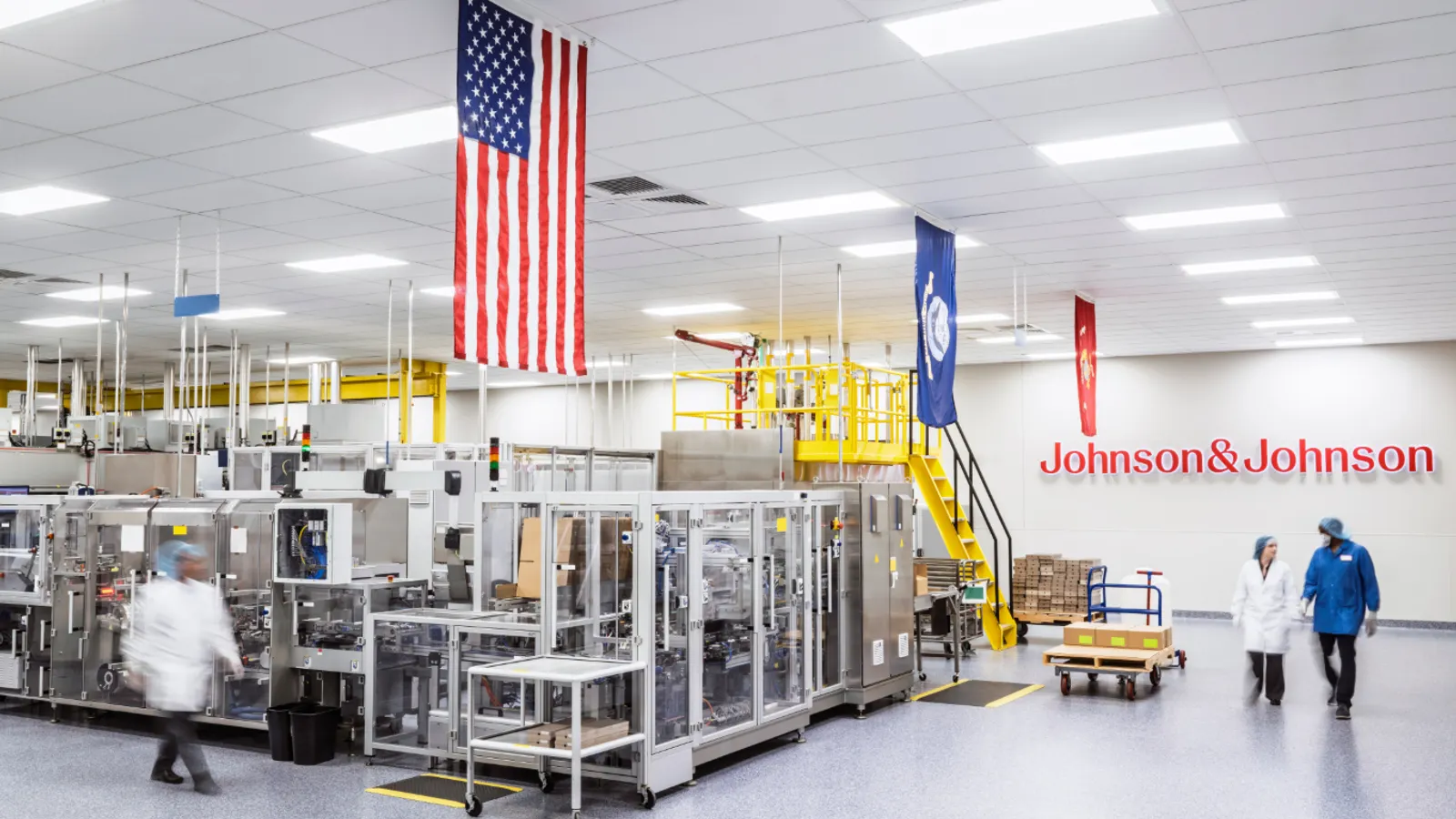
The Jacksonville investment is specifically earmarked for the construction of a high-tech distribution facility, complemented by the integration of state-of-the-art manufacturing and packaging technologies. Rather than focusing on a headline-grabbing expansion of its headcount, the company has clarified that this capital outlay is designed to reinforce the existing infrastructure supporting its 3,500-strong local workforce. By automating and optimizing its supply chain within the United States, J&J is signaling a shift toward domestic resilience in an era marked by global logistics volatility.
Chronology: Four Decades of Innovation in Florida
The relationship between J&J and Jacksonville is one of the most successful corporate-regional partnerships in the life sciences sector. The timeline of this integration reveals how a local acquisition blossomed into a global manufacturing powerhouse.
- 1981: The Foundation. Johnson & Johnson entered the Jacksonville market by acquiring Frontier Contact Lens. At the time, the facility specialized in lathe-cut rigid and soft lenses, establishing a technical foothold that would eventually change the vision-correction industry forever.
- 1987: The Acuvue Milestone. Leveraging the expertise acquired in Florida, J&J launched the first disposable contact lenses in the United States under the Acuvue brand. This launch effectively created the modern contact lens market, moving the industry away from long-wear, difficult-to-clean lenses toward the convenience of single-use or frequent-replacement products.
- 1990s – 2010s: Scaling Global Supply. Throughout the turn of the century, the Jacksonville campus expanded exponentially, becoming the primary production hub for Acuvue. The site integrated complex chemical engineering with precision molding to handle the massive scaling required to meet global demand.
- 2024: The Strategic Pivot. Following post-pandemic supply chain disruptions, J&J announced its massive $55 billion U.S. manufacturing push. This plan was not merely about new construction but about bringing the "Made in the USA" label to the center of its medical device strategy.
- 2025/2026: Consolidation and Modernization. As of early 2026, J&J has officially deployed roughly $12 billion of its total capital expenditure budget. The current Jacksonville project represents a critical phase in this deployment, focusing on the modernization of distribution logistics to ensure the campus remains the heart of the company’s global contact lens strategy.
Supporting Data: Capacity and Economic Impact
The scale of J&J’s Jacksonville operation is difficult to overstate. Today, the facility is responsible for the production of more than 1.7 billion Acuvue lenses annually for U.S. patients. This output makes it one of the most critical manufacturing nodes in the company’s entire global network.
Economic Snapshot:
- Total Workforce: 3,500 employees.
- Primary Output: High-volume, high-precision contact lenses.
- Investment Scope: Part of a $55 billion national capacity-building program.
- Capital Deployment: $12 billion already invested as of Q1 2026.
According to data from the Jacksonville economic development organization (JAXUSA), the campus has remained a stable employer for decades. By focusing on technological upgrades rather than job growth, J&J is emphasizing labor retention and upskilling. In an industry where specialized manufacturing skills are in high demand, the ability to maintain a workforce of 3,500 while increasing output through automation suggests a move toward higher productivity per employee.
Official Responses and Corporate Strategy
The rationale behind this move, as articulated by J&J leadership, centers on the concept of "resilience." In recent earnings calls, CFO Joseph Wolk and CEO Joaquin Duato have consistently highlighted that the company’s massive capital expenditure is not just a growth strategy, but a risk-mitigation strategy.
CEO Joaquin Duato’s Stance:
In a recent statement regarding the Jacksonville project, Duato emphasized that the integration of new manufacturing and packaging technologies is a direct response to the vulnerabilities exposed by recent global supply chain crises. "The investment will make J&J’s supply chain more resilient," Duato noted, highlighting that domestic production allows for shorter lead times and a higher degree of quality control.
CFO Joseph Wolk’s Financial Perspective:
During the April 2026 earnings call, Wolk addressed the $12 billion milestone. He framed the investment as a prudent use of cash flow to secure long-term market dominance. By investing heavily in its own plants rather than relying on third-party contract manufacturers, J&J retains tighter control over its intellectual property and production schedules. This strategy is viewed by analysts as a defensive moat, protecting the company from geopolitical tensions and international logistics bottlenecks.
Implications: What This Means for the Industry
The J&J expansion in Jacksonville serves as a microcosm for a larger trend in the pharmaceutical and medical device sectors: the "reshoring" of critical manufacturing.
1. The End of "Just-in-Time" Fragility
For decades, medical device manufacturers operated on lean, "just-in-time" supply chains that relied heavily on international shipping. The COVID-19 pandemic shattered these models. By building new plants and expanding existing sites in the U.S., J&J is transitioning to a "just-in-case" model, where inventory and production capacity are kept close to the end-user.
2. Technological Integration as a Competitive Advantage
The shift toward advanced packaging and automated manufacturing technologies in Jacksonville implies that the future of the medical device industry lies in smart manufacturing. By integrating AI-driven supply chain management with high-speed automated packaging, J&J can respond to market fluctuations—such as a sudden surge in demand for specific lens types—with agility that was previously impossible.
3. Regional Economic Stability
For Jacksonville, J&J’s commitment is a major validation of the region’s status as a hub for life sciences. While the company is not currently adding a significant number of new roles, the investment ensures that existing jobs are "future-proofed." By modernizing the facility, J&J is ensuring that its Florida workforce remains relevant in an industry that is rapidly digitizing and automating.
4. Setting a Precedent for Peers
Other major pharmaceutical and med-tech firms are watching J&J’s $55 billion gamble closely. If the company successfully leverages these investments to lower its cost of goods sold (COGS) while increasing its reliability, it will likely trigger a wave of similar infrastructure investments across the U.S. healthcare landscape. The move suggests that for companies with the scale of J&J, the cost of building in the U.S. is now lower than the cost of risking a disrupted supply chain.
Conclusion
Johnson & Johnson’s ongoing investment in its Jacksonville Vision campus is more than just a real estate project; it is a strategic repositioning of one of the world’s largest companies. By anchoring its future in domestic manufacturing, J&J is placing a multi-billion dollar bet on the stability, reliability, and technological superiority of the American workforce. As the company continues to execute its $55 billion plan through 2026 and beyond, the Jacksonville site will remain the standard-bearer for how global corporations can effectively bridge the gap between historic legacy and future-ready innovation. The focus remains clear: for J&J, the path to the future is paved with more resilient, more local, and more advanced manufacturing.