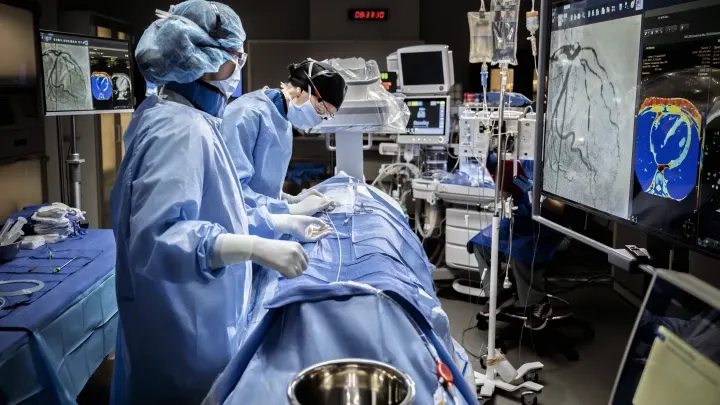
Executive Summary: The Latest Intervention
Johnson & Johnson (J&J), through its subsidiary Abiomed, has initiated a new field safety action regarding its Impella heart pump systems. The recall centers on a technical malfunction within the automated controller—the nerve center of the Impella device—specifically involving the purge cassette recognition process. While the incident rate remains low, occurring in approximately 0.2% of cases, the medical device giant is proactively addressing the issue to ensure patient safety during critical circulatory support procedures.
Impella pumps serve as vital mechanical circulatory support for patients undergoing high-risk cardiac procedures or those suffering from acute heart failure. The devices are engineered to assist the heart in pumping blood throughout the body when it can no longer function independently. Given the life-sustaining nature of these pumps, any deviation in performance or sensor accuracy necessitates immediate clinical attention and transparent communication from the manufacturer.
Chronology of Events: From Integration to Inspection
The current recall is the latest in a series of regulatory actions that have followed Johnson & Johnson’s acquisition of Abiomed, a move finalized in late 2022 for approximately $16.6 billion. Since the acquisition, J&J has undertaken an exhaustive review of the legacy Abiomed quality management systems.
The Audit Process
Following the integration, J&J leadership committed to a "comprehensive, retrospective audit" of all existing quality processes and manufacturing standards. In May 2024, the company noted that these audits were intentionally rigorous, designed to identify potential vulnerabilities that might have been overlooked under previous ownership.
The Identification of the Purge Issue
The specific defect identified—a failure in the purge cassette recognition—appears to be a mechanical or software-based misalignment within the sensor assembly. When the automated controller fails to recognize the purge cassette, it can disrupt the device’s ability to maintain the necessary pressure to prevent blood from entering the motor, a critical safety feature of the pump.
The August 12 Directive
On August 12, J&J issued a formal communication to healthcare providers detailing the specific mitigation strategy. The company outlined a two-step triage process for clinicians encountering a "purge flag component failure" alarm:
- Immediate Intervention: Clinicians are instructed to reinsert the purge disc to attempt to clear the alarm.
- System Contingency: If the alarm persists, the hospital staff must immediately switch to a backup automated Impella controller to ensure uninterrupted circulatory support.
Supporting Data and Technical Context
To understand the gravity of this recall, one must examine the role of the Impella automated controller. It serves as the primary interface between the catheter and the clinical team. It performs three critical functions:
- Performance Modulation: It regulates the rotational speed of the pump motor.
- Safety Monitoring: It monitors for critical alarms, including purge pressure, motor current, and positioning.
- Navigation: It provides telemetry on the device’s position relative to the aortic valve.
The 0.2% Threshold
While a 0.2% incident rate may appear statistically minor, in the context of critical care medicine, where patient survival often hinges on the device’s stability, this represents a significant number of potential failure points. Data suggests that these failures are not necessarily catastrophic in every instance, but they do require immediate user intervention to prevent the loss of hemodynamic support.
The Sensor Assembly
The "purge pressure sensor assembly" is a highly sensitive component. The purge system is responsible for maintaining a positive pressure gradient to keep the pump motor free from blood ingress. If the purge flag or retainer components within this assembly fail to register, the device loses its diagnostic visibility, effectively "blinding" the clinician to the pump’s status.
Official Responses and Corporate Strategy
Johnson & Johnson has maintained a consistent narrative regarding these recalls: they are a testament to the efficacy of their upgraded quality systems, not a failure of the technology itself.
The J&J Stance
In official statements provided earlier this year, J&J emphasized that these field actions are the result of "rigorous and working" processes. By applying the broader, more stringent quality standards of the J&J enterprise to the Abiomed portfolio, the company argues it is identifying and correcting issues that might have remained latent under less comprehensive auditing regimes.
Collaboration with Field Teams
The company has mobilized the Abiomed field service team to coordinate with hospitals. The primary goal is the scheduled replacement of the purge flag and purge retainer components. This is not a "stop use" order, but rather a "proactive maintenance" mandate. J&J is urging providers to contact their local representatives to facilitate these component swaps, ensuring that the sensor assembly meets the newly validated specifications.
Implications for Healthcare Providers and Patients
The ongoing cycle of recalls for the Impella system carries significant implications for the cardiology community and the broader med-tech industry.
Impact on Clinical Workflow
For interventional cardiologists and cardiac surgeons, these frequent updates require a high level of vigilance. Hospitals must ensure that backup controllers are readily available and that nursing staff are trained on the specific troubleshooting protocols issued in the August 12 letter. The requirement to keep backup units in the immediate vicinity of the patient adds a layer of logistical complexity to the ICU and catheterization lab environments.
Regulatory Scrutiny
The frequency of these actions has naturally attracted the attention of regulators, including the U.S. Food and Drug Administration (FDA). While J&J is acting voluntarily, the agency closely monitors the "corrective and preventive action" (CAPA) plans of major manufacturers. Persistent quality issues, even when identified by the company itself, can lead to increased oversight, mandatory reporting, and, in severe cases, consent decrees.
Patient Safety Considerations
For the patient, the benefit of the Impella pump remains high; it is often the last line of defense in a cardiac crisis. However, the requirement for frequent recalls necessitates that patients—and their families—be made aware of the risks and the hospital’s preparedness to handle potential device alarms. It underscores the importance of choosing centers of excellence that are well-versed in the management of mechanical circulatory support devices.
Looking Ahead: The Future of Impella
Johnson & Johnson’s long-term strategy involves fully embedding the Abiomed technology into its broader MedTech ecosystem. The company is investing heavily in next-generation controller software and hardware that aims to eliminate these legacy sensor issues entirely.
The Path Forward
The path to stabilizing the Impella brand involves two distinct tracks:
- Operational Stability: Clearing the current backlog of retrospective quality audits and executing the necessary field corrections for the installed base.
- Technological Evolution: Transitioning toward a newer generation of controllers that utilize more robust sensors and predictive diagnostics, moving from reactive alarms to proactive system health monitoring.
Conclusion
The latest recall of Impella purge components serves as a stark reminder of the complexity of modern cardiac support technology. As Johnson & Johnson continues its integration of Abiomed, the medical community will be watching to see if these "proactive" audits lead to a period of stability or if the legacy of the acquired technology will continue to necessitate frequent field interventions. For now, the directive is clear: clinicians must remain informed, keep backup systems at the ready, and work closely with field service teams to ensure that these life-saving pumps continue to operate within their defined parameters of safety.
As the medical device industry evolves, the intersection of rapid innovation and stringent quality control remains the primary challenge. For J&J, the success of the Impella line will ultimately depend on its ability to maintain the trust of the cardiologists who rely on these tools, even as the company works to refine the very systems that underpin the technology.