











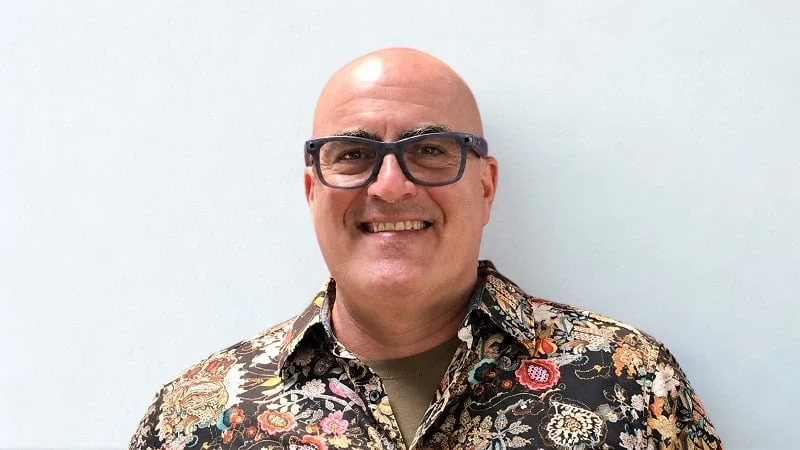
Melbourne, FL – [Date of Publication] – Kalogon, an innovative company at the forefront of adaptive seating technology, today announced the appointment of Marty Evans, a highly respected veteran in consumer hardware engineering, as its inaugural Chief Technology Officer (CTO). This strategic hire marks a pivotal moment for Kalogon, signaling an aggressive expansion beyond its foundational work in smart seating for wheelchair users into high-stakes environments such as aviation and other demanding commercial markets. Evans, with over 25 years of experience cultivated at tech giants like Microsoft, Meta, and Magic Leap, is poised to lead Kalogon’s engineering and product development teams, driving the evolution of its intelligent seating solutions for a broader audience.
The appointment underscores Kalogon’s ambition to revolutionize how people experience prolonged sitting, leveraging Evans’ deep expertise in bringing complex, user-centric hardware to market. His distinguished career, which began with the U.S. Air Force and transitioned into pioneering roles in consumer electronics and augmented reality, uniquely positions him to spearhead Kalogon’s next phase of growth and technological innovation. The company’s expansion into aviation, particularly with significant U.S. Air Force grants, represents a strategic alignment with Evans’ own career trajectory, promising a synergistic approach to enhancing comfort, reducing fatigue, and improving safety for those who spend critical hours in a seat.
Main Facts: A New Era for Adaptive Seating
Kalogon, a company previously recognized for its advanced seating products designed to prevent pressure injuries for wheelchair users, has officially brought Marty Evans on board as its first Chief Technology Officer. This move is not merely an addition to the executive team but a clear declaration of the company’s intent to scale its groundbreaking smart seating technology across diverse sectors. Evans’ mandate will be to guide Kalogon’s engineering and product development efforts, translating cutting-edge research into tangible, marketable products.
His background is particularly relevant to Kalogon’s burgeoning aspirations. With a career spanning over a quarter-century in designing, developing, and deploying consumer hardware, Evans has a proven track record of innovation. His previous roles include significant contributions to Microsoft’s Surface line, pioneering work at Valve, and leadership positions at Meta’s Reality Labs and Magic Leap, where he was instrumental in shaping the future of augmented reality. This diverse experience equips him with a comprehensive understanding of hardware intricacies, user experience design, and the challenges of bringing complex technological solutions to mass production.
Kalogon’s current trajectory sees it applying its core adaptive seating technology, which dynamically adjusts pressure points, to new applications. While initially focused on the medical community, particularly for wheelchair users, the company is now actively developing solutions for pilots and passengers in the aviation industry. This expansion is supported by substantial U.S. Air Force grants, highlighting the technology’s potential to address critical issues like pilot fatigue and long-duration comfort in military and, eventually, commercial aircraft. Evans’ leadership is expected to accelerate this diversification, ensuring that Kalogon’s smart seating becomes synonymous with superior comfort and well-being wherever people sit for extended periods.
Chronology: A Career of Innovation Meets a Company on the Rise
The journey of Marty Evans to Kalogon’s CTO is a compelling narrative of continuous innovation and a strategic return to his roots, paralleling Kalogon’s own evolution from a specialized medical device company to a broader technology innovator.
Kalogon’s Genesis and Early Focus:
Kalogon emerged from a fundamental need to address the pervasive problem of pressure injuries (also known as pressure ulcers or bedsores) among individuals who spend significant time in wheelchairs. These injuries are not only debilitating but also costly and significantly reduce the quality of life. Kalogon’s initial breakthrough involved developing intelligent cushions that use sensors and active components to constantly monitor pressure distribution and make micro-adjustments, thereby preventing static pressure points that lead to tissue damage. This empathy-driven approach laid the groundwork for a technology with far wider applications.
Marty Evans: From Air Force to Consumer Tech Pioneer:
Evans’ career began far from the consumer electronics aisle, embedded in the high-stakes world of military aviation. As a U.S. Air Force avionics technician, he was responsible for maintaining the sophisticated electronic systems of F-16 and F-117A stealth fighters. This early experience instilled in him an unparalleled understanding of precision engineering, reliability under extreme conditions, and the critical importance of human-machine interface in demanding environments – skills that would prove invaluable throughout his career.
After earning his electrical engineering degree with top honors, Evans transitioned into the burgeoning consumer electronics industry in 1999. His initial roles at companies like HP allowed him to hone his skills in product development and manufacturing. He then moved to Microsoft, where he contributed to the iconic Surface product line, renowned for its blend of innovative design and robust engineering. His tenure at Valve further broadened his experience in hardware development for immersive user experiences.
The next significant chapter of Evans’ career unfolded in the frontier of augmented reality. As Director of Electrical Engineering at Meta’s Reality Labs, he was at the forefront of developing the complex, miniaturized hardware required for AR headsets. Later, as VP of Engineering at Magic Leap, he continued to push the boundaries of spatial computing, focusing on integrating sophisticated sensors, displays, and processing power into wearable form factors. This period was crucial for developing an "empathy-driven design" philosophy – understanding deeply how technology could extend human abilities and integrate seamlessly into daily life.
Kalogon’s Strategic Expansion and Evans’ Arrival:
While Evans was innovating in AR, Kalogon was quietly demonstrating the versatility of its adaptive seating technology. The company recognized that the principles applied to preventing pressure sores in wheelchairs – dynamic pressure relief, personalized comfort, and fatigue reduction – were equally relevant to other populations enduring long hours in fixed seating.
This realization led Kalogon to strategically pursue opportunities in the aviation sector, particularly with the U.S. Air Force. The company secured multiple Small Business Innovation Research (SBIR) Phase II grants, totaling an impressive $3.5 million. These grants were specifically aimed at adapting Kalogon’s smart seating for aircrews in venerable aircraft like the B-52 and E-4B, where personnel can spend 30 to 40 hours in seats designed decades ago, leading to significant discomfort and fatigue.
The results of these Air Force tests were compelling: Kalogon’s cushions reduced peak pressure by a remarkable 51% and significantly mitigated pilot fatigue. These concrete, validated outcomes provided a clear blueprint for broader applications in long-haul commercial aviation and beyond.
It was against this backdrop of proven capability and ambitious expansion that Marty Evans joined Kalogon. His appointment as the company’s first CTO is the culmination of Kalogon’s strategic growth, providing the leadership and technical prowess needed to translate these promising test results into scalable, market-ready products across new verticals. His "coming full circle" sentiment reflects the unique synergy between his Air Force past, his AR-driven empathy for user experience, and Kalogon’s mission to enhance human well-being through intelligent seating.
Supporting Data: The Imperative for Smart Seating Technology
The necessity for advanced seating solutions like Kalogon’s is underscored by compelling data points and widespread challenges across various sectors. The problems that static, conventional seating presents are not merely discomforts but significant health, safety, and performance impediments.
The Medical Imperative: Combating Pressure Injuries
For wheelchair users, the risk of pressure injuries is a constant and severe concern. According to various medical studies, the prevalence of pressure injuries among long-term wheelchair users can range from 25% to over 60%. These injuries, often developing on bony prominences like the sacrum, ischium, and heels, are excruciatingly painful, difficult to heal, and can lead to severe complications, including infection, osteomyelitis, and even amputation. The economic burden is staggering; treatment for a single severe pressure injury can cost tens of thousands of dollars, and the overall annual cost to healthcare systems runs into billions. Beyond the financial aspect, the impact on a patient’s quality of life, independence, and psychological well-being is immeasurable. Kalogon’s dynamic pressure redistribution technology directly addresses this by continuously adjusting the contact surface, preventing prolonged pressure on any single point, and promoting healthier blood flow.
The Aviation Challenge: Fatigue and Performance in the Cockpit
In aviation, particularly for military aircrews and commercial long-haul pilots, prolonged sitting in often antiquated or poorly designed seats poses significant risks. Air Force personnel in aircraft like the B-52 and E-4B can endure missions lasting 30 to 40 hours. The physical toll of such extended periods in a static, uncomfortable position includes back pain, numb extremities, muscle stiffness, and critically, fatigue. Pilot fatigue is a well-documented threat to aviation safety, impairing cognitive function, reaction time, and decision-making abilities. Studies have shown a direct correlation between discomfort and increased fatigue, impacting operational effectiveness and mission success.
Kalogon’s work with the U.S. Air Force provides concrete evidence of its technology’s efficacy. The reported 51% reduction in peak pressure signifies a dramatic improvement in comfort and a direct mitigation of the physical stressors leading to fatigue. A significant reduction in pilot fatigue, as observed in Air Force testing, translates directly into enhanced alertness, improved performance, and ultimately, greater safety for both military and commercial operations. This data points to a solution that moves beyond mere comfort to become a critical component of human factors engineering in aviation.
Broader Market Potential: The Sedentary Lifestyle Epidemic
Beyond medical and aviation, the implications of poor seating extend to the general population. With an increasing number of people spending significant portions of their day seated – in offices, vehicles, gaming chairs, and various transport modes – the long-term health consequences of sedentary behavior are a growing concern. While Kalogon’s technology directly addresses pressure and fatigue, its core principles of adaptive, intelligent support have vast potential to improve general well-being, posture, and productivity for millions. The market for ergonomic and health-conscious seating solutions is expanding rapidly as awareness grows about the link between seating and health outcomes.
Kalogon’s Technological Edge: Expertise and Innovation
Kalogon’s "smart seating technology" is not just about soft cushions; it’s a sophisticated integration of hardware and software. The company’s solutions likely involve:
- Advanced Pressure Sensing: High-resolution sensor arrays embedded within the cushion continuously map pressure distribution across the seated surface.
- Electromechanical Actuation: Small, precise actuators (e.g., air bladders, fluid cells, or shape-memory alloys) dynamically adjust the cushion’s contours in real-time based on sensor feedback.
- Intelligent Algorithms: AI and machine learning algorithms analyze pressure data, predict potential problem areas, and control the actuators to redistribute pressure proactively, optimizing for comfort and tissue viability.
- Power Management: Efficient power systems are crucial for portable, long-duration applications. Marty Evans’ patent portfolio, which includes expertise in pressure sensing, wireless charging, electromechanical actuation, and power management, aligns perfectly with these technological requirements, suggesting he brings not just leadership but also profound hands-on technical knowledge to Kalogon’s core innovation. His 20+ patents underscore his personal contribution to the foundational technologies that make such adaptive systems possible.
The convergence of these elements allows Kalogon to create a truly "adaptive" experience, where the seat responds dynamically to the user’s movements, posture, and even physiological changes, preventing discomfort and injury before they occur. This is a significant leap beyond static ergonomic designs, offering a personalized and proactive approach to seating health. The proven results from the U.S. Air Force testing serve as a powerful validation of this sophisticated technological approach and its real-world impact.
Official Responses: Vision, Empathy, and Strategic Alignment
The appointment of Marty Evans has been met with enthusiastic commentary from both the new CTO himself and Kalogon’s leadership, highlighting a shared vision for the future of adaptive seating and a deep appreciation for the human element in technology design.
Marty Evans’ Perspective: A Full Circle Journey with Empathy at its Core
For Marty Evans, joining Kalogon represents more than just a new professional chapter; it’s a profound personal and professional "coming full circle." He articulates this connection by referencing his early career in military aviation and his more recent work in augmented reality. "Getting closer to the technology again while applying the same principles of empathy-driven design to a new sector," Evans stated. This sentiment underscores a core philosophy that has guided his career: technology should serve to enhance human capabilities and improve daily experiences.
He draws a direct parallel between the challenges of AR and adaptive seating: "In AR, we explored ways technology could extend someone’s abilities, from helping someone follow a conversation in a noisy room to making visual information easier to see. Adaptive seating calls for the same mindset – understanding what each person needs, then using hardware and thoughtful design to improve their daily experience." This highlights his commitment to user-centric design, where deep understanding of human needs drives technological solutions. His experience in AR, a field inherently focused on seamless human-computer interaction, provides a unique lens through which to approach the challenges of integrating complex hardware into an intuitive, beneficial seating experience.
Evans also expressed genuine excitement about his new team, specifically mentioning the passionate engineers, makers, and tinkerers in Melbourne. His comment, "Finding a team of passionate engineers, makers and tinkerers doing exactly that, right here in Melbourne, felt like a match made in engineering heaven," speaks to the strong cultural fit and shared dedication to innovation that he found at Kalogon. The return to aviation work, linking back to his U.S. Air Force roots, further solidifies this sense of alignment, making his role at Kalogon a natural and meaningful progression.
Tim Balz’s Perspective: Visionary Leadership for Scaled Innovation
Tim Balz, founder and CEO of Kalogon, expressed immense confidence in Evans’ ability to drive the company’s ambitious expansion. Balz’s praise for Evans centers on his unique skill set: "Marty has built some of the most sophisticated consumer devices on the market, and he knows how to make advanced technology disappear into the background of someone’s day." This observation is crucial, as it points to Evans’ mastery of not just engineering complexity but also user experience – the ability to integrate cutting-edge technology so seamlessly that it becomes intuitive and unobtrusive.
Balz then directly links this expertise to Kalogon’s core mission: "That’s exactly what great seating should do." He emphasizes that the ultimate goal of Kalogon’s smart seating is to provide profound benefits without requiring conscious interaction or adding complexity to the user’s life. Evans’ track record in achieving this level of integration in demanding consumer products makes him an ideal leader for Kalogon as it scales.
The CEO also highlighted the strategic importance of Evans’ experience in accelerating Kalogon’s growth into new markets. "His experience will help us move faster as we take what we’ve learned from wheelchair users into new places people sit, including the airplane cabin." This statement confirms that Evans’ appointment is a deliberate move to leverage the lessons learned and the technology perfected in the medical field to rapidly penetrate and innovate within other sectors. Balz’s remarks collectively paint a picture of a CEO who has found the perfect technological leader to actualize Kalogon’s vision of widespread, intelligent seating solutions.
Industry Insights: A Strategic Play for Market Disruption
From an industry perspective, the recruitment of a CTO with Evans’ pedigree by a company like Kalogon signifies a growing trend in specialized technology sectors. Bringing in top-tier talent from the consumer electronics world – a sector known for its rapid innovation cycles, focus on user experience, and ability to scale production – can be a game-changer for companies operating in more niche or traditional markets. Evans’ expertise in mass production, supply chain management, and creating elegant, robust hardware for millions of users will be invaluable as Kalogon transitions from a developer of specialized medical devices to a provider of broad-market solutions. This strategic hire positions Kalogon not just as an innovator, but as a potential disruptor across multiple seating industries, from healthcare to aerospace and beyond.
Implications: Reshaping the Future of Seating
The appointment of Marty Evans as Kalogon’s first CTO carries significant implications, not only for the company itself but also for the broader landscape of adaptive technologies, the seating industry, and the millions of individuals who spend countless hours seated.
For Kalogon: Accelerated Innovation and Market Leadership
Evans’ arrival is poised to supercharge Kalogon’s research and development efforts. His extensive experience in bringing sophisticated consumer hardware from concept to mass production will undoubtedly streamline Kalogon’s product development cycle, allowing for faster iteration and market entry. This will be critical as the company seeks to expand aggressively into new verticals. His leadership will also likely attract further top-tier engineering talent, strengthening Kalogon’s intellectual capital and fostering a culture of rapid, user-centric innovation. By leveraging Evans’ expertise, Kalogon is positioned to solidify its role as a market leader in smart seating, potentially setting new industry standards for comfort, health, and performance. The successful application of its technology in challenging environments like military aviation also opens doors to other high-value, specialized markets that demand uncompromising reliability and effectiveness.
For the Seating Industry: A Paradigm Shift Towards Intelligence
The traditional seating industry, often characterized by incremental ergonomic improvements, is ripe for disruption. Kalogon’s approach, now with Evans at the helm, represents a paradigm shift from static, one-size-fits-all designs to dynamic, intelligent, and personalized seating. This will likely push competitors to invest more heavily in sensor technologies, active materials, and AI-driven adjustments, fundamentally reshaping how seats are designed, manufactured, and sold across all segments – from office chairs and automotive interiors to public transport and gaming setups. The emphasis on health outcomes, fatigue reduction, and personalized comfort, validated by rigorous testing, will become new benchmarks for innovation within the industry.
For Users: Enhanced Well-being and Performance
The most profound implications are for the end-users.
- For Wheelchair Users: Kalogon’s continued innovation will translate into even more effective solutions for preventing pressure injuries, significantly improving quality of life, reducing healthcare costs, and fostering greater independence.
- For Aviation Professionals: Pilots and aircrews, both military and commercial, will benefit from reduced fatigue and enhanced comfort on long missions, leading to improved alertness, better decision-making, and ultimately, greater safety and operational efficiency. This could also contribute to better retention rates for highly skilled personnel.
- For Long-Haul Travelers: Passengers on extended flights will experience unprecedented levels of comfort, mitigating the common discomforts and health risks associated with prolonged immobility in cramped spaces.
- For the General Public: As the technology permeates broader markets, people spending long hours at desks, in vehicles, or engaging in leisure activities could experience improved posture, reduced back pain, and enhanced overall well-being, combating some of the negative health impacts of modern sedentary lifestyles.
Broader Technological and Economic Implications:
Evans’ transition from cutting-edge AR to adaptive seating highlights a fascinating trend: the cross-pollination of advanced hardware development principles. The demands of AR – miniaturization, power efficiency, complex sensor fusion, and seamless user interaction – are highly transferable to creating intelligent, unobtrusive seating solutions. This points to a future where "smart" technology becomes increasingly integrated into everyday objects, moving beyond screens and devices to enhance our physical environment.
Furthermore, Kalogon’s success, particularly its leveraging of SBIR grants to develop dual-use technology (military to commercial), underscores the vital role of government funding in fostering innovation that benefits both national defense and the civilian population. This model demonstrates how strategic investment can lead to transformative technologies with widespread societal impact.
In conclusion, Marty Evans’ appointment as Kalogon’s CTO is far more than a personnel announcement; it is a strategic declaration of intent. It signals Kalogon’s readiness to lead a revolution in seating technology, moving beyond mere ergonomics to a future where every seat is an intelligent, adaptive partner in promoting health, comfort, and performance for all. The "match made in engineering heaven" described by Evans is set to redefine how we sit, interact with our environment, and experience daily life.