




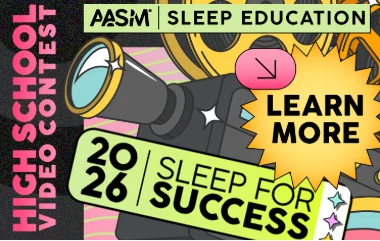
In an era defined by constant digital stimulation, social media pressures, and rigorous academic demands, the American Academy of Sleep Medicine (AASM) is turning the lens toward a critical, often overlooked pillar of adolescent health: sleep. The organization has officially announced the launch of its 2026 “Sleep for Success” High School Video Contest, a nationwide initiative designed to challenge teenagers to articulate the vital role that rest plays in their development, mental well-being, and future success.
By incentivizing creative expression, the AASM hopes to bridge the gap between clinical sleep science and the lived experience of the modern high schooler. The contest serves as both an educational campaign and a creative incubator, tasking students with producing short-form video content that resonates with their peers.
The Core Objective: Redefining Adolescent Rest
The primary objective of the “Sleep for Success” campaign is to shift the cultural narrative surrounding sleep. For decades, the "hustle culture" that permeates high school—often romanticizing late-night studying and sleep deprivation as markers of ambition—has contributed to what sleep experts call a "silent epidemic."
The AASM is inviting students to create original, 30- to 90-second videos that move beyond mere facts and figures. The goal is to produce compelling narratives that demonstrate why prioritizing sleep is not a sign of weakness or laziness, but a foundational requirement for academic, athletic, and social achievement. Whether through humor, documentary-style storytelling, or creative animation, participants are encouraged to highlight how consistent, healthy sleep habits shape their daily lives.
Chronology: From Concept to Competition
The trajectory of the 2026 competition is structured to maximize student engagement and professional development.
- Launch Phase: The announcement of the contest signals the beginning of the brainstorming phase for high school students across the United States.
- The Development Period: Throughout the winter and early spring, students will have the opportunity to research sleep hygiene, interview peers, and storyboard their entries.
- The Deadline: All submissions must be finalized and submitted via the official AASM portal no later than Tuesday, March 31, 2026, at 12:00 PM EDT.
- Adjudication: Following the deadline, a panel of experts from the AASM will review the entries, evaluating them based on creativity, clarity of the message, production quality, and the effectiveness of the call to action.
- The Announcement: Winners will be selected and publicly showcased by the AASM later in the spring, providing students with a national platform to display their work.
Supporting Data: The Biological Imperative
The urgency behind this contest is rooted in extensive medical data. According to the AASM and the Centers for Disease Control and Prevention (CDC), the majority of American teenagers do not meet the recommended 8 to 10 hours of sleep per night. This chronic sleep debt has measurable, often severe, consequences.
Cognitive and Academic Impact
Research consistently demonstrates that sleep is a period of active brain development for adolescents. During REM and deep sleep cycles, the brain consolidates memories, prunes unnecessary synaptic connections, and stabilizes neural pathways. Students who are sleep-deprived struggle with executive function, impulse control, and information retention, leading to a direct correlation between sleep duration and GPA.
Mental Health and Emotional Regulation
The relationship between sleep and mental health is bidirectional. A lack of sleep increases the production of cortisol (the stress hormone) and decreases the brain’s ability to regulate the amygdala—the region responsible for emotional response. For adolescents, who are already navigating hormonal changes, sleep deprivation acts as a catalyst for anxiety, depression, and mood instability.
Athletic Performance and Safety
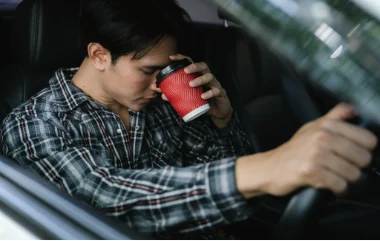
For student-athletes, sleep is the most effective performance-enhancing tool available. It is during sleep that the body releases growth hormones necessary for muscle repair and physical recovery. Furthermore, the AASM highlights the danger of drowsy driving. Drowsiness slows reaction times, impairs judgment, and mimics the physiological effects of alcohol intoxication, making sleep education a critical component of public safety for newly licensed teenage drivers.
Official Responses and Educational Advocacy
The AASM views this contest as more than just a creative exercise; it is an advocacy tool. By involving educators, the AASM aims to create a ripple effect in high school classrooms.
"We recognize that students are often the best messengers for their own generation," says an AASM representative. "By providing a platform for students to speak to other students, we move the conversation about sleep out of the clinical office and into the hallways and social media feeds where teens actually spend their time."
The contest structure also includes a financial incentive for educators. By offering a $100 gift card to the teachers associated with the winning entries, the AASM acknowledges the vital role that mentors play in encouraging student participation and facilitating the logistics of video production. This collaborative approach ensures that the message of sleep hygiene is supported from both the bottom-up (students) and the top-down (educators).
Implications: Building Media Literacy and Health Advocacy
The “Sleep for Success” contest is designed to yield dividends far beyond the cash prizes. Participation encourages students to refine their media literacy skills, an increasingly essential competency in the 21st-century workforce.
Developing Storytelling Proficiency
In an age of TikTok, Instagram Reels, and YouTube Shorts, the ability to distill a complex health topic into a 30- to 90-second narrative is a powerful skill. Students must learn how to hook an audience, present evidence, and craft a compelling conclusion—all within a tight time constraint. This process mirrors the demands of modern digital marketing, journalism, and public relations.
Peer-to-Peer Influence
Traditional public health messaging often fails to penetrate the teenage demographic because it is perceived as top-down "adult advice." When the message comes from a peer—using their vernacular, their humor, and their visual language—the barrier to entry drops. The winning videos, which will be featured by the AASM, will serve as a permanent archive of teen-driven health advocacy that can be shared in schools across the country for years to come.
Shaping Long-term Habits
The most profound implication of this contest is the potential for lifelong habit formation. By researching the benefits of sleep for their videos, students are forced to engage with the science themselves. The process of creating the content serves as a "self-persuasion" mechanism; students who teach others about the importance of sleep are statistically more likely to adopt those behaviors themselves.
How to Participate
The AASM has streamlined the entry process to be as accessible as possible. Interested students should visit the official 2026 contest page to review the comprehensive rulebook. The guidelines cover technical requirements, such as file formatting and copyright considerations, as well as creative criteria.
With a $1,000 cash prize on the line for the winning entry, the competition is expected to be fierce. However, the true value lies in the opportunity to contribute to a national conversation about health.
In a society that often demands more, faster, and longer, the AASM is inviting the next generation to embrace the power of "less"—specifically, the power of taking the time to sleep. As the deadline of March 31 approaches, the challenge remains clear: translate the science of rest into a vision that can inspire a nation of tired students to finally wake up to the benefits of a good night’s sleep.