For most of us, the alphabet is the very first tool we are gifted. We learn our ABCs in primary school as a foundational building block, a prerequisite for unlocking the vast world of literature, communication, and knowledge. Yet, while we are taught how to spell, we are rarely taught how to navigate the complex internal landscape of our own minds. Specifically, we are often left without a roadmap for managing one of the most fundamental human emotions: anxiety.
Anxiety is an evolutionary necessity, a biological alarm system designed to protect us from genuine threats. However, for millions of people worldwide, this alarm system has become hypersensitive. When the "alarm" sounds without a genuine threat, it can lead to paralyzing distress. The solution, according to emerging mental health methodologies, may be simpler than we think: it is time to go back to the basics and learn our "Anxiety ABCs."
The Anatomy of an Emotional Crisis: The ABCtracker™ Framework
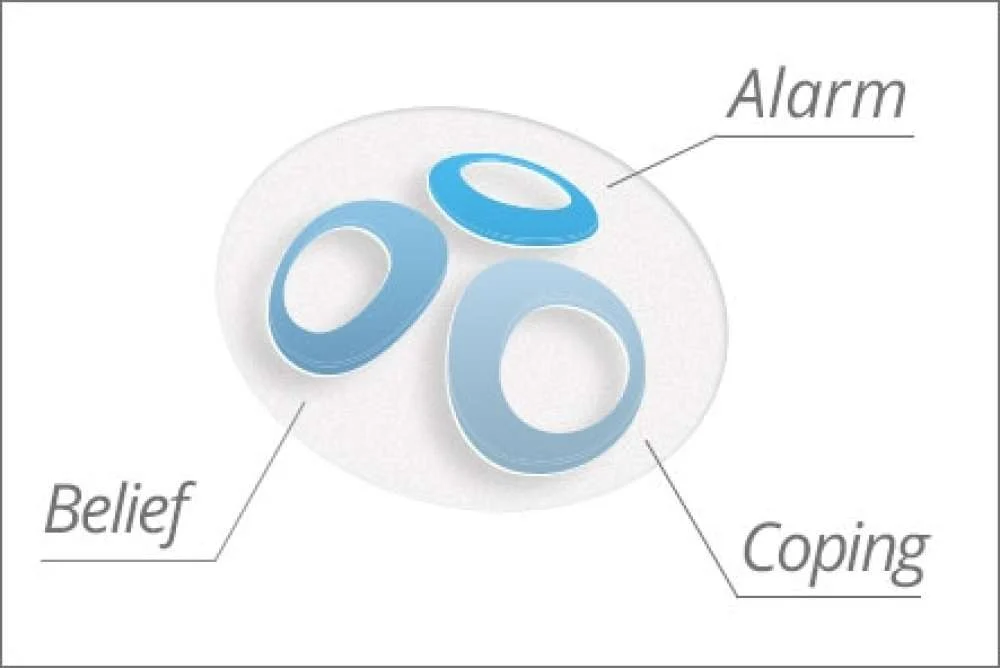
In the professional mental health community, there is a growing emphasis on cognitive-behavioral frameworks that empower patients to take an active role in their own psychological regulation. At the forefront of this movement is the ABCtracker™, a structured diagnostic tool designed to help individuals decode their anxiety by breaking it down into three manageable components: Alarm, Belief, and Coping.
By treating anxiety not as a monolithic, terrifying force, but as a systematic process, individuals can move from a state of reactive panic to one of conscious observation. Whether utilized in tandem with a licensed psychologist or as a self-guided monitoring tool, the ABCtracker™ provides a clear, logical structure for understanding why we feel what we feel—and how we can change it.
The Chronology of an Anxiety Spike
To understand the utility of the ABC model, one must first understand the timeline of an anxious episode. Anxiety is not a random occurrence; it follows a predictable, albeit rapid, trajectory.
- The Trigger (The Alarm): The cycle begins with a physiological response. This is the "A" in the ABCs. It is the moment the nervous system identifies a potential threat.
- The Assessment (The Belief): Almost instantaneously, the brain interprets the physiological signal. This is the "B." The brain assigns meaning to the physical sensation, determining whether the threat is existential or mundane.
- The Response (The Coping): Finally, the individual acts. This is the "C." Whether the reaction is fight, flight, freeze, or avoid, the coping strategy is the culmination of the cycle.
Understanding this chronology is essential because it allows individuals to intervene at specific points along the timeline. If you can catch the "Alarm" before it becomes a "Belief," or modify your "Coping" mechanism before it reinforces the "Alarm," you can effectively rewire the cycle.
Supporting Data: Why Our Alarms Go Haywire
Clinical data suggests that anxiety disorders are often characterized by a "false positive" bias in the amygdala—the brain’s fear center. For those with generalized anxiety or panic disorders, the alarm system is essentially set too high.
Research indicates that individuals with high anxiety levels often suffer from "cognitive distortions." These are irrational thought patterns that reinforce the idea that a situation is dangerous when it is, in fact, neutral. For instance, a person might feel their heart rate increase (the Alarm) and immediately conclude, "I am having a heart attack" (the Belief), which leads to avoidant behavior like leaving a public space (the Maladaptive Coping).
Studies on the efficacy of tracking these cycles show that patients who log their ABCs are significantly more likely to report a reduction in symptom severity over a six-month period. By keeping a written record, patients move from subjective suffering to objective data collection, making it easier for therapists to identify specific cognitive triggers.
H3: A – The Alarm: Understanding Your Biological Warning System
The "A" represents the body’s instinctive reaction to perceived danger. Evolutionarily, this system kept our ancestors alive when faced with predators. Today, however, our "predators" are often deadlines, social interactions, or even existential uncertainties.
When your body signals an alarm, it is an unfiltered response. It might manifest as a racing heart, shallow breathing, sweaty palms, or a feeling of "doom." The critical insight for anyone struggling with anxiety is to recognize that an alarm is not a fact; it is a notification. By learning to label the sensation as an "Alarm" rather than "Danger," you create a vital psychological buffer.
H3: B – The Belief: The Brain’s Interpretive Lens
If the Alarm is the siren, the Belief is the reason we think the siren is ringing. The brain is a meaning-making machine. When the body signals distress, the brain instinctively scans for a cause.
For those with pervasive anxiety, this scan is often flawed. Because the brain is primed for survival, it often defaults to the "worst-case scenario." These beliefs become self-fulfilling prophecies. If you believe that your social anxiety is a sign of personal inadequacy, that belief will naturally increase your stress, triggering the alarm again in a vicious cycle. Recognizing these beliefs allows you to challenge them: Is my heart racing because I am dying, or because I am nervous about this presentation?
H3: C – The Coping: The Mechanism of Survival
The final step is the action taken to deal with the distress. Coping is the instinctive desire to return to a state of safety. However, not all coping is created equal.
- Adaptive Coping: These are techniques that resolve the anxiety in a healthy way. Examples include deep breathing, grounding exercises, seeking professional guidance, or physical exercise.
- Maladaptive Coping: These are short-term "fixes" that actually exacerbate the problem in the long run. Examples include substance use, social withdrawal, or constant reassurance-seeking.
The ABCtracker™ encourages users to identify their maladaptive habits and replace them with adaptive strategies. By acknowledging that you have a choice in how you respond to your anxiety, you transition from a victim of your emotions to an architect of your mental health.
Official Responses and Clinical Perspectives
Mental health professionals have largely lauded the ABC framework for its accessibility. Dr. Elena Vance, a clinical psychologist specializing in cognitive-behavioral therapy (CBT), notes that the simplicity of the ABC model is its greatest strength.
"Patients often come into my office feeling overwhelmed by a ‘cloud’ of anxiety," says Dr. Vance. "They can’t describe what’s wrong, only that they feel terrible. Using the ABC framework acts as a scalpel. It dissects the experience into components that we can actually work with. Once a patient realizes they have agency over their Beliefs and their Coping mechanisms, the anxiety loses its absolute power over them."
While the ABCtracker™ is not a replacement for clinical treatment, it is increasingly being integrated into standard care as a "take-home" tool for patients between therapy sessions.
The Implications: A New Era of Emotional Literacy
The implications of adopting a framework like the ABCs are profound. If we can normalize the discussion of "Anxiety Literacy" in the same way we discuss physical fitness or basic education, we can drastically reduce the stigma surrounding mental health.
When we learn our Anxiety ABCs, we are doing more than just managing symptoms; we are gaining a deeper understanding of our own humanity. We learn that we are not broken; we are simply reacting to an internal system that needs recalibration.
As we move toward a future where mental health is prioritized as highly as physical health, tools like the ABCtracker™ represent a vital step forward. By mastering the fundamentals, we can stop the cycle of fear, reframe our beliefs, and choose coping strategies that allow us to live not just safely, but fully.
The next time your heart begins to race or your mind begins to spiral, remember: this is just an alarm. You have the tools to evaluate the belief, and you have the power to choose how you cope. The ABCs are not just for children—they are for everyone seeking to master the complexities of the human experience.