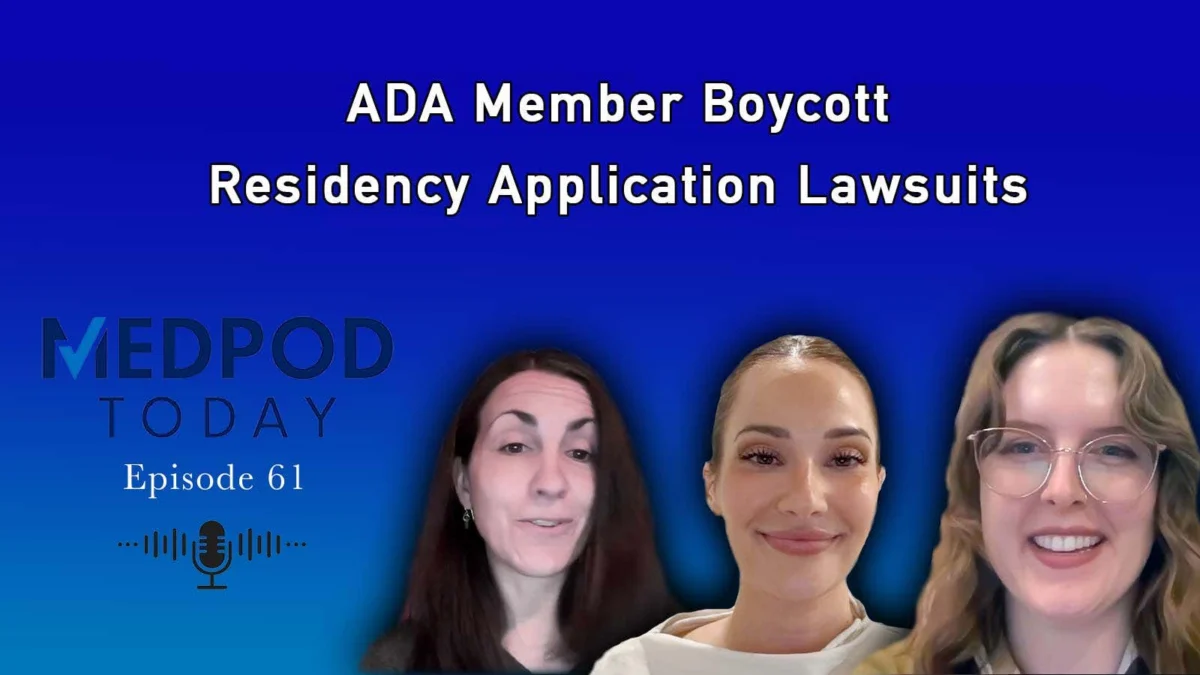
The medical landscape is currently facing a period of profound institutional scrutiny. From the hallowed halls of the American Diabetes Association (ADA) to the complex administrative machinery governing graduate medical education, stakeholders are challenging established norms. In recent weeks, two major stories have dominated the discourse: a burgeoning boycott of the ADA sparked by the controversial removal of prominent researchers from its annual meeting, and a series of high-stakes lawsuits that have cast a spotlight on the competitiveness—and the cost—of the residency application process.
Part I: The ADA Boycott—A Professional Schism
The Incident in New Orleans
The current unrest within the American Diabetes Association traces back to the organization’s annual scientific sessions held in June in New Orleans. The event, usually a celebration of clinical and research advancement, took a dark turn when Steven Kahn, MBChB, editor-in-chief of the ADA’s flagship journal Diabetes Care, and four other high-profile researchers were forcibly ejected from the premises by local law enforcement.
The researchers were distributing printed copies of an editorial they had co-authored and published in the April issue of Diabetes Care. The piece was overtly critical of federal policies—specifically the Trump administration’s funding cuts to biomedical research—that they argued threatened the future of the field. The ADA’s decision to involve police to remove these scientists triggered immediate outrage among the scientific community, who viewed the move as an egregious suppression of academic freedom and civil discourse.
Chronology of a Growing Backlash
The weeks following the June incident were marked by what many critics describe as a failure of institutional leadership. Rather than addressing the concerns of the scientific community, the ADA’s response was characterized by what boycotters call "shifting justifications" and a lack of accountability.
- June: Five researchers are escorted out of the ADA annual meeting by police while distributing literature critical of federal research funding.
- July–August: Tensions simmer as the ADA fails to provide a formal apology or a transparent explanation of the security protocols used.
- September 11: An organized boycott is launched. Within 48 hours, the movement gains over 400 signatures, including former ADA presidents, award-winning researchers, and members of the organization’s own Scientific Sessions committee.
The Scope of the Boycott
The boycott is not merely a symbolic protest; it is a comprehensive withdrawal of labor and participation. Signees have pledged to cease all engagement with the ADA, which includes:
- Refraining from planning or attending ADA-led meetings, including the upcoming scientific sessions.
- Withholding participation in grant reviews, fundraisers, and board-led investigative committees.
- Suspending all manuscript submissions and editorial reviews for ADA journals, including Diabetes Care.
The potential impact on the ADA’s flagship journal is particularly significant. While the ADA has publicly insisted that the journal is "continuing with regular publication and processes," the loss of peer reviewers and contributors could lead to critical delays in the dissemination of life-saving diabetes research.
Part II: The Residency "Arms Race" and the Courts
While the ADA faces a crisis of trust, the medical education sector is grappling with a crisis of competition. Two recent, contradictory lawsuits have highlighted the contentious nature of the residency application market, pitting established players against new software competitors.
The Case Against the AAMC: Monopoly Allegations
The first legal battle involves Kaitlin Buhrke, DO, a wound care physician who has filed a lawsuit against the Association of American Medical Colleges (AAMC). The core of her argument is that the AAMC’s Electronic Residency Application Service (ERAS) functions as an illegal monopoly.
Buhrke’s legal team contends that the lack of meaningful competition allows the AAMC to engage in price-gouging, charging applicants exorbitant fees to participate in the residency match. Buhrke herself reported paying nearly $1,700 to navigate the application cycle—a significant financial barrier for students already burdened by medical school debt. With ERAS generating roughly $120 million in annual revenue, the lawsuit alleges that the AAMC is exploiting its dominant position to maximize profits at the expense of aspiring physicians.
The Counter-Narrative: Thalamus vs. ResidencyCAS
In a starkly different legal challenge, the software firm Thalamus has launched its own suit, this time positioning itself as an aggrieved victim of anti-competitive practices. Thalamus, which has long collaborated with the AAMC and ERAS, has sued both Maya Hammoud, MD, MBA, and the company Liaison International—the creators of the competing platform ResidencyCAS.
The lawsuit claims that these parties engaged in a coordinated effort to steal proprietary information. According to the complaint, Thalamus entered into a pilot project agreement with Hammoud and other professional medical organizations between 2020 and 2021. Thalamus alleges that this agreement explicitly prohibited the use of their internal data to develop a competing product. When Liaison International later entered the market and began gaining ground in specialties like obstetrics and gynecology, Thalamus characterized the move as an unfair breach of their previous collaborative trust.
Part III: Implications for the Medical Field
The Role of Market Competition
Medical education expert Bryan Carmody, MD, MPH, has closely followed both the Buhrke and Thalamus cases. His assessment provides a nuanced view of the current state of medical technology.
On one hand, Carmody suggests that the entry of new competitors like ResidencyCAS has arguably improved the quality of existing services, forcing the AAMC to innovate. In this sense, market competition is functioning as intended. However, he remains wary of the "chilling effect" that litigation might have on future innovation. If large, entrenched organizations use the courts to crush smaller competitors, it may deter doctors and developers from creating new tools that could simplify or reduce the costs of the residency process.
The Broader Crisis of Public Health
Beyond institutional politics and legal wrangling, the healthcare community continues to face urgent public health challenges. The ongoing measles outbreak remains a primary concern for practitioners. Recent data shows:
- Weekly Trends: The rate of transmission remains high, with 157 cases reported in the most recent week, following 235 cases the week prior.
- Regional Clusters: Pennsylvania remains the epicenter, reporting 99 cases in the last week, down from 117 the week before.
The volatility of these numbers underscores the necessity of a stable, communicative medical infrastructure. When organizations like the ADA are preoccupied with internal boycotts and professional societies are tied up in antitrust litigation, the focus on foundational public health issues can be dangerously diluted.
Conclusion: The Path Forward
The common thread linking these disparate events is a demand for transparency and equitable practice. Whether it is a researcher demanding the right to critique funding policies without fear of police intervention, or a medical student demanding fair pricing in a monopolistic application system, the message is clear: the status quo is under intense pressure.
For the ADA, the path forward requires a genuine, independent review of the June incident and an earnest attempt at reconciliation with its membership. For the AAMC and the developers of residency software, the courtroom will ultimately decide the limits of market competition. As these stories continue to evolve, the medical community remains at a crossroads, balancing the need for institutional stability against the imperative of professional accountability. The outcomes of these conflicts will likely redefine how medical professionals organize, communicate, and enter the workforce for years to come.