








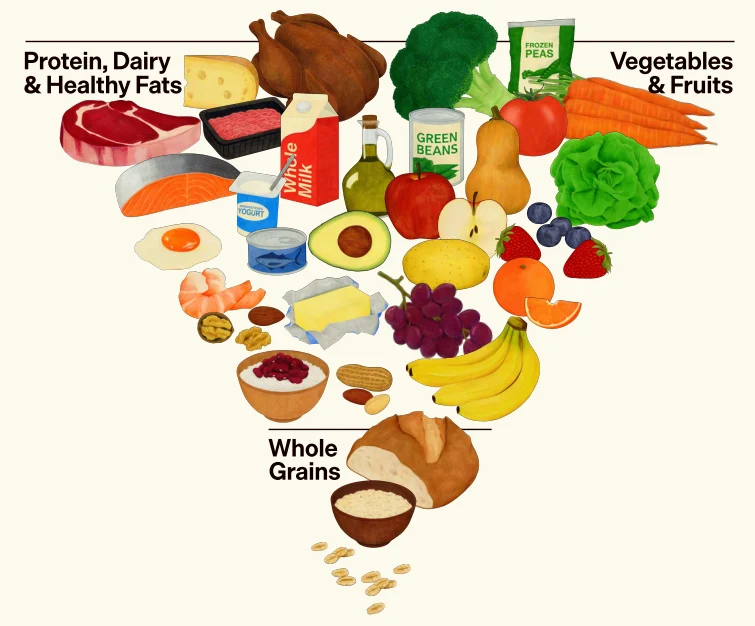
The release of the 2025–2030 Dietary Guidelines for Americans (DGAs) was met with significant anticipation, arriving with the evocative tagline "Eat Real Food." While the guidelines take a commendable, firmer stance against the proliferation of ultra-processed foods and added sugars, the document has ignited a firestorm of controversy. At the heart of the debate is a newly introduced, inverted pyramid graphic that visually prioritizes animal-based fats and proteins—a choice that many nutrition experts argue contradicts the text’s own advice on cardiovascular health.
Main Facts: A Shift in Tone and Visuals
The 2025–2030 edition of the DGAs marks a pivot toward a more consumer-facing, accessible format. By shortening the text and launching an interactive digital experience, federal authorities have clearly sought to improve public engagement. The core message focuses on the reduction of "highly processed" foods—a first for the DGAs—specifically targeting sugar-sweetened beverages and refined carbohydrates.
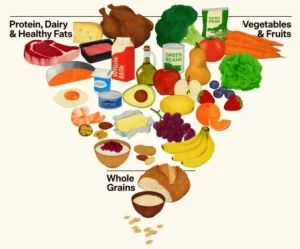
However, the visual representation—the "New Food Pyramid"—has become the focal point of the controversy. By placing items like steak, full-fat milk, and butter in prominent positions, the graphic suggests a diet that runs contrary to decades of nutritional science. While the written guidelines technically maintain the long-standing cap on saturated fat at 10% of total daily calories, the graphic’s emphasis creates a dangerous disconnect. As Frank Hu, professor of nutrition and epidemiology and chair of the Department of Nutrition at the Harvard T.H. Chan School of Public Health, points out, these mixed messages threaten to undermine public health efforts by potentially encouraging increased intake of LDL-cholesterol-raising fats.
Chronology: The Road to the New Guidelines
The development of the DGAs is typically a rigorous, multi-year process involving independent scientists, public comment periods, and exhaustive evidence review. Every five years, the U.S. Departments of Agriculture (USDA) and Health and Human Services (HHS) convene an advisory committee to synthesize the latest nutritional science.
Historically, this process is designed to be insulated from political and industry influence. The 2025–2030 cycle, however, diverged significantly from this tradition. After the independent Dietary Guidelines Advisory Committee submitted its exhaustive scientific report, the administration took an unprecedented step: it rejected the committee’s findings. Instead, the final guidelines were informed by a "supplemental scientific analysis" conducted by a group selected through a federal contracting process.
This deviation has drawn sharp criticism from within the scientific community. Deirdre Tobias, an assistant professor at Harvard and a member of the original advisory committee, has expressed deep concern regarding the lack of transparency. The methodology behind the supplemental report remains opaque, and critics have pointed to the documented financial ties between several of the reviewers and the beef and dairy industries. This procedural shift has led many to question whether the final product reflects the most objective science or if it was shaped by powerful agricultural lobbying interests.
Supporting Data: The "Saturated Fat Math"
To understand why public health experts are alarmed, one must look at the math. The guidelines recommend a daily limit of 10% of calories from saturated fat. For a standard 2,000-calorie diet, this equates to roughly 22 grams.
When the DGAs recommend three daily servings of dairy—if those servings include common options like one cup of whole milk (5g saturated fat), three-quarters of a cup of full-fat Greek yogurt (6g), and one ounce of cheddar cheese (6g)—the individual has already consumed 17 grams of saturated fat. Adding a single tablespoon of butter or beef tallow—both of which are highlighted as recommended cooking fats in the guide—pushes the daily total to 23–24 grams, exceeding the limit before accounting for the saturated fat naturally present in proteins like red meat.
This internal contradiction is profound. While the guidelines briefly acknowledge the health benefits of unsaturated fats like olive oil, they fail to provide a hierarchy of fats, effectively equating heart-healthy plant oils with animal-based fats known to contribute to cardiovascular disease. Furthermore, the guideline’s suggestion to increase protein intake to 1.2–1.6 grams per kilogram of body weight—without distinguishing between high-quality plant proteins and saturated-fat-heavy animal sources—risks promoting diets that could negatively impact long-term health outcomes.
Official Responses and Scientific Critique
The official stance from the USDA and HHS remains that the guidelines are rooted in scientific rigor. However, the external response has been largely skeptical. Dr. Frank Hu highlights that while the movement against refined grains and added sugars is a step in the right direction, the ambiguity surrounding "highly processed" foods and the lack of guidance on protein quality represent significant missed opportunities.
The scientific community is particularly concerned about the "protein package." When consumers choose a protein source, they are not just consuming protein; they are consuming the accompanying fats, sodium, and fiber. By failing to differentiate between the health outcomes of consuming legumes, fish, or poultry versus red meat and processed meats, the DGAs ignore the cumulative health impact of the "protein package."
Moreover, the guidelines’ approach to alcohol remains frustratingly vague. Moving from specific drink-count limits to a nebulous recommendation to "consume less" provides little actionable advice for the average American, who often struggles with how to interpret such generalized health warnings.
Implications: A Disconnect Between Policy and Practice
The implications of these guidelines are far-reaching. Because the DGAs inform federal nutrition programs—including school lunches, military meals, and WIC—they dictate the dietary landscape for millions of Americans. If these programs pivot toward the "New Food Pyramid," the result could be a national diet higher in saturated fats, potentially reversing decades of progress in reducing heart disease rates.
Furthermore, the omission of environmental and socioeconomic considerations remains a glaring oversight. Food production is a leading driver of environmental change, and an individual’s ability to "eat real food" is often strictly dictated by their local food environment and economic resources. By ignoring these systemic realities, the guidelines risk becoming a document that is not only scientifically questionable but also socioeconomically out of touch.
A Call for Independent Guidance
Given the contradictions, the lack of transparency in the drafting process, and the potential for industry-influenced messaging, experts are urging the public to exercise caution. The history of nutrition science shows that policy documents are not always synonymous with optimal health.
For those navigating these conflicting messages, the best path remains relying on evidence-based resources that prioritize human and planetary health, such as the Healthy Eating Plate. As Dr. Hu and other experts have suggested, if the guidelines are causing confusion, the wisest course of action is to consult a registered dietitian or a healthcare provider who can offer personalized, science-backed advice, rather than following the potentially misleading visuals presented in the latest federal report.
Ultimately, the 2025–2030 DGAs serve as a reminder that in the realm of public health, the process of how information is produced is just as important as the information itself. When transparency and independent scientific rigor are compromised, the resulting guidelines may serve the interests of the few rather than the health of the nation.