Executive Summary: A Breach of Public Trust
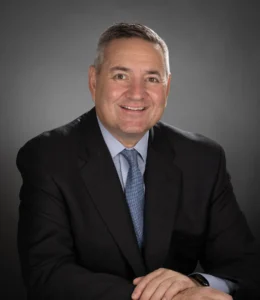
In a significant crackdown on healthcare exploitation, the owner and operator of a multi-site Oregon diagnostic company has entered a guilty plea for a sophisticated, multi-year conspiracy to defraud federal and private insurance providers. Mehrdad Gerami, 67, the principal figure behind Coastal Diagnostic Testing Group, admitted to orchestrated billing schemes that siphoned more than $2.1 million from the U.S. Department of Health and Human Services (HHS), the Veterans Health Administration (VHA), and various private insurers.
The fraudulent activities, which spanned several years, centered on the systemic misrepresentation of sleep studies. By inflating the complexity of procedures and fabricating records for studies that never occurred, Gerami compromised the integrity of diagnostic care across several Oregon communities. As part of his plea agreement, Gerami faces a potential decade behind bars, significant financial penalties, and a court-mandated requirement to provide full restitution to the victims of his scheme.
Chronology of the Fraudulent Enterprise
The investigation into Coastal Diagnostic Testing Group revealed a pattern of behavior that evolved from simple upcoding to outright fabrication. The timeline of the illicit operations, as established by federal prosecutors, is as follows:
- 2021: The initiation of the conspiracy. Prosecutors allege that Gerami began instructing his staff to systematically miscode medical services to maximize reimbursement rates.
- 2021–2026: The active period of the fraud. Throughout these five years, the Coastal Diagnostic Testing Group, operating in Coos Bay, Brookings, Reedsport, Florence, and Roseburg, functioned as a hub for illicit billing practices.
- June 22, 2026: Formal charges were filed against Gerami via criminal information in the U.S. District Court, signaling the culmination of a joint investigation by federal inspectors general.
- Post-June 2026: Gerami entered a plea of guilty to conspiracy to commit healthcare fraud, accepting responsibility for the $2.1 million loss.
- January 26, 2027: The scheduled date for sentencing, where a federal judge will determine the final term of imprisonment and the terms of supervised release.
Supporting Data: The Mechanics of the Scheme
The financial scale of the operation is staggering, totaling $2,124,363.41 in confirmed losses. To understand the gravity of the offense, one must examine the two primary mechanisms employed by Gerami and his subordinates:
1. Upcoding: The "In-Office" Deception
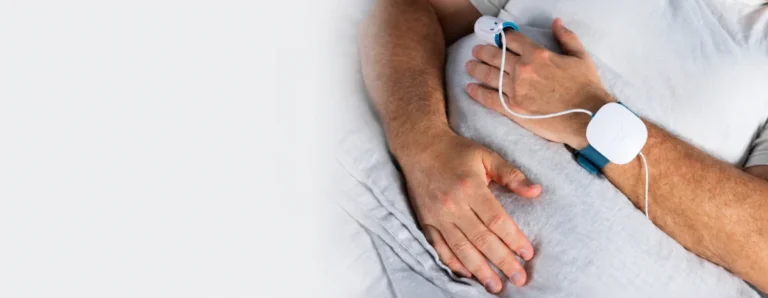
The most frequent method of fraud involved "upcoding." Under standard medical billing guidelines, an in-office, attended sleep study—which requires professional monitoring and specialized equipment—is reimbursed at a significantly higher rate than an at-home, unattended sleep study.
Gerami directed his staff to bill federal and private insurers for high-cost, in-office studies for patients who had actually only received the lower-cost, at-home diagnostic kits. By consistently misrepresenting the level of service provided, the company was able to inflate its revenue stream artificially, effectively "taxing" the insurance system for services that were never rendered.
2. Fabricated Procedures: Revenue Generation in Low-Volume Months
When diagnostic volume dipped, the financial pressure to meet revenue targets led Gerami to adopt more aggressive tactics. During months of low productivity, Gerami instructed staff to access patient files and bill for sleep studies that never occurred. These records were often fabricated using legitimate patient information to bypass automated insurance audit triggers. This practice represents a dual violation: it is both a theft of funds from taxpayers and a dangerous manipulation of patient medical records, which could have long-term implications for the accuracy of those patients’ future medical treatments.
Official Responses and Legal Proceedings
The prosecution of this case underscores the federal government’s commitment to policing the medical industry. The investigation was a collaborative effort between the HHS Office of Inspector General (OIG) and the Department of Veterans Affairs (VA) OIG.
Assistant US Attorneys Joseph Huynh and Julia Jarrett, who are leading the prosecution, have emphasized the betrayal of trust inherent in this case. By targeting the Veterans Health Administration, the scheme specifically diverted resources intended for those who served in the military—a factor that often carries weight during the sentencing phase of federal criminal cases.
According to the plea agreement, Gerami faces:
- Maximum Imprisonment: Up to 10 years in federal prison.
- Monetary Penalties: A maximum fine of $250,000, independent of the required restitution.
- Supervised Release: A term of three years following his release from incarceration.
- Restitution: An absolute obligation to repay the $2.1 million stolen from the government and private insurers.
The upcoming sentencing hearing in January 2027 will be a pivotal moment for the residents of the affected Oregon communities. The court will consider the impact of the fraud on both the healthcare system and the specific patients whose medical records were exploited.
Broader Implications for the Healthcare Industry
The Coastal Diagnostic Testing Group case serves as a stark reminder of the vulnerabilities within the diagnostic testing sector. Several key implications arise from this event:
The Vulnerability of Diagnostic Networks
Diagnostic sleep testing has grown rapidly due to an increased awareness of sleep apnea and related disorders. However, the decentralized nature of these clinics, especially in smaller, rural, or semi-rural areas like those in the Oregon coastal region, can sometimes escape the immediate oversight of larger hospital networks. This case highlights the need for more rigorous, real-time auditing of diagnostic billing patterns by insurance carriers.
The Erosion of Patient Trust
When medical records are manipulated for profit, the repercussions extend beyond financial loss. Patients who were falsely billed for procedures they never underwent may face issues with their insurance deductibles, future coverage eligibility, and the accuracy of their medical history. If a patient’s record falsely indicates they have been treated for a sleep disorder, it could potentially complicate their interactions with future primary care physicians or specialists.
Strengthening Oversight Mechanisms
Healthcare fraud of this magnitude often relies on a lack of transparency. The federal investigation indicates that while the fraud was complex, it was eventually caught through data analysis and inter-agency coordination. Future policy shifts may favor more stringent documentation requirements for diagnostic groups, including mandatory third-party verification of diagnostic equipment usage logs.
The Cost to the Public
Ultimately, the $2.1 million loss is a cost borne by the public. In the case of HHS and the VA, these are taxpayer dollars that should have been utilized to improve patient care, upgrade medical facilities, or expand access to veterans. Private insurance fraud, similarly, contributes to the rising cost of premiums for all policyholders.
Conclusion: A Cautionary Tale
The guilty plea of Mehrdad Gerami brings a measure of justice to a case defined by greed and the manipulation of medical necessity. As the U.S. District Court prepares for sentencing in early 2027, the case remains a testament to the vigilance of federal oversight agencies. For the healthcare industry, it serves as a stern warning: the systemic exploitation of billing processes will be met with the full force of the law.
The case of Coastal Diagnostic Testing Group is now a matter of public record, a sobering look at how the pursuit of revenue can lead to the erosion of professional ethics and the betrayal of the very patients that diagnostic clinics are sworn to serve. As the legal process concludes, the focus shifts to ensuring that the victims are made whole and that such systematic fraud is deterred in the future.