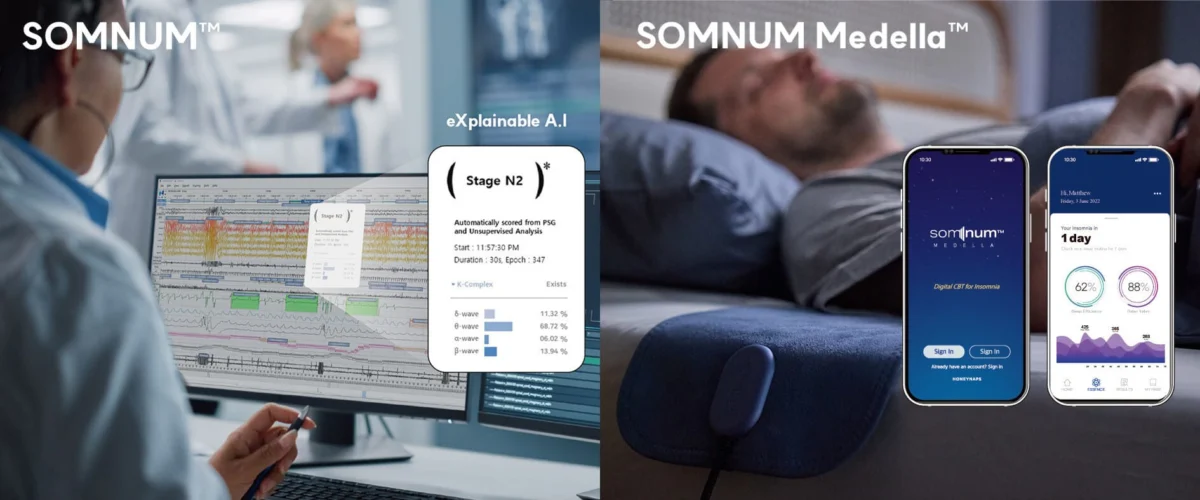
The landscape of sleep medicine is undergoing a profound transformation, moving away from labor-intensive manual analysis toward a future defined by high-fidelity artificial intelligence. In a significant milestone for diagnostic technology, the US Food and Drug Administration (FDA) has officially granted 510(k) clearance to HoneyNaps for its latest innovation, SOMNUM V3.0. This advanced clinical decision support software is engineered to ingest, analyze, and interpret complex polysomnography (PSG) data, offering an unprecedented level of automation in the identification and differentiation of various sleep apnea subtypes.
By enabling the autonomous detection of obstructive, central, and mixed sleep apnea, SOMNUM V3.0 promises to alleviate the mounting administrative and analytical burden placed on sleep technicians and clinicians, potentially setting a new benchmark for diagnostic accuracy in the field.
The Evolution of Sleep Diagnostics: A Chronological Overview
To understand the magnitude of the SOMNUM V3.0 clearance, one must look at the trajectory of HoneyNaps’ development within the diagnostic sector. The journey began with the initial validation of the software’s core engine, which sought to address the inherent variability found in human-scored sleep studies.
- The Foundation (SOMNUM V1.1.2): HoneyNaps first secured FDA clearance for version 1.1.2 of the SOMNUM platform. This initial iteration focused on the automation of foundational PSG elements, including sleep staging and basic respiratory event detection. It served as the "proof of concept" that AI could reliably assist medical professionals in processing the vast arrays of biosignals generated during overnight sleep studies.
- The Iterative Leap: Following the success of the initial rollout, the engineering team at HoneyNaps shifted focus toward the more nuanced challenge of respiratory classification. While identifying that a patient stopped breathing is relatively straightforward for modern sensors, distinguishing why that breathing stopped—whether due to an obstruction, a failure of respiratory drive, or a combination of both—has historically required significant expertise and time-consuming manual review.
- Regulatory Validation (SOMNUM V3.0): The recent 510(k) clearance marks the culmination of this development cycle. By achieving this regulatory milestone, HoneyNaps has effectively bridged the gap between raw data collection and precise clinical classification, validating its algorithm’s performance against the rigorous standards required by the FDA.
Supporting Data: The Power of Algorithmic Precision
The clinical utility of AI in healthcare is often measured by its concordance with the "gold standard"—in this case, the expert consensus of sleep specialists. During the validation phase submitted to the FDA, SOMNUM V3.0 demonstrated remarkable efficacy.
According to the validation results, the software achieved an overall percent agreement exceeding 97% across all monitored respiratory event categories. This high degree of correlation suggests that the AI is not merely mimicking human performance but is capable of identifying subtle physiological patterns in multi-channel biosignals that might be overlooked during standard manual scoring.
Traditional PSG analysis relies heavily on composite indices—such as the Apnea-Hypopnea Index (AHI)—which provide a general snapshot of sleep-disordered breathing severity. However, these indices often lack the granularity required to tailor treatments. SOMNUM V3.0 moves beyond these aggregate scores by providing event-level classification. By categorizing events as Obstructive Sleep Apnea (OSA), Central Sleep Apnea (CSA), or Mixed Sleep Apnea (MSA), the software provides clinicians with a detailed "map" of the patient’s respiratory health, facilitating a more surgical approach to therapeutic interventions.
Official Perspectives: The Vision Behind the Software
The introduction of SOMNUM V3.0 is viewed by HoneyNaps leadership as a strategic move toward the digitization of sleep health. In an official statement following the announcement, Sean Ha, president of HoneyNaps USA, highlighted the significance of this regulatory achievement.
"The FDA 510(k) clearance for SOMNUM V3.0 represents regulatory validation of our AI algorithm’s clinical performance in automatically detecting and differentiating OSA, CSA, and MSA," Ha noted. "We remain focused on advancing AI-driven sleep diagnostics through continued innovation in automated analysis and next-generation digital biomarkers."
This statement underscores a broader corporate philosophy: the belief that AI is not a replacement for the physician, but a tool that amplifies their capacity to provide care. By handling the heavy lifting of data analysis, HoneyNaps aims to liberate clinicians from the desk-bound task of scoring, allowing them to focus on patient consultations, treatment adherence, and long-term health outcomes.
Implications for the Future of Sleep Medicine
The implications of the SOMNUM V3.0 clearance extend well beyond the technical capabilities of the software itself. As the global prevalence of sleep disorders continues to rise, the demand for PSG testing has far outpaced the availability of qualified sleep technologists. This "diagnostic bottleneck" leads to long wait times and delayed treatment for millions of patients.
1. Standardization of Care
One of the most persistent challenges in sleep medicine is inter-scorer variability. Even highly trained technicians may interpret the same sleep study slightly differently. By introducing a standardized, AI-driven scoring protocol, medical facilities can ensure a consistent diagnostic baseline, regardless of the clinician’s years of experience or the time of day the study is scored.
2. A Shift Toward Digital Biomarkers
HoneyNaps is already looking toward the horizon. The company has confirmed that it is actively developing next-generation AI technologies designed to evaluate "digital biomarkers." These include:
- Hypoxic Burden: Measuring the cumulative impact of oxygen desaturation on the body, which is a stronger predictor of cardiovascular risk than the standard AHI.
- Arousal Burden: Assessing the frequency and duration of sleep disruptions caused by respiratory events, providing insight into why patients feel fatigued despite appearing to have "normal" sleep cycles.
- Ventilatory Burden: Analyzing the stability of the breathing rhythm to identify early-stage respiratory instability.
By incorporating these metrics, future versions of SOMNUM will likely transition from being a diagnostic tool to a comprehensive prognostic engine, helping doctors predict a patient’s risk of developing comorbidities such as hypertension, stroke, or heart failure.
3. Improving Treatment Planning
The ability to differentiate between OSA and CSA is not merely an academic exercise; it is fundamental to patient safety. OSA is typically managed with mechanical solutions like CPAP therapy, whereas CSA often requires a more nuanced approach involving medication or specialized ventilation support. If a software can accurately distinguish between these two conditions at the point of scoring, it prevents the trial-and-error approach that currently plagues many treatment plans. Patients can receive the correct therapy faster, leading to improved compliance and better long-term health outcomes.
Conclusion: A New Era of Diagnostic Efficiency
The clearance of SOMNUM V3.0 is a testament to how artificial intelligence is maturing within the clinical environment. It is no longer enough for an AI to simply "detect" an event; it must now possess the clinical sophistication to classify it with high fidelity and provide actionable data that improves patient management.
As HoneyNaps continues to pursue additional FDA clearances for its pipeline of digital biomarkers, the medical community will be watching closely. The success of SOMNUM V3.0 suggests that the future of sleep medicine lies in the seamless integration of high-resolution biosignal analysis and intelligent automation. For the millions of individuals suffering from undiagnosed or improperly managed sleep disorders, this technological leap promises a future where diagnostic clarity is not only faster but significantly more precise, ensuring that the right patient receives the right treatment at the right time.
With this latest regulatory milestone, HoneyNaps has firmly established itself as a leader in the digital transformation of sleep health, paving the way for a more robust and data-driven approach to one of the most common, yet under-treated, conditions in modern medicine.