










In the rolling hills of rural Vermont, a radical experiment in humanistic psychiatry is entering its second decade. Founded by Beatrice Birch, Inner Fire is a residential program that offers what much of the modern medical establishment does not: a structured, slow-tapering path away from psychotropic medications, grounded in a philosophy that views mental distress not as a chemical imbalance to be suppressed, but as a "soul health" crisis to be navigated.
As the United States grapples with a burgeoning mental health crisis and growing skepticism regarding the long-term efficacy of heavy over-medication, Inner Fire stands as a rare, albeit expensive, beacon of alternative care. In a deep-dive interview with Robert Whitaker of Mad in America, Birch detailed the program’s origins, its rigorous daily rhythm, and the profound challenges of supporting individuals as they "reclaim their lives" from the numbing effects of antipsychotics and benzodiazepines.
Main Facts: A New Model for "Soul Health"
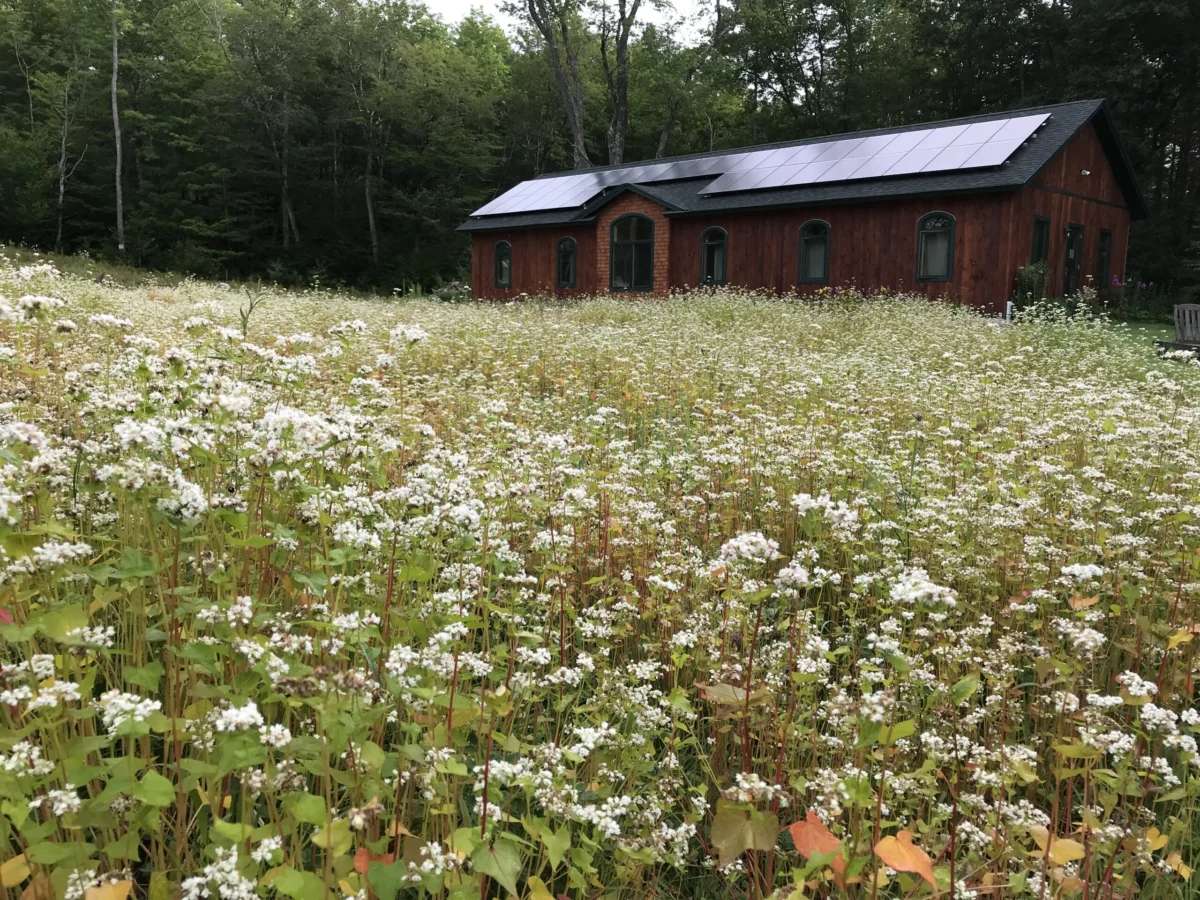
Inner Fire is located on a 43-acre farmstead in Brookline, Vermont. It is not a locked facility, nor does it operate under the traditional "patient-provider" hierarchy. Instead, those who come to the program are called "Seekers"—individuals looking for a way out of the revolving door of psychiatric hospitalizations and the side effects of polypharmacy.
The program’s core pillars include:
- Medication Tapering: A slow, medically supervised reduction of psychiatric drugs, including antipsychotics, antidepressants, and benzodiazepines.
- The One-Year Commitment: A belief that true healing requires time—first to clear the "chemical blanket" of medication, and second to address the underlying trauma or soul-wounds.
- Anthroposophical Foundation: Based on the teachings of Rudolf Steiner, the program treats the human being as a tripartite entity of body, soul, and spirit.
- Holistic Integration: A rigorous schedule of physical labor, artistic therapy, and a strict nutritional protocol (currently transitioning to a ketogenic diet).
Birch’s approach is a direct challenge to the reductionist view that mental health is merely a matter of genetics and brain chemistry. "I see mental health as a reductionist term for soul health," Birch explains. "We’re actually talking about the soul."
Chronology: From European Clinics to a Vermont Farmstead
The genesis of Inner Fire was born from tragedy. Beatrice Birch spent nearly 40 years as a Hauschka Artistic Therapist in Europe, primarily in the United Kingdom, working within anthroposophical clinics. In these settings, medication was rarely the first line of defense, and the focus remained on meeting the "whole person."
Upon her return to the United States, Birch began working at a traditional rehabilitation facility. The contrast was stark. While her European experience was characterized by empowerment and artistic expression, her American experience was defined by heavy sedation. "A number of the residents realized that I was not really from the system," Birch recalls. They began approaching her with a desperate question: "I hate being medicated. Is there a choice?"
The catalyst for Inner Fire occurred after Birch left that facility. Within two years, six of the twelve individuals she had worked with—all of whom felt trapped by their medication—had died by suicide.
"When I heard of the first suicide, I thought to myself, I’m out of this. This is too serious," Birch says. "Then I realized innocence is bliss, and I’m not innocent." This "karmic moment" led Birch to make a promise: their deaths would not be in vain. She committed to creating an alternative where tapering was not just a possibility, but a supported therapeutic goal.
In 2014, with the support of her husband, Tom Kavet—an economist for the Vermont State Legislature—Birch began the arduous process of finding a home for Inner Fire. They purchased an abandoned 43-acre farmstead for $500,000, a price lowered by a seller who believed in the mission. For nine years, Birch and Kavet lived in two small rooms in the farmhouse, raising over $1 million to build the "East Wing" dormitory, which opened in 2019.
Supporting Data: The Economics and Logistics of Intensive Care
The reality of providing 24/7 support for individuals undergoing complex medication withdrawal is reflected in the program’s significant price tag. Inner Fire costs approximately $237,000 per year per Seeker.
Financial and Operational Metrics:
- Capacity: The program currently averages about six Seekers at a time, with a maximum capacity of twelve once the "West Wing" is completed.
- Staffing: The team includes a naturopathic doctor (on-site three days a week), a nutritionist/chef, gardeners, woodsmen, and "guides" who live and work alongside the Seekers.
- Success Rates: Over its 10-year history, approximately 65 Seekers have moved through the program. While formal long-term longitudinal data is currently unavailable due to funding constraints, Birch notes that many former Seekers have returned to college or entered the workforce.
- Fundraising: Roughly two-thirds of participants receive some form of financial aid. Birch spends a significant portion of her time fundraising to bridge the gap between what families can afford and the actual cost of care.
The high cost is attributed to the "intensity" of the work. Tapering from long-term antipsychotic use is a volatile process. Birch notes that when the "blanket" of medication is removed, the world becomes "sharper and brighter," often leading to sensory overload. This requires a high staff-to-Seeker ratio to ensure safety and provide "grounding" through physical activity.
Official Responses: A Systemic Failure to Fund Alternatives
Despite the interest in Inner Fire from families around the world, the program operates largely outside the traditional healthcare infrastructure. Birch reports that state funding in Vermont has remained elusive, and insurance companies are notoriously difficult to navigate.
"We’ve tried to get state funding, but they’re not interested," Birch states. The program’s refusal to adhere to the standard medical model—which prioritizes rapid stabilization via medication—makes it an outlier for state-sponsored healthcare budgets.
However, there have been minor victories. One "tenacious" mother managed to secure full reimbursement from her insurance provider after a year-long battle, providing a potential roadmap for others. To aid this, Inner Fire has had to learn the "ropes" of medical coding, framing their holistic work in language that insurance algorithms can recognize as a legitimate therapeutic program.
The lack of official support highlights a broader systemic gap: while the psychiatric community increasingly acknowledges the difficulty of "discontinuation syndromes" (withdrawal), there are almost no state-funded residential facilities dedicated to helping patients safely taper.
Implications: The Future of the "Inner Fire" Model
The implications of Birch’s work extend far beyond the borders of Vermont. Inner Fire represents a proof-of-concept for a "grounding-first" approach to mental health.
The Importance of Grounding
One of the most significant insights from the Inner Fire model is the role of physical labor in managing psychiatric symptoms. Birch shares the story of "Peter," a Seeker haunted by auditory hallucinations. After two hours of splitting wood, Peter realized his voices had vanished. Birch’s explanation is simple: "You can’t hear voices when you’re splitting wood because you have to be grounded… you have to be in your body."
This focus on the physical—gardening, woodcutting, jumping rope to stave off mania—offers a non-pharmacological toolkit for emotional regulation. It suggests that for some, "mental" illness is best treated through the body.
Safety and Risk Management
The program does not shy away from the risks of tapering. Birch admits that in 11 years, there have been five acts of violence. However, she contextualizes this by noting that violence is a daily occurrence in many locked psychiatric wards. By anticipating "manic tipping points"—observing changes in a Seeker’s gait or eye movement—the staff uses "preventative grounding" (such as immediate physical labor) to de-escalate tension before it turns into a crisis.
A Global Demand
The most telling metric of Inner Fire’s impact is the global demand for its replication. Birch has received inquiries from Texas, Michigan, the U.K., Africa, Japan, and Romania. "An email from South Africa says knowing Inner Fire exists gives us hope," she says.
As Birch looks toward the future, her goal is to complete the Vermont site and then serve as a training ground for others. She envisions a "train-the-trainer" model where people from across the globe live at Inner Fire to "breathe and work" the philosophy before bringing it back to their own communities.
Conclusion
Inner Fire is more than a farmstead; it is a critique of a society that has "buried its head in the sand" regarding the long-term consequences of psychiatric over-medication. While the high cost and small scale make it inaccessible to many, its existence poses a fundamental question to the psychiatric establishment: If people can find healing through wood-splitting, organic diets, and artistic expression, why is the system so singularly focused on the prescription pad?
For Beatrice Birch, the reward is found in the "resilience of the human spirit." By treating mental distress as a soul’s journey rather than a biological defect, Inner Fire offers a path back to a life that is not just stable, but vivid. "They’re listening to their Inner Fire," Birch concludes. "And it’s beautiful."