By Elise Reuter
Published June 18, 2026
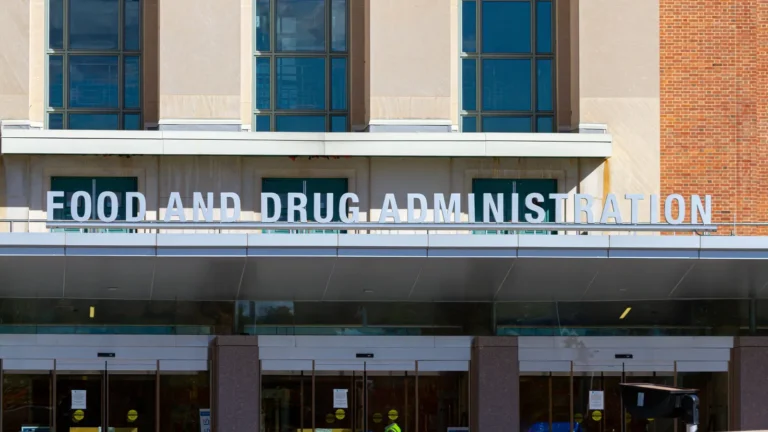
The U.S. Food and Drug Administration (FDA) has issued a formal warning letter to Zoll Medical Corporation, a subsidiary of the Japanese conglomerate Asahi Kasei, following an exhaustive inspection of the company’s headquarters and primary manufacturing facility in Chelmsford, Massachusetts. The letter, dated April 30, 2026, and made public by the agency on June 16, outlines a series of systemic quality control failures, inadequate complaint handling processes, and significant lapses in reporting adverse events to federal regulators.
The findings, which span several of the company’s critical life-support products—including portable ventilators, automated external defibrillators (AEDs), and specialized medical electrodes—represent a significant regulatory hurdle for one of the most prominent names in critical care technology.
Main Facts: The Scope of the FDA’s Findings
The FDA’s intervention follows an inspection conducted between February and April 2025. In its communication, the agency characterized Zoll’s internal quality management as deficient, specifically highlighting a pattern of failing to adequately document, investigate, and report device malfunctions that carry the potential for serious patient injury.
At the heart of the warning letter are three primary categories of concern:

- MRI Compatibility Failures: The FDA identified significant nonconformances regarding how certain portable ventilators interact with Magnetic Resonance Imaging (MRI) environments.
- Inadequate Complaint Handling: The agency discovered a discrepancy between the number of complaints received by the company and those documented in its internal quality management system, suggesting a breakdown in regulatory reporting requirements.
- Corrective and Preventive Action (CAPA) Deficiencies: The company failed to initiate necessary corrective actions for known product defects, including potential safety risks like thermal injuries from electrode components.
Chronology of Regulatory Noncompliance
The timeline of the current enforcement action reveals a protracted struggle between the company’s internal reporting practices and federal expectations for medical device manufacturers.
- 2016–2024: During this eight-year window, the FDA alleges that Zoll’s internal records significantly underreported the volume of complaints related to ventilator malfunctions. While company records showed 27 complaints, federal investigators identified 50 incidents.
- Early 2024: Zoll initiated a recall of its 731 series ventilators to update instructions regarding safe proximity to MRI machines. However, the FDA notes that the company’s delay in reporting these incidents—some of which involved total device shutdowns—contravened federal mandates for timely disclosure.
- February–April 2025: FDA investigators conducted an on-site audit of the Chelmsford, Massachusetts, facility. This inspection uncovered the documentation gaps and validation failures that would eventually form the basis of the April 2026 warning letter.
- April 30, 2026: The FDA officially issued the warning letter, notifying Zoll that the agency deemed their existing quality management procedures insufficient to ensure the safety and effectiveness of their life-saving equipment.
- June 16, 2026: The FDA formally published the letter, signaling a move toward more aggressive public oversight.
Supporting Data: Examining the Product-Specific Risks
The FDA’s investigation focused heavily on the 731 Series Ventilators, which are designed for both hospital and emergency transport use. These devices are intended to provide continuous ventilatory support, but investigators found that when these units are operated in proximity to MRI machines, they are prone to unexpected malfunctions.
The MRI Interaction Gap
The warning letter details specific instances where Zoll failed to properly validate the performance of its devices across varying magnetic field strengths. For instance, the Z Vent Ventilator was marketed as compatible with 1.5-Tesla and 3-Tesla MRI machines. However, investigators found that the company had only performed testing at the 3-Tesla level. Consequently, the device lacked sufficient labeling or validation for use in 1.5-Tesla environments. A 2024 customer complaint confirmed these fears, as the user reported significant image quality discrepancies, suggesting that the ventilator’s electromagnetic output was interfering with the diagnostic machine.
Electrode Safety Concerns
Perhaps more alarming to clinicians is the finding related to Zoll’s defibrillation electrodes. The FDA documented a specific issue involving "burnt tin" found under the electrode gel—a condition that could theoretically cause localized burns to a patient during defibrillation. Despite identifying this as a potential safety hazard, Zoll declined to open a CAPA (Corrective and Preventive Action) file, claiming it was a singular occurrence. The FDA rebuked this logic, noting that ignoring the first instance of a potentially harmful defect fails to meet the threshold of responsible manufacturing.
Official Responses and Corporate Accountability
As of mid-June 2026, representatives for Zoll Medical have stated that the company is "working diligently" to address the concerns raised by the FDA. In a preliminary statement, the company noted that they have already implemented enhanced training for their quality assurance teams and are reviewing all current complaint-handling protocols to ensure alignment with 21 CFR Part 820 (the FDA’s Quality System Regulation).

However, the tone of the FDA’s warning letter leaves little room for ambiguity. The agency stated that if Zoll fails to provide a comprehensive plan to address these violations, the FDA could pursue further enforcement actions, including, but not limited to, seizure of products, injunctions against manufacturing, or the issuance of a consent decree.
Implications: What This Means for Hospitals and Patients
The warning letter issued to Zoll carries significant weight for healthcare providers and the medical technology industry at large.
Impact on Clinical Operations
Hospitals currently utilizing the 731 series ventilators or the Z Vent must now conduct internal reviews to ensure their usage protocols align with updated FDA guidelines. The agency’s finding that ventilator shutdowns have necessitated "alternative means of ventilation" underscores the acute danger these malfunctions pose in high-stakes environments like the ICU or during ambulance transport. Biomedical engineering departments are likely to face increased workloads as they audit their existing Zoll inventory for compliance.
The Regulatory Landscape
This incident highlights a broader trend of the FDA’s increasing scrutiny toward "active" medical devices—those that require software or electronic components to function. As medical technology becomes more integrated with diagnostic imaging tools like MRIs, the burden of proof for electromagnetic compatibility rests squarely on the manufacturer.
Furthermore, the discrepancy in complaint reporting serves as a warning to other manufacturers. The FDA is increasingly utilizing data-matching techniques to compare the volume of complaints a company reports versus the complaints a company receives. When these numbers do not align, it is often a red flag for the agency that the manufacturer is attempting to minimize the appearance of device failures.

The Path Forward
For Zoll, the path forward requires more than just a public relations response. The company must prove to federal auditors that it has fundamentally transformed its culture of quality. This includes:
- Retrospective Analysis: A complete audit of all complaints filed since 2016 to determine if other safety trends have been overlooked.
- Validation Upgrades: Rigorous testing of all portable ventilators against the full spectrum of MRI field strengths.
- Cultural Reform: Strengthening the internal mechanisms that allow quality assurance officers to escalate safety concerns without fear of production-related pressure.
Ultimately, the Zoll case serves as a stark reminder of the "human element" in medical device manufacturing. Every data point in a spreadsheet and every complaint in a digital inbox represents a patient whose life may depend on the equipment functioning as intended. As the FDA continues to exert its oversight, manufacturers are being put on notice: the era of lax documentation and delayed reporting is coming to a definitive end. The medical community will now wait to see whether Zoll can regain the trust of regulators and clinicians alike through transparent, measurable, and immediate action.