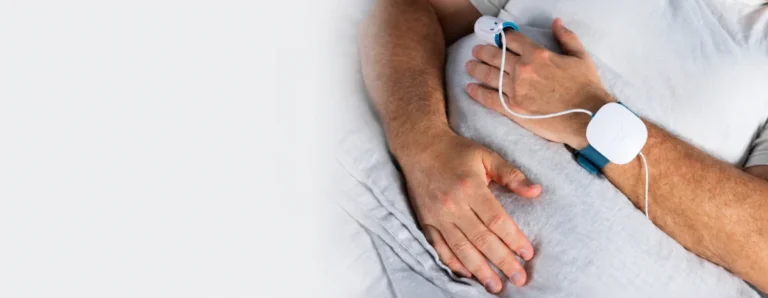
In the rapidly evolving landscape of digital health, the operational burden of managing home sleep testing (HST) has long been a bottleneck for sleep clinics and health systems. Practitioners frequently find themselves juggling the logistical demands of equipment maintenance, patient support, and device shipping, leaving precious little time for the high-value clinical work of data interpretation and patient counseling.
To address these systemic inefficiencies, EnsoData has officially launched EnsoHST Direct, a fully managed, AI-driven diagnostic ecosystem. This new service model aims to fundamentally decouple diagnostic capacity from clinical overhead, allowing healthcare providers to scale their sleep programs without the traditional costs associated with physical device inventory or administrative staffing.
Main Facts: The End-to-End Diagnostic Evolution
EnsoHST Direct represents a shift from a product-centered model to a service-centered model. Under the traditional paradigm, clinics were required to purchase or lease sleep testing devices, manage a library of hardware, oversee cleaning and sanitization, and handle the shipping logistics for every patient.
EnsoHST Direct streamlines this by providing a comprehensive, “hands-off” workflow for the clinic. The core features of the platform include:
- Logistics Management: EnsoData handles all aspects of device fulfillment, shipping hardware directly to the patient’s doorstep.
- Patient Support: The service includes automated setup guidance and technical support, ensuring that patients are correctly oriented with the technology before they begin testing.
- Multi-Night Testing: Recognizing the inherent "night-to-night" variability in sleep patterns, the service supports up to seven nights of diagnostic testing. This longitudinal approach offers a more comprehensive view of sleep health than a single-night snapshot.
- Automated Success Tracking: Patients receive real-time, in-app notifications regarding the success of their studies. If a test fails to capture sufficient data, the system automatically prompts the patient to try again the following night, contributing to a reported 97% patient success rate.
- Rapid Turnaround: The entire diagnostic cycle, from the initial order to the generation of finalized, AI-scored results, is designed to be completed within a one-to-five-day window.
Chronology: The Journey to Scalable Diagnostics
The launch of EnsoHST Direct is the culmination of years of development in artificial intelligence for sleep medicine. EnsoData has consistently positioned itself as a leader in applying machine learning to the complex waveforms generated by polysomnography (PSG) and home sleep tests.
- Early Development: EnsoData began by focusing on the "back-end" of sleep medicine—the scoring of sleep studies. By developing AI capable of parsing vast amounts of respiratory and sleep-stage data, the company proved that AI could match or exceed the precision of human technicians in certain metrics.
- FDA Clearances: The company secured a series of regulatory wins, gaining FDA clearance for its AI-powered diagnostic technologies, particularly regarding pulse oximetry and automated respiratory scoring.
- Capital Injection: In recent years, EnsoData secured $20 million in funding intended to expand its footprint in the sleep diagnostic market. This capital served as the engine for the R&D required to pivot from a software provider to a comprehensive, logistics-heavy diagnostic partner.
- The Launch of EnsoHST Direct: Following successful pilot programs and internal testing to ensure logistics integrity, the company has now fully rolled out the Direct service, effectively integrating its proprietary AI engine into a managed, hardware-supported workflow.
Supporting Data: Precision and Performance Metrics
The clinical utility of EnsoHST Direct is anchored in the robust performance of EnsoData’s AI scoring engine. When evaluating a new diagnostic tool, clinicians primarily look for accuracy, sensitivity, and clinical relevance. According to the company’s internal validation studies, the results generated by EnsoHST Direct are highly comparable to traditional, in-lab PSG—the gold standard of sleep diagnostics.
Key performance indicators provided by EnsoData include:
- Sensitivity: The system boasts a 92% sensitivity for sleep apnea, ensuring that few cases of the condition go undetected.
- Specificity: For moderate Central Sleep Apnea (CSA), the system reports 100% specificity, providing high confidence for clinicians during the differential diagnosis process.
- Accuracy: The mean difference in the estimated Apnea-Hypopnea Index (eAHI) is within ±1, which is considered clinically insignificant in most diagnostic contexts.
- Sleep Time Consistency: The average difference between the EnsoHST total sleep time and traditional PSG is approximately 5.5 minutes, demonstrating that the compact home device can capture sleep architecture with high fidelity.
By leveraging these metrics, the platform ensures that the data delivered to the physician is not just "fast," but clinically actionable.
Official Responses: Eliminating Operational Friction
The philosophy driving EnsoHST Direct is one of "clinical empowerment." Bobby Cockrill, MBA, the Chief Commercial Officer at EnsoData, has been vocal about the systemic barriers that have hindered the growth of sleep medicine.
“Our primary goal with EnsoHST Direct is to eliminate the operational friction that has historically capped the growth of home sleep testing programs while finally making multi-night diagnostics accessible,” says Cockrill.
He emphasizes that the current model of sleep medicine is often constrained by the labor-intensive nature of device management. By offloading these tasks to EnsoData, clinicians can reclaim the time previously spent on supply-chain logistics. "By taking the entire burden of shipping, device management, and patient support off the clinic’s shoulders, we are empowering healthcare providers to focus on what matters most: clinical interpretation and patient care," Cockrill adds.
Furthermore, Cockrill notes that the technology addresses a long-standing limitation in the field: the "single-night" bias. "This fully managed, end-to-end workflow allows sleep programs and health systems to overcome the clinical limitations of single-night testing and capture a true longitudinal picture of a patient’s sleep health, while scaling testing capacity without adding internal headcount or complexity."
Implications: The Future of Sleep Program Management
The implications of this model for the healthcare industry are profound. As the prevalence of sleep-disordered breathing continues to rise globally, the demand for diagnostic services is outpacing the supply of trained sleep technicians and clinic space.
Scaling Without Adding Headcount
One of the most significant advantages for health systems is the ability to scale without the need for additional administrative staff. Traditionally, as a clinic’s patient volume grew, the demand for "back-office" staff to track devices, clean equipment, and troubleshoot patient issues increased linearly. With EnsoHST Direct, this relationship is severed. A clinic can double or triple its testing capacity without needing to hire a single additional employee to manage the hardware.
Improving Patient Adherence and Outcomes
Patient non-compliance and "failed tests" have historically been the bane of home sleep testing. When a patient receives a device but fails to use it correctly—or when a single night’s data is inconclusive due to a bad sensor—the diagnostic process is delayed, often by weeks. The 97% success rate reported by EnsoData is a game-changer. By providing automated, real-time feedback and the ability to conduct multiple nights of testing, the platform ensures that the patient is supported throughout the process, reducing the risk of drop-off.
The Rise of Longitudinal Data
The move toward multi-night testing is arguably the most significant clinical shift facilitated by this model. A single night of sleep data can be an outlier; perhaps the patient consumed caffeine, had a particularly stressful day, or slept in an unusual position. By capturing up to seven nights of data, clinicians are presented with a "longitudinal" view, which is far more representative of the patient’s habitual sleep health. This leads to more accurate diagnoses and more appropriate treatment plans, whether that involves CPAP therapy, oral appliances, or behavioral interventions.
Financial and Operational Considerations
While EnsoData handles the logistics, the responsibility for patient payment and insurance billing remains with the practice. This is a crucial distinction. It allows the provider to maintain ownership of the patient relationship and the financial revenue generated by the test, while simply outsourcing the "busy work" that does not require a medical degree.
Conclusion: A New Standard?
The launch of EnsoHST Direct signals a broader trend in medical technology: the migration of complex diagnostic procedures from the laboratory to the home, supported by sophisticated, AI-driven logistics. By bridging the gap between hardware and high-level interpretation, EnsoData is not just offering a device; they are offering an infrastructure that could allow the sleep medicine field to finally keep pace with the growing public health crisis of sleep disorders.
As hospitals and independent practices look for ways to improve efficiency in a post-pandemic environment, the "managed diagnostic" model may soon become the gold standard. By reducing the logistical burden, EnsoData is allowing clinicians to return to the heart of medicine: diagnosing and treating patients with precision, speed, and confidence.