










While the sweltering heat of late summer tempts many to trade their gym bags for beach towels and sun loungers, the world of elite strength and conditioning is far from stagnant. Joe DeFranco, the mastermind behind the awe-inspiring physiques of NFL icons, UFC champions, and WWE titans, is currently turning up the temperature in the weight room with a high-intensity protocol designed to separate the dedicated from the casual.
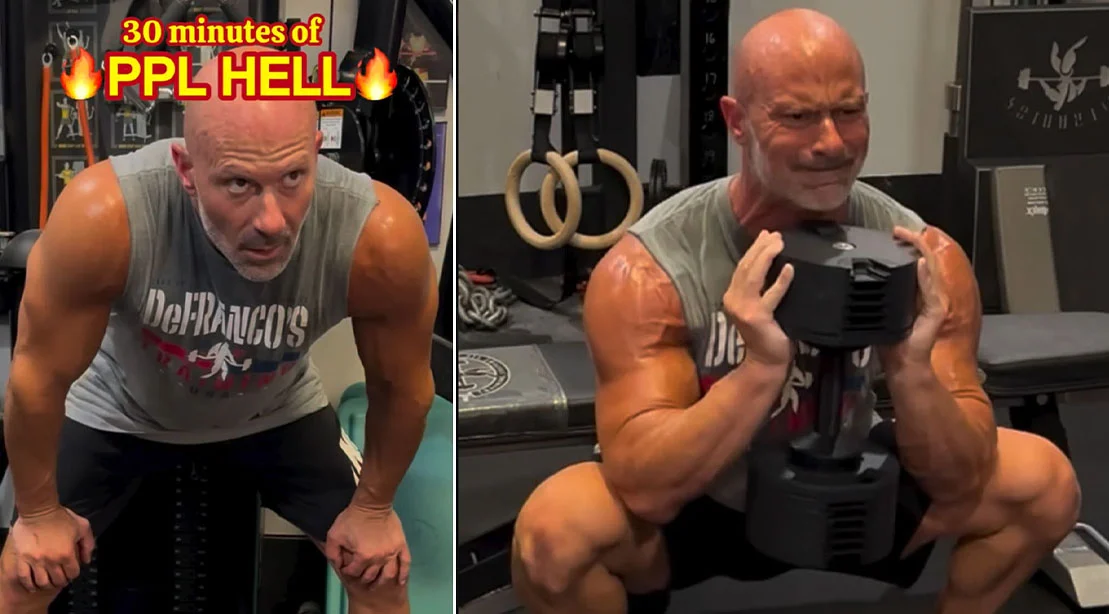
DeFranco, a legend in the fitness industry, has recently unveiled a "30 Minutes of PPL Hell" circuit. Shared with his massive community of over 220,000 Instagram followers, this workout isn’t for the faint of heart. It is a calculated, brutal, and highly effective synthesis of strength and conditioning that promises to torch body fat while carving out quality muscle—all within the span of half an hour.
The Core Philosophy: Why "PPL Hell" Works
The fitness landscape is often cluttered with "fluff"—endless sets of isolation movements, low-intensity cardio, and overly complex supersets that offer more distraction than results. DeFranco’s approach cuts through the noise. By utilizing a Push-Pull-Legs (PPL) structure compressed into a high-density, timed circuit, he ensures that the trainee achieves maximum metabolic output without sacrificing the mechanical tension required for hypertrophy.
For the busy professional or the athlete on a tight schedule, this protocol is a revelation. It shifts the paradigm from "how long can I spend in the gym" to "how much work can I perform with high-quality movement in a limited window?"
A Chronological Breakdown of the Circuit
The protocol is deceptively simple in its structure, but as DeFranco warns, "Simple on paper, HELL in practice." To execute this correctly, you are not chasing mindless volume with light weights; you are chasing the heavy load, maintaining structural integrity, and fighting against the clock.
Phase 1: The Pulling Foundation (Bench-Assisted Dumbbell Rows)
The circuit begins with the bench-assisted dumbbell row. This movement is the antidote to the modern sedentary lifestyle. For those hunched over desks for eight hours a day, the upper back is often weak and overstretched. This move targets the lats, traps, and rhomboids, effectively pulling the shoulders back into a healthier alignment. Beyond the postural benefits, it taxes the grip and arms, setting a demanding tone for the remainder of the workout.
Phase 2: The Powerhouse (Goblet Squats)
Once the back is fatigued, the transition to the goblet squat forces the trainee to engage the core and lower body. This is a primary pushing movement for the legs. It recruits the quads, glutes, hamstrings, adductors, and calves. The nature of the goblet hold—tucked firmly against the chest—necessitates a rigid, braced torso, turning a leg exercise into a full-body stability challenge.
Phase 3: The Chest and Shoulder Finish (Shoulder Tap Pushups)
The final movement in the cycle is the shoulder tap pushup. This is not merely a chest exercise; it is an anti-rotational core movement. By removing one point of contact while in the pushup position, the trainee forces the obliques and transverse abdominis to fire intensely to prevent the hips from swaying. The pectorals, triceps, and anterior deltoids receive a massive amount of volume, pushing the muscles toward failure by the end of each round.
Supporting Data: The Mechanics of Intensity
DeFranco’s methodology relies on a specific loading parameter. He advises that for the rows and the squats, the user should select a dumbbell equivalent to 30% to 35% of their total body weight.
Why this specific load?
- Mechanical Tension: Using weights in this range ensures that the muscles are under enough strain to trigger growth hormone release and myofibrillar hypertrophy.
- Metabolic Demand: By keeping the load significant but manageable enough to move through the circuit without excessive rest, the body enters a state of high oxygen consumption (EPOC), which facilitates fat burning long after the workout concludes.
- The "DeFranco" Standard: Unlike traditional "circuit training" that often prioritizes speed over form, DeFranco’s system demands that the load remains heavy. The conditioning effect is a byproduct of the intensity, not the lack of weight.
Scaling the Intensity: From Novice to Elite
One of the most frequently asked questions regarding professional-grade programs is, "Can this be scaled for my level?" The beauty of this 30-minute block is its inherent scalability.
For the Beginner
If 30 minutes feels like a daunting mountain, DeFranco encourages users to start by reducing the duration. Aiming for 15 or 20 minutes allows the body to adapt to the metabolic demands of the circuit without risking burnout or injury. Consistency, he reminds us, is the foundation of the process.
For the Athlete
For those looking to replicate the performance levels of the NFL stars coached by DeFranco, the "heat" can be turned up. The shoulder tap pushups can be modified by elevating the feet on a bench. This shifts a greater percentage of body weight onto the upper body, significantly increasing the difficulty of the pushup and the intensity of the core stabilization required to stay balanced.
Implications for Modern Fitness
The rise of "time-compressed training" like DeFranco’s PPL circuit signals a shift in how we view body composition. The days of spending two hours in the gym performing "bro-splits" are fading. In their place, we are seeing a focus on functional strength and metabolic efficiency.
Impact on Recovery
Because this workout is so intense, the implications for recovery are significant. A 30-minute session of this caliber creates high levels of neuromuscular fatigue. DeFranco’s emphasis on "trusting the process" implies that this workout should not be done every day. Incorporating adequate protein, hydration, and sleep is non-negotiable. If you are pushing your body into "hell," you must provide the nutrients required to climb back out.
The Psychological Component
Perhaps the most understated element of this protocol is the mental discipline required. As DeFranco noted, you have to "think positive." When you are deep into the 20th minute of the circuit, and your lungs are burning and your grip is failing, the tendency is to quit or lighten the load. By forcing yourself to maintain the heavy dumbbells and the required form, you are training the brain as much as the bicep.
Official Perspective: The "DeFranco" Standard
Joe DeFranco has built his reputation not on hype, but on results. His gym, DeFranco’s Training, is a pilgrimage site for those who want to see what the human body is truly capable of. When he speaks about training, the industry listens.
His critique of "mindless" circuit training is particularly poignant. By stripping away the ego and focusing on the relationship between heavy load and short rest periods, he has created a template that works for the average gym-goer while remaining rigorous enough for the pros. The goal isn’t just to sweat; the goal is to induce a physiological adaptation that results in a stronger, leaner, and more resilient physique.
Conclusion: Are You Ready for the Heat?
As we transition out of the summer, the temptation to slow down is strong. However, the "30 Minutes of PPL Hell" is a reminder that the best time to build a championship physique is always "now." Whether you are a professional athlete or someone just looking to reclaim your fitness, this circuit offers a direct, no-nonsense path to your goals.
Remember the words of the coach:
- Choose your load wisely: 30-35% of your body weight.
- Prioritize form: Don’t sacrifice the quality of the rep for the speed of the set.
- Trust the process: Results aren’t built in a day; they are built in the 30-minute windows of pain you choose to endure when nobody is watching.
If you find yourself struggling, remember why you started. You aren’t just doing reps; you are conditioning your heart, your mind, and your body to handle the demands of life. As Joe DeFranco puts it, "Simple on paper. HELL in practice." But for those who endure, the results are nothing short of heavenly.
To stay updated on Joe DeFranco’s latest training protocols and to join the community of athletes pushing their limits, follow his journey on Instagram.