1 July, 2026
The European Respiratory Society (ERS) has officially opened the polls for its 2026 Leadership Elections, marking a pivotal moment for the global respiratory community. As the organization looks toward the next four years, members are being called upon to select the individual who will serve as the next ERS Vice President—a role that serves as the gateway to a succession plan encompassing the positions of President-Elect, President, and finally, Past President.
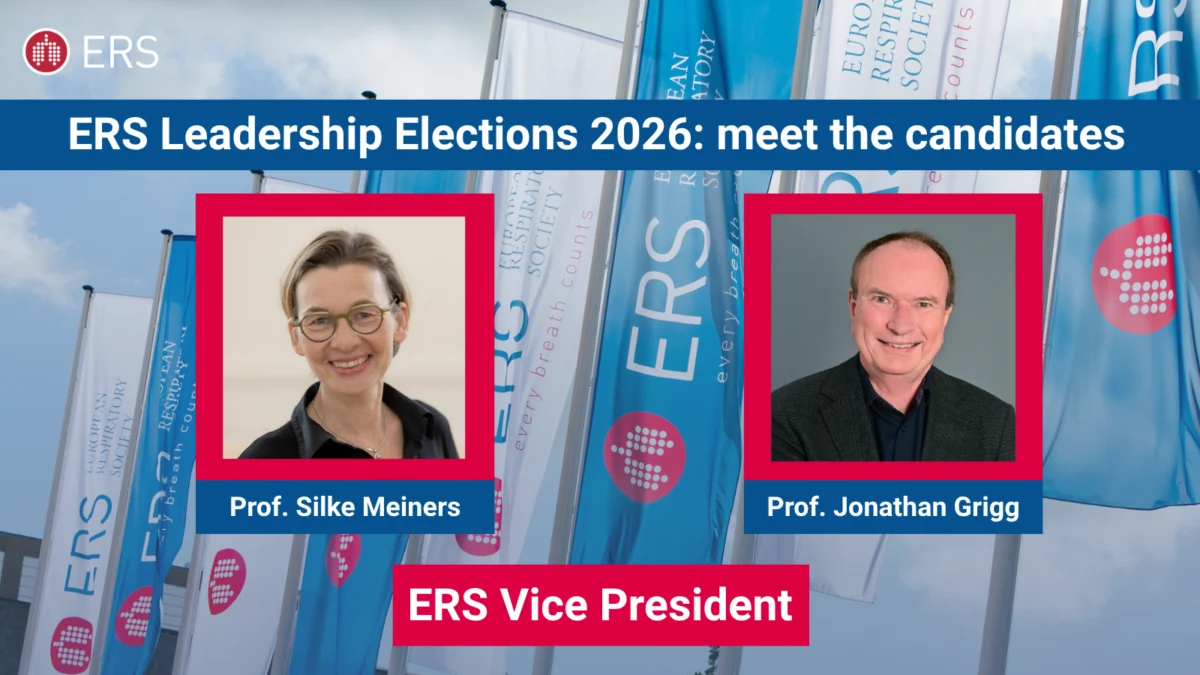
With the landscape of respiratory health shifting rapidly due to climate change, the evolution of precision medicine, and the ongoing challenges of non-communicable respiratory diseases, the stakes for this election have never been higher. This year’s contest features two distinguished candidates: Prof. Silke Meiners and Prof. Jonathan Grigg. Both bring distinct visions, academic rigor, and a deep history of service to the ERS.
The Path to Presidency: Understanding the Role
The ERS leadership structure is designed for long-term strategic stability. The Vice President is not merely an advisory role; it is the first step in a four-year leadership trajectory. The individual elected this August will eventually helm the society, guiding its scientific agenda, international advocacy efforts, and educational mandates.
The society’s bylaws emphasize that the elected leader must possess a balance of administrative acumen and scientific vision. They must manage the complexities of a multi-disciplinary membership while steering the organization’s response to global health crises. With voting now live, the ERS is actively encouraging its diverse membership base—comprising clinicians, researchers, and allied health professionals—to engage with the platforms of both candidates to ensure the future direction of the society aligns with the needs of the global patient population.
Candidate Profiles: A Closer Look at the Contenders
Prof. Silke Meiners: A Vision for Translational Precision
Prof. Silke Meiners has long been recognized as a cornerstone of the ERS scientific community. Her career is defined by an unwavering commitment to bridging the "bench-to-bedside" divide. For over 15 years, the ERS has served as her primary academic home, and her leadership history—particularly within Assembly 3—is marked by a focus on integration and innovation.
Scientific Foundation and Expertise
Meiners’ research portfolio is vast, spanning oncology, cardiovascular disease, and respiratory science. She has been instrumental in refining the mechanistic understanding of fibrosis and Chronic Obstructive Pulmonary Disease (COPD). By leveraging human patient samples alongside sophisticated preclinical animal models, she has provided the empirical foundation for new therapeutic interventions. Her work in multi-centre cohort studies, specifically regarding biomarker analysis, has established her as a pioneer in the era of precision medicine.
The "Translational Framework" Platform
If elected, Meiners intends to implement an "end-to-end" translational science framework. Her platform focuses on:
- Integrating Discovery: Connecting basic science discovery with clinical trials to ensure that laboratory breakthroughs reach patients more efficiently.
- Early Career Empowerment: As a vocal advocate for the next generation, she plans to foster programs that support early-career researchers, ensuring they have the mentorship and resources to navigate the translational pipeline.
- Diversity and Equity: Meiners aims to champion equity and diversity within the respiratory research ecosystem, believing that the future of medicine must be as inclusive as it is scientific.
Prof. Jonathan Grigg: Advocating for Global Health and Policy
Prof. Jonathan Grigg, a Professor of Paediatric Respiratory and Environmental Medicine at Queen Mary University of London, presents a platform rooted in advocacy, public health, and the urgent intersection of environment and respiratory wellbeing.
Environmental Advocacy and Clinical Leadership
Grigg’s influence extends far beyond the hospital ward. As an Honorary Consultant Paediatrician at Barts Health NHS Trust and a former Head of the Paediatric Assembly and Chair of the Tobacco Control Committee at ERS, he has become a leading voice in the fight for cleaner air. He is perhaps best known for his role in the landmark Ella Adoo-Kissi-Debrah case, where his expert testimony linked air pollution directly to asthma mortality. His advocacy group, "Doctors against Diesel," has fundamentally shifted the discourse on urban air quality, prompting policy shifts at both the national and international levels.
A Global Vision for ERS
Grigg’s campaign is characterized by a desire to break down the "traditional medical boundaries" that often silo research. His goals for the ERS include:
- Global Health Equity: Drawing on his experience leading a Global Health Research Group in Sub-Saharan Africa, Grigg is committed to addressing the unmet needs of patients in the Global South.
- Affordability and Access: He intends to lobby for the widespread availability of affordable inhaled therapies in developing regions, aiming to rectify the disparity in care between wealthy and low-resource settings.
- Policy Influence: Grigg plans to solidify the ERS as the primary authority for governments and international bodies like the WHO, using the society’s collective expertise to influence climate and health policies worldwide.
Chronology of the 2026 Election Process
The election cycle is a structured process designed to ensure transparency and member participation.
- 1 July, 2026: Official opening of the voting portal via the myERS member platform.
- July 2026: A month-long awareness campaign featuring webinars, candidate Q&As, and dissemination of manifesto materials to the membership.
- 2 August, 2026 (23:59 CEST): Deadline for all ballots to be cast.
- Late August 2026: Official announcement of the election results, followed by a transition period before the incoming Vice President officially takes office.
Supporting Data: The Need for New Leadership
The 2026 election arrives at a critical juncture for respiratory medicine. According to recent ERS data, the global burden of chronic respiratory disease continues to rise, with an estimated 500 million people living with COPD and hundreds of millions more affected by asthma and lung fibrosis.
Furthermore, the environmental crisis has created an unprecedented demand for respiratory expertise in policy circles. The ERS has seen a 12% increase in membership interest regarding environmental health advocacy over the last three years. Both candidates recognize this trend, though they emphasize different tactical approaches: Meiners through the lens of precision clinical application, and Grigg through the lens of systemic environmental reform.
These data points illustrate the necessity for a leader who can manage both the high-tech, data-driven future of personalized medicine and the high-stakes, political world of global environmental policy.
Official Responses and Member Implications
The ERS Secretariat has emphasized that the choice facing the membership is reflective of the society’s own growth. "We are a society that encompasses the molecular lab, the clinical ward, and the halls of government," stated an ERS representative. "The candidates represent the two pillars of our mission: the advancement of medical science and the advancement of public health policy."
For the average ERS member, the implications of this vote are significant. The elected Vice President will oversee the allocation of research grants, the setting of conference themes, and the society’s stance on international health initiatives.
Key Considerations for Voters:
- Research Focus: Does the member prioritize the refinement of precision therapeutics (Meiners) or the expansion of global health equity and environmental policy (Grigg)?
- Mentorship: Which candidate’s vision for the next generation of respiratory scientists aligns with the voter’s own career path?
- Societal Identity: How should the ERS balance its role as a scientific academic body versus its role as a global advocacy powerhouse?
Looking Ahead: The Future of the ERS
As the voting window enters its final stages, the campaign underscores the health of the ERS as an institution. The presence of two highly qualified candidates with deep, multifaceted experiences ensures that regardless of the outcome, the society will remain in capable hands.
The successful candidate will inherit a legacy of excellence but will also face the daunting challenge of a post-pandemic world where respiratory health is a primary public concern. Whether through the technical rigor of translational science or the bold pursuit of environmental justice, the next ERS Vice President will be charged with defining what it means to be a respiratory physician or scientist in the late 2020s.
Members are encouraged to log in to myERS before the 2 August deadline to cast their vote. The future of the society, and by extension the future of millions of respiratory patients worldwide, depends on the informed participation of its membership.