






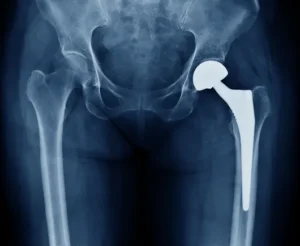



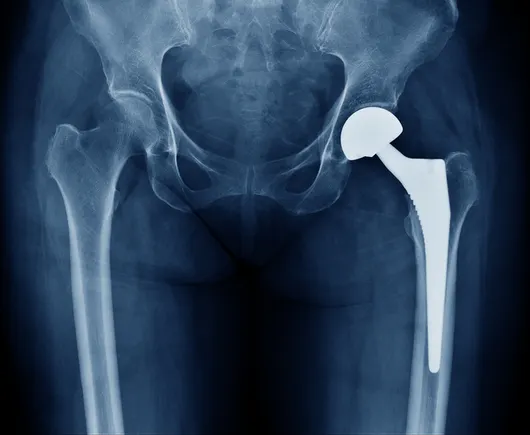
Medical technology giant Stryker Corporation has signaled a significant cooling in the elective surgery market, reporting a third-quarter performance that fell short of investor expectations. The company, a bellwether for the orthopedic sector, identified a pronounced deceleration in joint replacement procedures—a trend management attributes to the growing financial burden on U.S. patients.
The quarterly results, which marked one of the final earnings calls for long-standing CEO Kevin Lobo, underscored a challenging economic climate where rising healthcare costs are increasingly dictating patient behavior. Despite a revenue increase, the bottom line took a hit, prompting a downward revision of the company’s full-year financial guidance and casting a shadow over the near-term outlook for the broader medtech industry.
By the Numbers: Q3 Financial Overview
Stryker’s third-quarter results present a complex narrative of top-line growth coupled with shrinking profitability.
- Quarterly Revenue: The company reported $6.5 billion in revenue, representing a 7.7% increase year-over-year. While this growth demonstrates the resilience of Stryker’s diversified portfolio, it failed to meet the aggressive targets previously set by Wall Street analysts.
- Net Earnings: The company’s net earnings saw a contraction, coming in at $753 million—a 12.3% decrease compared to the same period in 2025.
- Orthopedic Performance: The core of the issue lies within the hip and knee business. Knee sales grew by a modest 1.1% compared to the prior year, while hip sales actually declined by 1.0%.
These figures represent a marked departure from the post-pandemic "catch-up" phase, where the backlog of deferred surgeries fueled record-breaking growth for orthopedic manufacturers.
Chronology of a Slowdown
The realization that the market was cooling did not happen overnight. The narrative of this slowdown has evolved over the past several months:
- Early Q3 Signals: As the quarter progressed, internal data began to reflect a change in hospital throughput. Unlike previous quarters where demand consistently outpaced supply, the summer months saw a plateau in elective procedure scheduling.
- The CFO’s Warning: In late September, CFO Preston Wells offered an early indication of these headwinds during an industry conference, noting that peripheral vascular and hip sales were not tracking as expected. This served as a precursor to the formal Q3 earnings report.
- The Cyberattack and Operational Hurdles: Throughout 2026, Stryker has navigated significant operational friction, including a high-profile cyberattack and a complex software implementation within its orthopedics division. While these factors initially drew the focus of investors, management has clarified that they are secondary to the broader macroeconomic environment.
- The Q3 Earnings Call: On Thursday, CEO Kevin Lobo confirmed the market shift, officially lowering the company’s full-year sales guidance from a range of 8.3%–9.3% to a more conservative 6.5%–7.0%.
Supporting Data: The Patient Perspective
The central theme of the current slowdown is not a failure of Stryker’s technology, but rather a change in patient economic health. According to CEO Kevin Lobo, the culprit is the rising cost of living and the structure of modern insurance plans.
"In the U.S., we are seeing slower procedural growth amid affordability concerns from higher insurance premiums and deductibles," Lobo stated.
The data suggests a direct correlation between economic pressure and surgical volume. Patients who are hit with high out-of-pocket costs at the start of the year—or those whose insurance providers have tightened pre-authorization criteria—are choosing to postpone necessary joint replacements.
"There are patients that today are having trouble being able to make their deductible because their deductibles are higher," Lobo explained. "They’re actually living with pain a little bit longer than they would like to."
Historically, the elective surgery market has functioned as a cyclical industry. When disposable income is strained, non-emergency procedures are often the first to be deferred. Stryker’s data suggests that the market is currently in the grip of one of these cyclical downturns, as households prioritize essential spending over elective orthopedic corrections.
Official Responses and Leadership Transition
The Q3 report carries added weight as it serves as a swan song for Kevin Lobo, who has led Stryker for 15 years. Lobo, who is set to pass the mantle to current COO Spencer Stiles in January 2027, expressed his disappointment in the results.
"I would have preferred to deliver better news," Lobo noted during the call.
Lobo’s tenure has been defined by aggressive growth and the successful integration of robotic surgical systems like Mako. His departure marks the end of an era, but he emphasized that the current market deceleration is a macroeconomic reality rather than a reflection of company strategy. He maintained that Stryker has not lost market share to competitors; rather, the "total addressable market" for joint procedures has shrunk as patients opt to wait.
The transition to Spencer Stiles will take place at a time of strategic recalibration for the company, as it seeks to balance its dominance in orthopedics with forays into new growth categories.
Strategic Pivot: The CMR Surgical Partnership
Amid the gloomy news regarding hip and knee procedures, Stryker provided a glimpse into its long-term growth strategy through a significant investment in the soft-tissue robotics space.
Earlier this month, Stryker announced a $400 million investment in CMR Surgical. The deal establishes Stryker as the exclusive U.S. distributor of CMR’s "Versius Plus" robot.
Why CMR?
Lobo described the partnership as a calculated move to enter a new, high-growth market without the immediate risks of an outright acquisition.
- Market Versatility: The Versius Plus robot is designed for modularity, making it ideal for both high-volume hospital environments and the rapidly growing ambulatory surgery center (ASC) market.
- A "Pure Adjacency": Unlike the Mako system—which Stryker acquired in 2013 specifically for its orthopedic implants—the CMR robot represents a "pure adjacency" into general surgery. By partnering first, Stryker avoids the massive upfront development and regulatory costs associated with bringing a new robotic platform to the U.S. market.
- The Path to Acquisition: While Lobo was clear that no formal timeline exists, he explicitly stated, "Our hope and our plan is that we will eventually purchase this."
This strategy highlights Stryker’s intent to become a comprehensive surgical solutions provider. By leveraging its existing sales force and distribution network to push CMR’s technology, Stryker can test the waters of soft-tissue robotics while maintaining a disciplined balance sheet.
Implications for the Medtech Industry
The signals coming from Stryker have broad implications for the healthcare sector. If the leader in joint replacements is seeing patients delay care due to insurance deductibles and economic anxiety, it is highly likely that other orthopedic and medical device companies will report similar trends in the coming weeks.
1. The Impact of High-Deductible Health Plans (HDHPs)
The reliance of the U.S. healthcare system on high-deductible insurance plans creates a "front-loading" effect on costs, where patients are most sensitive to pricing early in the year. If this trend continues, manufacturers may see increased volatility in their quarterly performance, with greater sensitivity to the economic calendar.
2. The Rise of the Ambulatory Surgery Center (ASC)
Stryker’s focus on the modular nature of the CMR robot speaks to a larger industry shift. As hospitals face margin pressures, they are pushing lower-acuity procedures into ASCs. Companies that can provide technology that is portable, affordable, and easy to integrate into these smaller settings will likely win the next decade of market share.
3. The Future of M&A
Stryker’s "distribute-first, acquire-later" model with CMR Surgical may become a blueprint for other medtech giants. In a high-interest-rate environment where the cost of capital is elevated, large-scale acquisitions are riskier. Strategic partnerships that allow for market testing provide a lower-risk path to innovation, allowing companies to ensure a technology is a commercial success before committing their full balance sheet to an acquisition.
4. Continued Economic Sensitivity
As Stryker noted, elective surgery has historically been tied to economic cycles. While the industry has long touted the "demographic tailwind" of an aging global population, those individuals still require the financial means to access care. The current earnings report serves as a reminder that healthcare demand is not immune to the realities of inflation, wage growth, and the personal financial burden of insurance premiums.
Conclusion
Stryker’s third-quarter performance is a sobering reflection of the current intersection between medical necessity and economic reality. While the company continues to innovate through its investment in soft-tissue robotics and its established leadership in orthopedics, the immediate term is dominated by a cautious consumer and a slowing procedural environment.
As the company prepares for a leadership transition in early 2027, the challenge for incoming CEO Spencer Stiles will be to navigate these macroeconomic headwinds while maintaining the momentum of Stryker’s long-term growth initiatives. The path forward will require not only technological superiority but a deep understanding of the financial barriers currently preventing patients from seeking the care they need.