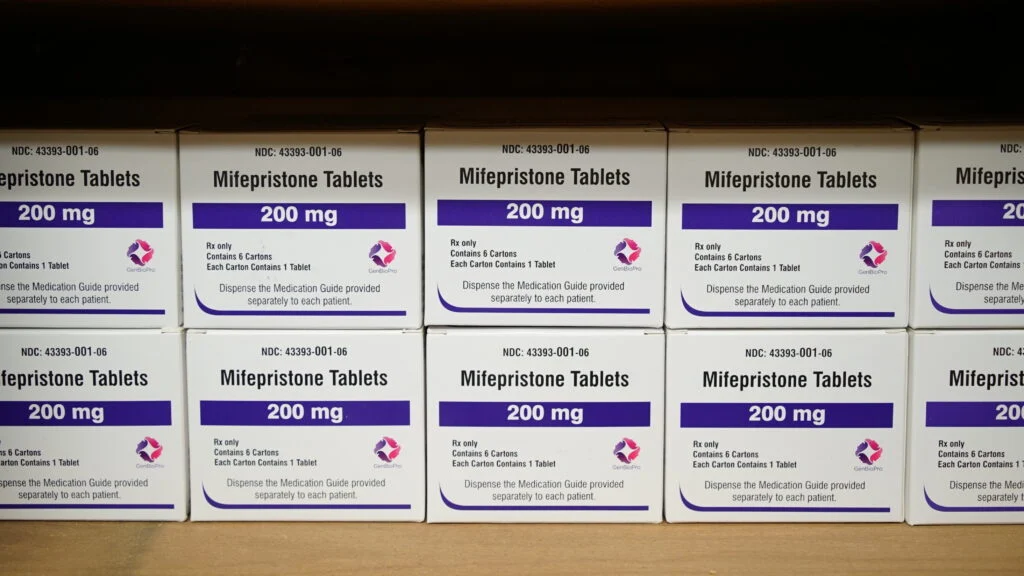
WASHINGTON — The U.S. Supreme Court has granted a temporary reprieve to abortion access advocates, issuing an emergency order that maintains the current availability of mifepristone—a widely used medication for ending early pregnancies—at least through Thursday. The order, signed by Justice Samuel Alito, effectively freezes a ruling from a federal appeals court that sought to impose strict limitations on the drug’s distribution, including the suspension of telehealth prescriptions and mail-order delivery.
As the nation navigates the evolving landscape of reproductive healthcare, this latest legal skirmish highlights the deepening divisions over abortion access four years after the Supreme Court’s landmark decision in Dobbs v. Jackson Women’s Health Organization, which overturned Roe v. Wade.
The Core Conflict: FDA Authority vs. State Sovereignty
At the heart of the current dispute is a lawsuit filed by the state of Louisiana. The state is challenging the Food and Drug Administration’s (FDA) regulatory framework regarding mifepristone, arguing that the agency’s policies—which allow for broader access to the drug—undermine state-level abortion bans. Louisiana contends that the federal government’s rules infringe upon its sovereign right to regulate the practice of medicine within its borders.
The legal challenge specifically attacks the FDA’s long-standing approval of the drug, which first entered the U.S. market in 2000. For over two decades, FDA scientists have repeatedly reaffirmed that mifepristone is both safe and effective. However, opponents of abortion argue that the agency acted improperly in easing restrictions over the years, alleging that the FDA overlooked safety protocols.
The 5th Circuit Ruling
A three-judge panel of the 5th U.S. Circuit Court of Appeals had previously concluded that Louisiana was likely to prevail on the merits of its case. Consequently, the appellate court ruled that the availability of mifepristone should be curtailed, mandating in-person doctor visits and restricting the use of the mail for medication delivery. The Supreme Court’s intervention on Monday prevents these restrictions from taking effect while the justices weigh the broader legal questions at hand.
A Chronology of the Mifepristone Legal Saga
The legal status of mifepristone has been in a state of flux since the Dobbs decision triggered a wave of state-level restrictions across the country.
- 2000: The FDA grants initial approval for mifepristone, acknowledging its safety and efficacy for medication abortion.
- 2020-2021: During the height of the COVID-19 pandemic, the FDA further eases restrictions, allowing for telehealth consultations and the mailing of the medication to patients.
- 2022: The Supreme Court overturns Roe v. Wade, stripping away the federal constitutional right to an abortion and allowing states to implement total or near-total bans.
- 2023: A separate lawsuit brought by anti-abortion physicians challenges the FDA’s approval of the drug. The Supreme Court eventually intervenes to keep access open while the case proceeds.
- 2024: The Supreme Court unanimously dismisses the physicians’ lawsuit, ruling that the plaintiffs lacked "standing"—the legal right to sue—as they could not demonstrate direct injury from the FDA’s policies.
- Late 2024–Present: The current lawsuit filed by Louisiana emerges, testing the limits of federal regulatory authority against state abortion bans.
Supporting Data: The Prevalence of Medication Abortion
The urgency surrounding this case is underscored by the current reliance on medication abortion within the American healthcare system. According to the most recent data, medication abortion—which typically involves a two-drug regimen of mifepristone followed by misoprostol—accounted for nearly two-thirds of all abortions performed in the United States in 2023.
Public health experts and reproductive rights advocates emphasize that the availability of these pills is a critical component of post-Roe healthcare. By removing the requirement for in-person clinic visits, patients in states with restrictive laws can more easily access care. Conversely, proponents of the current lawsuit argue that the widespread availability of these pills via mail bypasses state-level safety protections and undermines the authority of individual states to regulate the procedure.
Official Responses and Stakeholder Perspectives
The case has drawn intervention from a wide array of stakeholders, including major medical associations, pharmaceutical industry leaders, and lawmakers.
The Medical and Pharmaceutical Industry Stance
Mainstream medical groups, including the American College of Obstetricians and Gynecologists (ACOG), have consistently defended the safety of mifepristone. They argue that the legal challenge is ideologically driven rather than scientifically grounded.
The pharmaceutical industry has also issued stern warnings. Trade groups have alerted the Supreme Court that if the judiciary begins to second-guess the FDA’s scientific findings, it could fundamentally destabilize the entire drug approval process. They argue that allowing courts to supersede the FDA’s expertise on drug safety would create a chaotic regulatory environment that threatens pharmaceutical innovation.
The Political Silence from the Executive Branch
One of the most notable aspects of this case is the relative silence from the Trump administration. Despite the case centering on the validity of federal regulations overseen by the FDA, the administration has declined to file a formal brief, a move that legal observers characterize as a strategic attempt to avoid political fallout.
The situation places the administration in a precarious position. While the President relies on the support of conservative, anti-abortion advocacy groups, recent polling and the results of various state-level ballot initiatives suggest that a significant majority of Americans support the continued availability of abortion services. By remaining quiet, the administration is attempting to walk a fine line, neither alienating its base nor appearing out of step with public opinion on reproductive rights.
Implications: The Future of Federal Authority
This case represents a critical test for the Supreme Court. Justice Alito, who authored the majority opinion in the 2022 Dobbs decision, finds himself at the center of this emergency appeal. The court’s eventual ruling will not only dictate the immediate accessibility of mifepristone but will also set a precedent for the extent to which states can challenge federal regulatory agencies.
A Test of Regulatory Precedent
If the Supreme Court were to side with Louisiana, it would signal a profound shift in administrative law. It would suggest that states possess the power to effectively override federal drug approvals if they disagree with the FDA’s safety assessments. Legal scholars note that such a ruling could have cascading effects, potentially opening the door for future litigation against other FDA-approved drugs or treatments that state legislatures find objectionable.
Impact on Patient Access
For patients, the outcome is personal and immediate. The current status quo allows for a degree of flexibility that has become a lifeline for those living in "abortion deserts"—regions where clinics have closed following the Dobbs decision. Any restriction on the mailing of the drug or the use of telehealth would force thousands of patients to travel long distances, incurring significant financial costs and logistical burdens.
As the Court prepares to deliberate, the legal and social atmosphere remains charged. With the judiciary once again serving as the final arbiter of a deeply polarizing issue, the nation awaits a decision that will redefine the boundaries of reproductive autonomy and federal oversight in the United States.
Reporting by Mark Sherman, Geoff Mulvihill, and Matthew Perrone. Additional analysis provided by legal correspondents.