











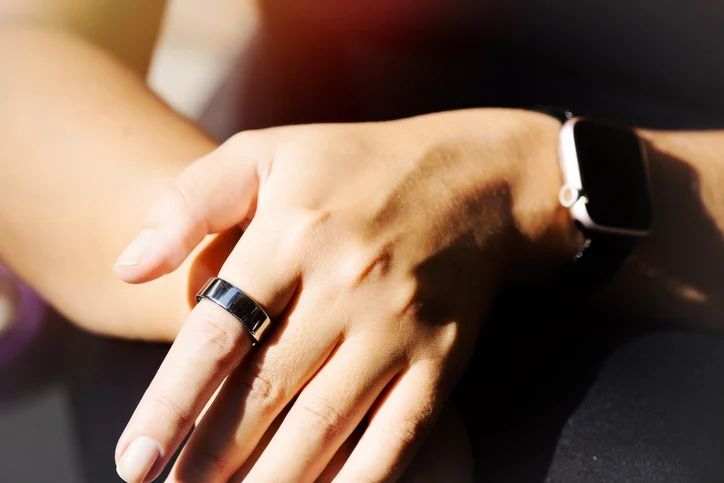
The burgeoning market for consumer health wearables is facing a high-stakes legal reckoning. Oura, a dominant player in the smart ring sector, has been hit with a class-action lawsuit in California federal court, alleging that the company’s marketing regarding its sleep-tracking accuracy is fundamentally misleading. At the center of the dispute is Oura’s prominent claim that its devices can achieve up to 95% accuracy in tracking sleep stages—a figure the plaintiff argues is scientifically unsupportable for a consumer wearable.
The lawsuit, filed by California resident Madison Surber, represents a growing tension between the marketing of "wellness" devices and the clinical reality of physiological measurement. As millions of consumers rely on these rings to manage their health, the legal community and health tech experts are watching closely to see if the case will force a new standard of transparency in how wearable companies communicate their data’s limitations.
The Core Allegations: Marketing vs. Reality
The complaint, filed last week, centers on the gap between Oura’s advertised capabilities and the methodology the ring actually employs. According to the filing, Oura markets its rings with claims of "up to 95% accuracy" in determining sleep stages. However, the plaintiff contends that such precision is physically impossible for a finger-worn sensor that lacks the clinical requirements for true sleep staging.
In a clinical environment, accurate sleep staging—the process of identifying REM, light, and deep sleep—requires polysomnography (PSG). This gold-standard diagnostic tool utilizes scalp electrodes (EEGs) to measure brain activity and sensors around the eyes (EOGs) to track rapid eye movement. The lawsuit argues that because Oura’s ring relies entirely on proxy signals—such as heart rate, heart rate variability, movement, breathing patterns, and temperature—it cannot perform true sleep staging. Instead, the ring utilizes AI-driven estimates.
The plaintiff posits that by failing to provide adequate, prominent disclaimers regarding the difference between clinical-grade measurement and AI-based estimation, Oura has misled consumers. Surber, who purchased an Oura Ring 4 Gold for over $500 in 2025, asserts that she would have either opted out of the purchase or paid significantly less had the marketing accurately reflected these limitations.
Chronology of the Dispute
- 2025: Madison Surber purchases an Oura Ring 4 Gold, citing the company’s marketing as a primary driver for the transaction.
- Early 2025: A study published in the journal Nature casts doubt on the performance of consumer wearables, finding that Oura rings achieved roughly 53% sleep-stage accuracy across 45 nights of observation.
- August 2026: The formal complaint is filed in California federal court, alleging false advertising and seeking an injunction alongside monetary damages for the proposed class of misled consumers.
- Post-Filing: Oura responds by launching an aggressive public-relations and scientific-defense campaign, publishing two blog posts detailing its methodology and validating its algorithms against clinical studies.
The Scientific Conflict: Analyzing the Data
The lawsuit leans heavily on a 2025 study published in Nature, which provided a sobering look at the discrepancy between Oura’s claims and real-world performance. The researchers, examining 45 nights of data, found the ring’s sleep-stage accuracy hovered around 53%. This massive disparity between the company’s 95% claim and the study’s findings forms the backbone of the plaintiff’s argument for deceptive trade practices.
However, the scientific debate is far from settled. Experts like Shawn Collins, an attorney at Stradling, point out that the definition of "accuracy" in the wearables industry is inherently proprietary. Wearable manufacturers typically validate their algorithms by comparing them against the PSG gold standard. While the results of these internal comparisons are often cited in marketing materials, they are rarely identical to clinical-grade, peer-reviewed outcomes.
The challenge, according to legal analysts, is that Oura does not explicitly claim its ring is a medical-grade substitute for PSG. Instead, the case may pivot on the prominence of the company’s disclaimers. If the court determines that the 95% accuracy figure is presented in a way that suggests clinical equivalence, Oura could be in significant legal jeopardy.
Official Responses and Defensive Strategy
Oura has remained firm in its defense, categorically disputing the allegations. In a statement provided to MedCity News, a spokesperson for the company emphasized that the ring is a wellness tool, not a medical device.
"Like other consumer sleep wearables, Oura Ring estimates sleep stages using multiple physiological signals," the spokesperson stated. "There is well-documented, peer-reviewed independent scientific evidence that sleep stages are associated with distinct, measurable, reproducible changes in physiology."
The company highlighted that its sleep-staging algorithm was developed using a robust dataset of over 1,200 nights of information and has been validated against PSG in multiple independent studies. Oura is clearly positioning itself to defend its methodology as scientifically sound, even if it differs from the clinical standard.
By taking the offensive through blog posts and white papers, Oura is attempting to frame the lawsuit as a misunderstanding of consumer technology rather than a failure of engineering. They maintain that they are committed to clear communication regarding what the ring "measures" versus what it "estimates."
The Broader Implications: Trust and Clinical Credibility
The case has ignited a wider debate regarding the future of the digital health industry. Shashi Shankar, CEO of Novellia, argues that the legal battle is not merely about a technical failure, but a crisis of trust.
"Wearables are pretty good at surfacing signals—like sleep patterns, heart rate, and activity—that prompt people to pay attention to their health," Shankar observed. "Where wearables fall short today is anchoring those signals to a patient’s clinical reality—their history, their conditions, and their outcomes."
For Shankar, the path forward for wearable tech is integration. He points to Oura’s partnership with Eli Lilly as an example of how the industry can evolve. By tying device data to pharmaceutical-grade validation and real-world patient outcomes, companies can move away from the "marketing vs. reality" trap and toward true clinical utility.
The "Scope Problem"
The legal dispute highlights what many in the industry call a "scope problem." As wearables attempt to bridge the gap between casual fitness tracking and medical diagnosis, they occupy a nebulous middle ground. If the court rules that Oura’s 95% accuracy claim is misleading, it could trigger a domino effect, forcing other wearable giants—such as Apple, Garmin, and Whoop—to re-evaluate how they present their own sensor data.
The Question of Substantiation
Ultimately, the lawsuit may hinge on a question of substantiation. As Shawn Collins noted, if Oura can provide peer-reviewed, clinical-grade evidence that justifies their 95% figure within the specific context of their algorithm, they have a strong path to dismissal. If, however, the court finds that the data does not support such a high degree of precision in real-world settings, the company may be forced to overhaul its entire marketing strategy.
Conclusion: A Turning Point for Wearables
The class action lawsuit against Oura is more than a localized legal dispute; it is a signal that the era of "black-box" health metrics is coming to an end. As consumers become more sophisticated and regulatory scrutiny intensifies, the companies that will survive are those that can successfully navigate the transition from lifestyle gadgetry to transparent, clinically validated health tools.
For now, the legal proceedings will continue to unfold, but the message to the industry is clear: the bridge between a sensor on a finger and a diagnosis in a clinic must be built with rigorous, transparent, and—most importantly—defensible data. Whether Oura emerges with its reputation intact or the industry is forced to adopt a new code of conduct, the outcome will fundamentally shape the future of personal health technology.