










Published November 19, 2026
In an era defined by hyper-connectivity and the relentless pace of the information age, the human body remains a biological relic of the Paleolithic era. While our tools have evolved from flint to fiber optics, our nervous systems continue to operate on ancient hardware. As we navigate the complexities of the 21st century, we are increasingly subject to a silent, systemic crisis: chronic stress. First explored in Yoga Journal’s September-October 1995 archives, the intersection of restorative yoga and stress management remains not only relevant but essential for modern survival.
The Main Facts: An Evolutionary Mismatch
At the core of the stress epidemic is a fundamental evolutionary mismatch. Anthropologists confirm that modern humans possess the same anatomical and physiological architecture as our ancestors. Millions of years ago, this architecture was designed for acute survival—the "fight or flight" response was a lifesaver when facing a physical predator.
Today, however, the "predators" have changed. We are no longer dodging wildlife; we are navigating job instability, financial volatility, digital overwhelm, and the complexities of modern family dynamics. Because the human brain struggles to distinguish between a life-threatening encounter with a wild animal and the mounting anxiety of an unread inbox, the body responds with the same chemical cascade: the release of adrenaline and noradrenaline. When this response is triggered repeatedly without the "release" of physical resolution, the body enters a state of chronic, maladaptive stress.
Chronology of the Stress Response
To understand why rest is a medical necessity rather than a luxury, one must look at the physiological timeline of the stress response:
- The Perception of Threat: The amygdala perceives a stressor, signaling the adrenal glands to flood the system with catecholamines.
- The Physiological Shift: Heart rate accelerates, blood pressure spikes, and mental alertness intensifies. Simultaneously, the body enters a state of triage, intentionally downregulating "non-essential" systems—digestion, immune function, tissue repair, and reproductive health.
- The Ancient Resolution: In our ancestral past, this energy was expended through immediate movement (fighting or fleeing). Once the threat passed, the parasympathetic nervous system engaged, and the body returned to homeostasis.
- The Modern Trap: In the modern workplace or home environment, we rarely have the opportunity to physically "fight or flee." The stress hormones remain active, the digestion remains suppressed, and the body stays in a state of high-alert, long after the deadline has passed or the argument has ended.
Over time, this cycle creates a state of persistent inflammation and physiological depletion, paving the way for what medical professionals now categorize as stress-related illnesses, ranging from hypertension and insomnia to autoimmune dysfunction and clinical depression.
Supporting Data: The Science of the "Relaxation Response"
The transition from identifying stress as a philosophical nuisance to a clinical diagnosis has been bolstered by decades of rigorous research. Scientific inquiry into relaxation began in earnest with Dr. Edmund Jacobson, whose 1934 seminal work, You Must Relax, pioneered the use of progressive muscle relaxation. His findings established that systemic, voluntary relaxation could treat conditions ranging from colitis to high blood pressure.
The Benson Revolution
In more recent decades, the work of Dr. Herbert Benson, founder of the Mind/Body Medical Institute, provided a clinical framework for this phenomenon. He coined the term "the relaxation response" to define a physiological state characterized by:
- Reduced metabolic rate.
- Lowered blood pressure.
- Synchronized, slower brain wave patterns.
- Decreased heart and respiratory rates.
The Psychoneuroimmunology Connection
The emerging field of psychoneuroimmunology—the study of the interaction between psychological processes and the nervous and immune systems—has confirmed what yogic traditions have taught for millennia: the mind and body are inseparable. Research by figures such as Dr. Dean Ornish has demonstrated that heart disease, once thought to be purely mechanical, can be significantly influenced by lifestyle interventions, including meditative rest. The conclusion is clear: rest is a biological imperative, not an absence of productivity.
Official Responses and Clinical Perspectives
The medical establishment has moved from skepticism to endorsement. The U.S. Food and Drug Administration (FDA) has, in various reports, acknowledged the efficacy of non-pharmacological interventions for managing mild hypertension. Dr. David Spiegel of Stanford University has noted that psychological interventions—such as breath-centered training and deep relaxation—are becoming essential tools in the physician’s toolkit.
The consensus among integrative medical experts is that the "body-mind" connection is a critical, underutilized asset. By utilizing intentional, supported rest, patients can effectively "hack" their own autonomic nervous system, shifting from the sympathetic (fight-or-flight) state to the parasympathetic (rest-and-digest) state.
The Implications: Why Restorative Yoga is "Active Relaxation"
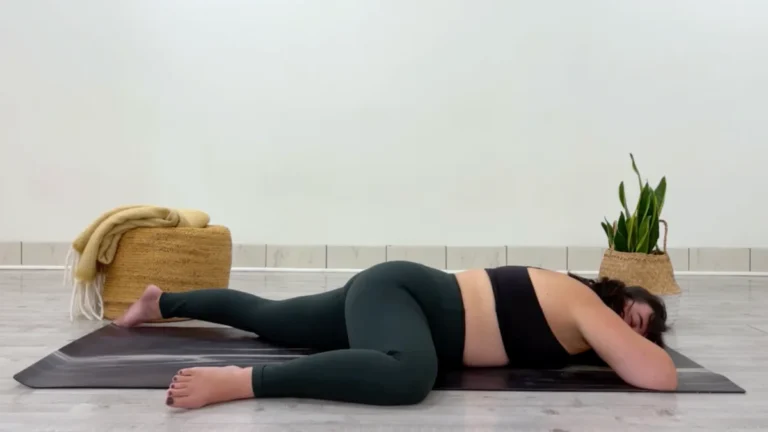
Restorative yoga is often misunderstood as merely "sleeping on a mat." In reality, it is a sophisticated, "active" form of relaxation. Unlike passive rest, restorative yoga uses props—bolsters, blocks, and blankets—to create a fully supported environment where the body can completely surrender the weight of the limbs.
1. Spinal Integrity and Structural Release
The sequences of restorative yoga are designed to move the spine in every direction—forward, backward, and through lateral twists. By removing the stress of gravity, these poses allow the vertebrae to decompress, reducing the chronic muscular tension that often manifests as back pain or tension headaches.
2. The Power of Inversions
Perhaps the most potent aspect of restorative practice is the inclusion of gentle inversions (e.g., legs-up-the-wall). By reversing the effects of gravity, these poses facilitate the drainage of lymph fluid and the return of blood to the heart. Research conducted by psychobiologist Dr. Roger Cole indicates that these poses dramatically alter hormonal levels, directly reducing brain arousal and fluid retention.
3. Energy Balancing: Prana and Apana
From a traditional yogic perspective, restorative yoga works by balancing the body’s energy currents. Prana (the upward-moving energy associated with heart and breath) and Apana (the downward-moving energy associated with digestion and elimination) are brought into equilibrium. When these energies are balanced, the practitioner experiences a state of deep, restorative stillness that prevents both overstimulation and fatigue.
4. A Tool for Life’s Transitions
The implications for personal health are profound. Restorative yoga is not merely for the injured or the infirm; it is a vital tool for navigating life’s major milestones—from bereavement and career changes to the simple, daily stressors of family life. By dedicating time to "active relaxation," individuals build a reservoir of resilience.
In conclusion, as we continue to push the boundaries of human achievement, the most radical act of health we can perform is to stop. In the quiet, supported stillness of a restorative pose, we allow the body to perform its most important work: healing itself. As we move deeper into the 21st century, the ancient wisdom preserved in the Yoga Journal archives serves as a timeless reminder that the secret to long-term health is not found in doing more, but in the intentional, conscious practice of doing less.