







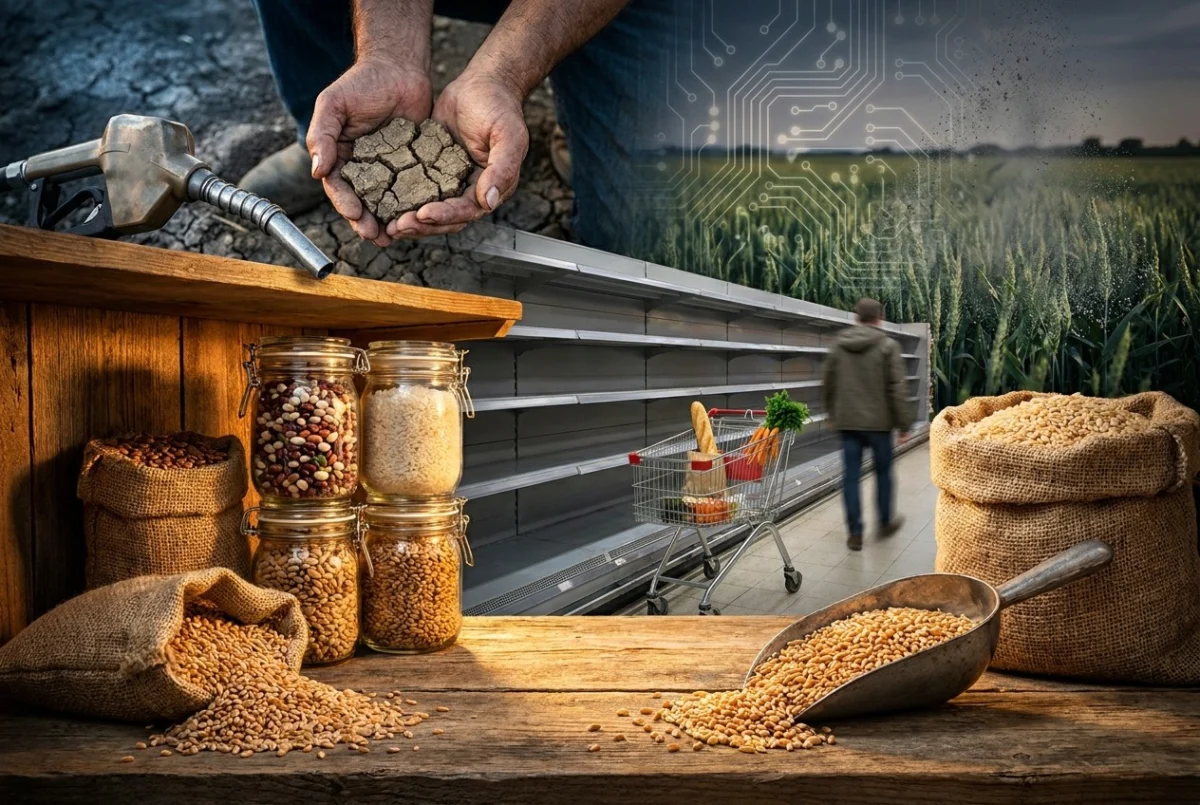
The global food supply chain, long regarded as a marvel of efficiency and "just-in-time" logistics, is showing signs of systemic fatigue that experts fear could culminate in a significant food security emergency. What was once considered a robust network of production, processing, and distribution is currently grappling with a convergence of physical shortages, technological vulnerabilities, and centralized policy pressures.
This is not a call to alarmism, but rather an objective analysis of current indicators that suggest the infrastructure supporting our daily caloric intake is under unprecedented strain. From wholesale supply gaps extending into 2027 to the increasing fragility of digitized agricultural oversight, the evidence suggests that the era of effortless food abundance may be reaching a critical turning point.
Main Facts: The Anatomy of a Systemic Shift
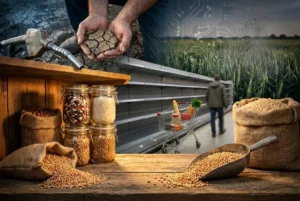
The current crisis is defined by a shift from temporary disruptions to long-term supply contraction. Industry insiders—ranging from independent organic suppliers to large-scale commodity distributors—report that wholesale inventory levels have plummeted. In many sectors, the "buffer" of stored goods that usually protects consumers from price spikes and availability gaps has been exhausted.
Key facts driving this assessment include:
- Wholesale Contraction: Independent suppliers report a transition from surplus to rationing. Commodities that were previously available in 10,000-pound lots are now being limited to 2,000 or 3,000 pounds, signaling a fundamental lack of underlying supply rather than merely a logistical delay.
- Forward-Looking Shortages: Some major wholesale suppliers have indicated that certain product lines are effectively "wiped out" through 2027. These are not speculative projections but confirmed purchase order failures that suggest a multi-year recovery horizon.
- The "Invisible" Shortage: The grocery store shelf is the last indicator of a supply chain failure. By the time an item is missing from a supermarket, the crisis has already persisted through the wholesale, distribution, and manufacturing layers for months.
Chronology of the Decline
The destabilization of the food supply is not a sudden event, but a cumulative process. Understanding the timeline of these stressors is essential to grasping why the current situation differs from previous inflationary periods.
Phase 1: The Input Crisis (2022–2024)
The initial stage of the current crisis was marked by a spike in the cost of essential agricultural inputs. High diesel prices, which affect every stage of the harvest-to-market process, forced farmers to reduce acreage or forgo the use of necessary fertilizers. This led to lower yields, which, while masked by existing inventories, set the stage for the current scarcity.
Phase 2: Centralized Consolidation and Diversion (2025)
During this period, anecdotal evidence emerged suggesting that large-scale food suppliers began prioritizing government contracts over commercial retail. This "quiet" diversion of production meant that while food was still being produced, it was being funneled into government reserves rather than the open market.
Phase 3: Technical and Environmental Fragility (2026–Present)
We have entered a phase characterized by "compound failures." The recent surge in cyber-intrusions targeting USDA infrastructure has disrupted farmer payments and loan systems, proving that the digital layer of agriculture is a potential single point of failure. Simultaneously, physical threats—such as proposed industrial or military activities near fertile land—have raised concerns regarding the long-term viability of soil and water safety.
Supporting Data: Why the Warnings Are Credible
The credibility of these warnings rests on the motivations of those providing them. When entities in the food storage and supply sector advise consumers to prioritize preparedness, they are essentially sacrificing potential sales in the future—or, conversely, shifting their business models away from traditional retail.
The Fertilizer-Energy Nexus
The cost of fertilizer, which is inextricably linked to natural gas prices and diesel availability, remains the primary "hard" constraint on global food output. When farmers cannot afford to nourish their crops, the biological yield of the land drops regardless of climate or weather. This is a mathematical certainty that cannot be corrected by policy alone.

Cyber-Vulnerability in Agriculture
Modern agriculture is centrally controlled via digital networks. The recent USDA cyber disruptions were a "canary in the coal mine." When the bureaucratic layer of farming is compromised, the farmer is left without the financial bridge needed to sustain livestock or pay fuel costs. In a worst-case scenario, this results in mass sell-offs of herds or the abandonment of planting cycles, leading to a permanent reduction in caloric production.
Environmental Contamination Risks
The recent proposal to conduct large-scale detonations of lead azide near agricultural hubs like Burlington, Iowa, highlights a profound disconnect between industrial military needs and food security. The dispersal of heavy metals into the soil and water table poses a generational risk to food safety. Such events, if carried out, would render vast tracts of productive land potentially unusable for high-quality, nutrient-dense agriculture.
Official Responses and Public Policy
Official government responses have been, at best, compartmentalized. While some nations have begun issuing quiet recommendations for citizens to maintain emergency food stockpiles, domestic policy in the United States remains focused on maintaining the status quo of the centralized system.
The disconnect between institutional messaging—which often prioritizes market stability—and the reality on the ground is growing. For instance, when government agencies dismiss concerns regarding supply chain integrity, they often ignore the compounding effects of labor shortages, energy costs, and the aging infrastructure of the regional food distribution network.
Implications: The Year of Famine and Beyond
Projections for the coming years suggest a bifurcation in the food market. We are likely to see a "Year of Famine"—not in the sense of a total absence of calories, but a severe scarcity of high-quality, nutrient-dense food.
The Rise of Processed Commodities
Processed food, designed for long-term shelf stability using commodity inputs, will likely remain available. These products are engineered to survive logistical bottlenecks. However, real, fresh, and nutrient-dense foods (whole grains, organic produce, high-quality proteins) will see a disproportionate contraction in supply.
The Panic Premium
History teaches us that the cost of preparation is significantly lower than the cost of panic. Those who wait for the shelves to empty will be forced to compete for whatever remains at hyper-inflated prices. This "panic premium" is a tax on the unprepared.
Recommendations for Resilience
The goal of preparedness is not to live in fear, but to insulate one’s family from the shocks of a failing system. Experts recommend:
- Prioritize Whole Grains: Unlike flour, which degrades quickly, whole grains (such as hard red wheat, rice, and oats) maintain their nutritional integrity and shelf life for years if stored correctly.
- Incremental Stockpiling: Do not attempt to build a "bunker" overnight. Instead, build a pantry that functions as a rotation, using and replacing items to ensure freshness.
- Source Decentralization: Support local, small-scale producers. These operations are often more resilient than the centralized global supply chain and less susceptible to the systemic "squeezes" that affect large wholesalers.
- Skill Acquisition: Stored food is only half the equation. Developing the skills to process, store, and cook from basic staples is a form of security that cannot be disrupted by cyber-attacks or supply chain collapses.
Conclusion
The current food supply emergency is a multi-layered issue that requires a pragmatic, rather than panicked, response. The system as it stands is designed to feed the system, not necessarily the individual. When the system faces a compound failure, the individual must be prepared to step outside the chain of dependency. By acting now—while inventory remains and choices are still available—households can ensure their security regardless of how the broader supply chain evolves in the years leading up to 2027. Preparedness is the only insurance policy that remains valid when the institutions themselves can no longer guarantee the integrity of the supply.