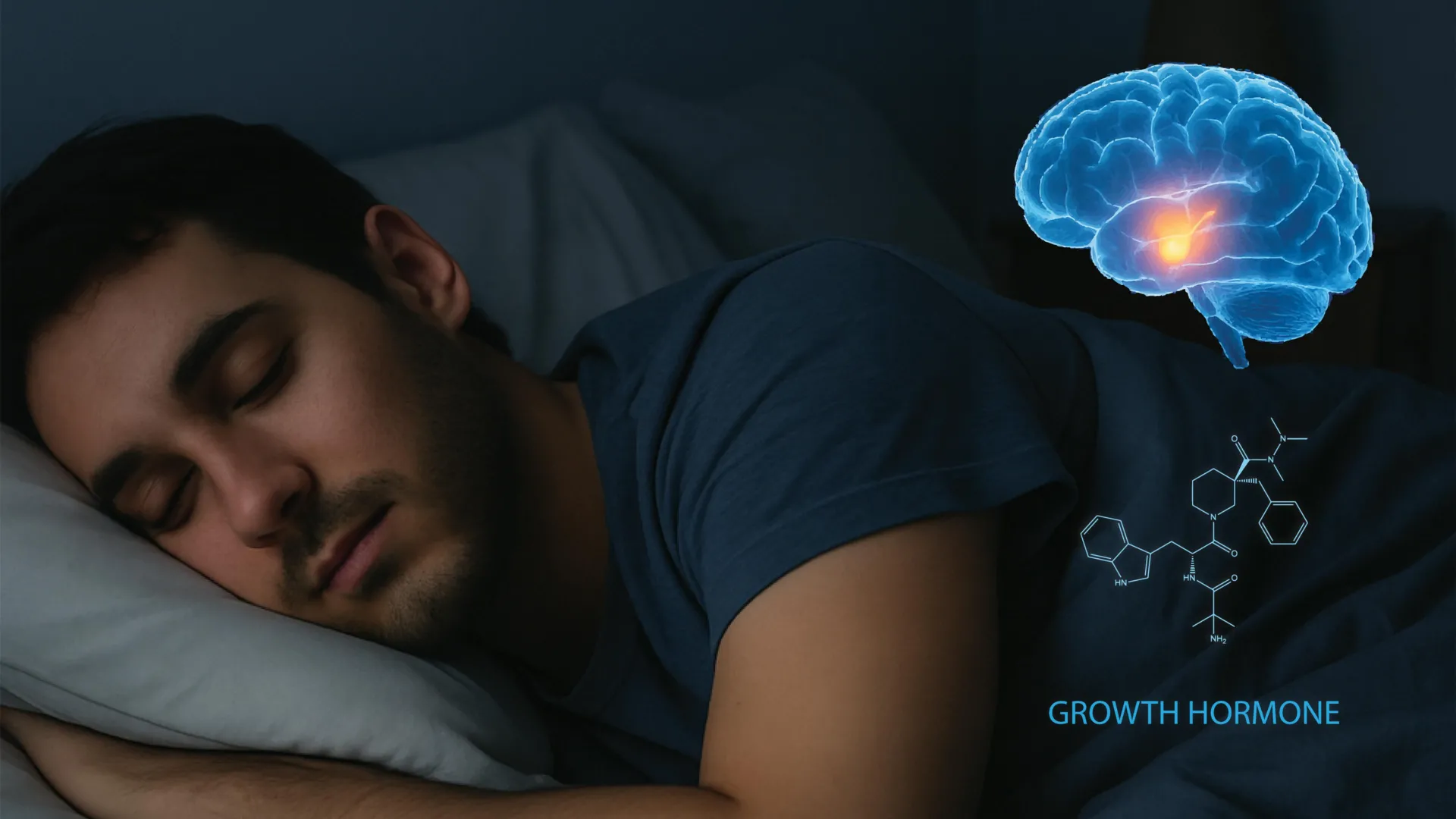
For decades, the phrase "getting your beauty sleep" has been dismissed as a colloquialism—a piece of grandmotherly advice devoid of scientific rigor. Yet, modern neuroscience has long confirmed that sleep is far from a passive state of rest. It is a highly active, physiologically vital period where the body undergoes critical maintenance: muscle tissue is repaired, bone density is supported, and fat metabolism is regulated. At the heart of this nightly rejuvenation lies growth hormone (GH), a chemical powerhouse essential for development and metabolic health.
While scientists have known for years that GH levels surge during deep, non-REM sleep, the precise "control room" within the brain that orchestrates this release has remained one of biology’s most enduring mysteries. Now, a groundbreaking study from the University of California, Berkeley, published in the journal Cell, has mapped the neural circuitry responsible for this process, unveiling a sophisticated feedback loop that links our sleep cycles to our metabolic and cognitive vitality.
The Discovery: Unlocking the Hypothalamic Circuit
The research, led by Professor Yang Dan and her team at UC Berkeley, marks a significant departure from traditional methods of studying hormones. Historically, our understanding of growth hormone was limited to "snapshot" data—drawing blood from subjects at intervals to measure hormone levels.
"People know that growth hormone release is tightly related to sleep, but only through drawing blood," explains Xinlu Ding, a postdoctoral fellow and the study’s first author. "We’re actually directly recording neural activity in mice to see what’s going on. We are providing a basic circuit to work on in the future to develop different treatments."
By utilizing advanced electrode placement and light-based stimulation (optogenetics) in mice, the team was able to pinpoint the exact nerve cells responsible for regulating GH. These neurons reside deep within the hypothalamus—an ancient, highly conserved brain region that acts as the command center for the body’s homeostatic systems. Within this region, the researchers identified a complex interplay between growth hormone-releasing hormone (GHRH) neurons and two distinct types of somatostatin neurons.
Chronology of the Research: Mapping the Neural Flow
The research team’s methodology capitalized on the unique sleep architecture of mice, who naturally drift in and out of sleep in short, frequent bursts throughout the day. This high-frequency cycle allowed the team to observe the hormone-regulation circuit in action across hundreds of iterations.
The Phases of Hormonal Regulation
The study revealed that the interaction between GHRH (which promotes GH) and somatostatin (which suppresses it) is dynamic, shifting significantly depending on the stage of sleep:
- During REM Sleep: Both GHRH and somatostatin levels rise simultaneously. This creates a surge in growth hormone, facilitating the repair processes associated with dreaming sleep.
- During Non-REM Sleep: The pattern shifts. Somatostatin levels drop, while GHRH levels rise only moderately. This distinct chemical environment suggests that the brain is not merely "turning on" growth hormone, but modulating it with surgical precision depending on the depth and type of sleep being experienced.
By mapping these fluctuations, the UC Berkeley team has provided the first clear schematic of how the brain dictates the timing and volume of growth hormone release.
Supporting Data: The Feedback Loop and the Locus Coeruleus
Perhaps the most surprising finding in the Cell paper is the discovery of a feedback mechanism that links growth hormone back to the brain’s alertness centers. The researchers found that once GH is released, it travels to the locus coeruleus, a brainstem region critical for regulating attention, wakefulness, and response to external stimuli.
This creates a self-regulating, bidirectional system:
- Sleep triggers GH: As the brain enters deep sleep, the hypothalamic circuit releases growth hormone.
- GH triggers alertness: As GH levels accumulate, they stimulate the locus coeruleus. Initially, this stimulation promotes wakefulness, effectively signaling the brain that it has been "repaired" and is ready for the day.
- The Unexpected "Brake": If the activity in the locus coeruleus becomes over-stimulated, the system triggers a counter-intuitive response: it begins to promote sleepiness.
"Sleep drives growth hormone release, and growth hormone feeds back to regulate wakefulness," explains co-author Daniel Silverman. "This balance is essential for growth, repair, and metabolic health."
Official Responses and Scientific Context
The implications of this discovery are profound, as the locus coeruleus is already implicated in a host of psychiatric and neurological conditions, including Parkinson’s and Alzheimer’s disease. Because this brainstem region is central to our ability to maintain focus, the discovery that growth hormone regulates it provides a new, potential "handle" for therapeutic intervention.
"There are some experimental gene therapies where you target a specific cell type," says Silverman. "This circuit could be a novel handle to try to dial back the excitability of the locus coeruleus, which hasn’t been talked before."
The research, supported by the Howard Hughes Medical Institute (HHMI) and the Pivotal Life Sciences Chancellor’s Chair fund, represents a collaborative effort between UC Berkeley and Stanford University. By identifying the neural mechanism, the team has moved the conversation from observation to potential intervention.
Implications for Health and Future Medicine
The link between sleep and metabolic health is well-documented, but this study provides the "why" behind the clinical observations. Consistently poor sleep is a known risk factor for obesity, cardiovascular disease, and type 2 diabetes. By understanding that GH acts as a metabolic regulator—not just a growth-inducer—scientists can better understand how sleep deprivation disrupts the body’s glucose and fat metabolism.
Beyond Muscle and Bone
While growth hormone is famous for building muscle and bone, its role in cognitive function is equally vital. "Growth hormone not only helps you build your muscle and bones and reduce your fat tissue, but may also have cognitive benefits, promoting your overall arousal level when you wake up," notes Ding.
This suggests that the "brain fog" experienced after a poor night’s sleep may be directly tied to a failure in this hypothalamic-growth hormone circuit. By failing to complete the necessary sleep cycles, the body fails to release the optimal amount of GH, which in turn fails to properly reset the locus coeruleus for the following day’s cognitive demands.
Future Therapeutic Horizons
The medical community is already looking toward how this discovery might shape the next generation of treatments. Future research will likely focus on:
- Hormonal Therapies: Developing ways to influence this circuit to treat individuals suffering from sleep-onset insomnia or sleep fragmentation.
- Neurodegenerative Defense: Exploring whether stabilizing GH release can protect the locus coeruleus from the early-stage degradation seen in diseases like Alzheimer’s.
- Metabolic Management: Using this neural "circuit map" to assist patients with metabolic disorders who have historically struggled with weight management despite traditional dietary and exercise interventions.
Conclusion: A New Frontier in Sleep Science
The study from UC Berkeley serves as a powerful reminder that our bodies operate on an intricate, biological clockwork. We are no longer simply "tired" or "awake"; we are the sum of thousands of neural firings and hormonal pulses that occur in the silence of the night.
By identifying the hypothalamic circuit that bridges the gap between sleep, growth hormone, and cognitive alertness, researchers have unlocked a door to a new era of personalized medicine. As we continue to decode the "language" of the brain, the ability to fine-tune our internal systems—improving both our physical recovery and our mental sharpness—moves from the realm of science fiction into the reality of modern clinical science.
The next time you settle in for a night of rest, remember that your brain is performing an elegant, calculated performance—a nightly symphony of neurons and peptides working to ensure that when the sun rises, you are not just awake, but fully restored.