










Published: June 23, 2026
In an era defined by hyper-connectivity and the relentless "hustle culture," the concept of free time has become a paradox. When a meeting is canceled or a gap appears in your schedule between arriving home and preparing dinner, the modern instinct is rarely to rest. Instead, we succumb to the "doom-scroll," a digital paralysis that leaves our nervous systems more frayed than before.
Recent data suggests that we are facing a collective crisis of recovery. As we approach the mid-point of 2026, the rise in self-reported burnout is not merely a lifestyle complaint; it is a clinical concern. However, YogaRenew instructor Melie Purdon argues that the solution does not require a week-long retreat or an hour of intense cardio. True restoration, she posits, can be found in the intentional, quiet practice of restorative yoga—even when you have as little as three minutes to spare.
The Science of the "Off Switch"
The human body is not designed for constant stimulation. Our sympathetic nervous system—the "fight or flight" response—is frequently hijacked by the demands of the digital age. When we fail to engage our parasympathetic nervous system (the "rest and digest" mode), we remain in a state of chronic low-level stress.
According to research published in the journal Restorative Techniques (2024), even short-term immersion in restorative postures can significantly lower cortisol levels and heart rate variability. By shifting the body into a state of "intentional stillness," we signal to the brain that it is safe to down-regulate. This isn’t just about feeling better; it is about physiological maintenance. When we bypass the "off switch" for too long, our cognitive function, emotional regulation, and immune health begin to degrade.
Chronology of a Reset: How to Reclaim Your Day
Finding time to reset is a matter of prioritizing micro-moments. The following chronology outlines how to weave these restorative practices into your existing day:
- 10:30 AM (The Mid-Morning Slump): Utilize the Downward-Facing Dog with a Chair to break the sedentary pattern of office work.
- 5:00 PM (The Transition): Upon returning home, engage in the Reclined Bound Angle Pose to bridge the gap between professional obligations and personal life.
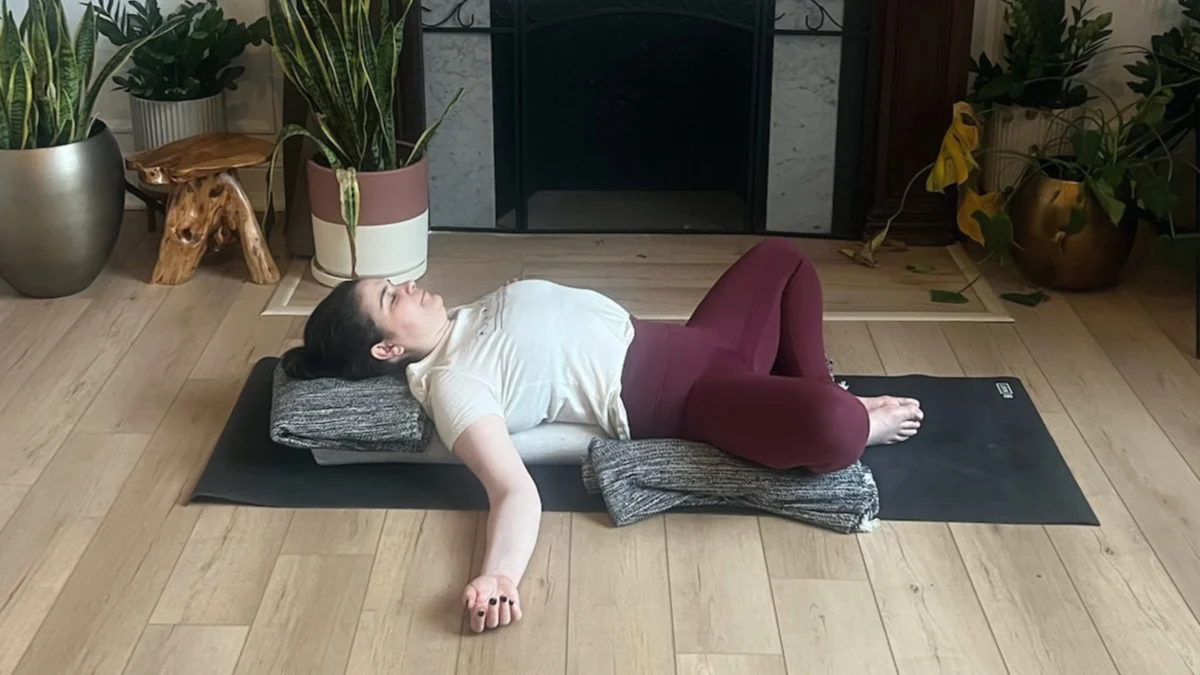
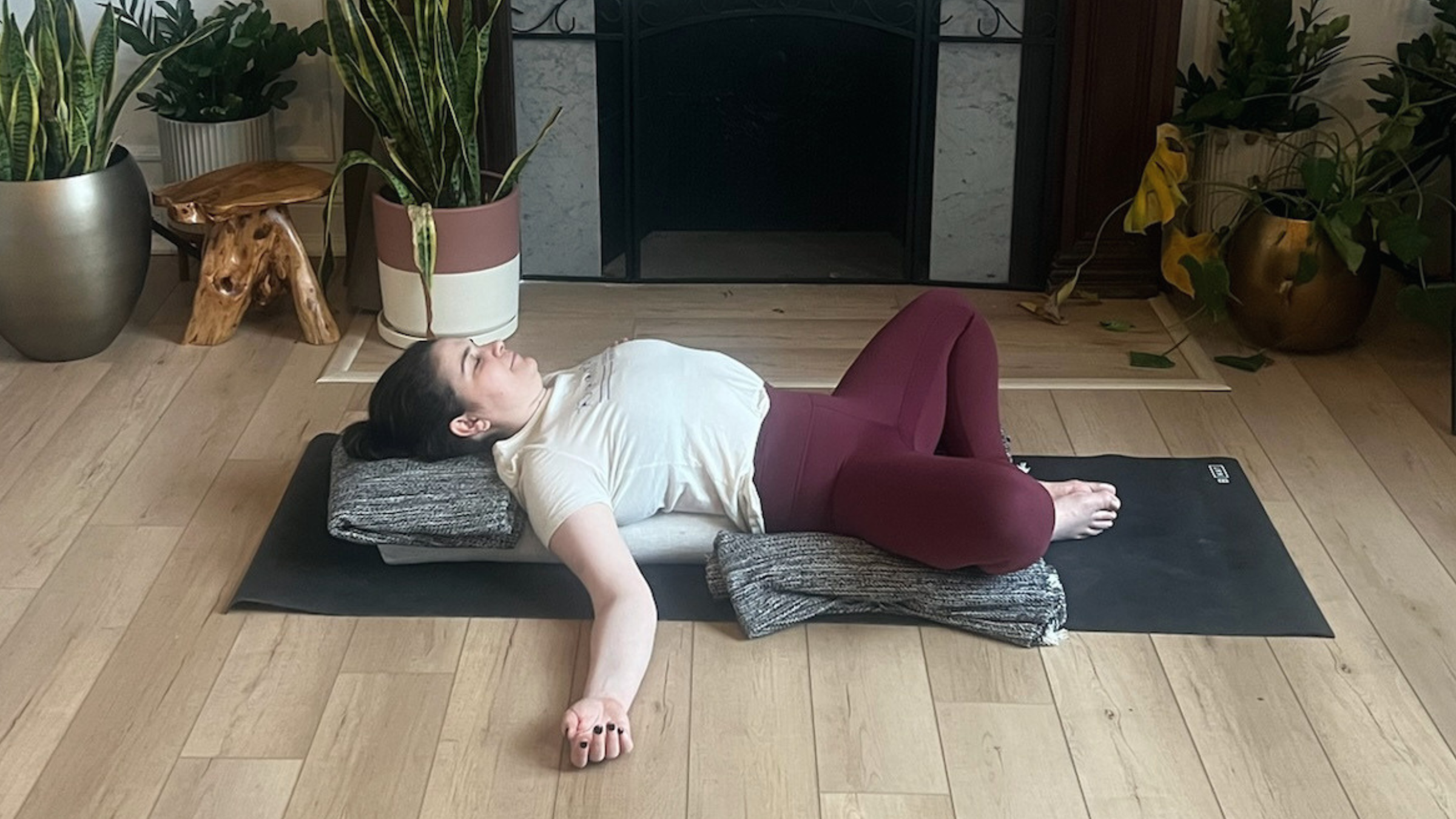
- 7:30 PM (The Decompression): Incorporate the Supported Supine Twist to release spinal tension accumulated throughout the day.
- 9:00 PM (The Final Wind-Down): Conclude with the Prone Supported Savasana to quiet the mind before sleep.
4 Soothing Restorative Yoga Poses for Total Exhaustion
Melie Purdon, a veteran teacher in the YogaRenew network, has curated four accessible poses designed to combat the modern fatigue cycle. These movements require minimal equipment—a blanket, a chair, or a pillow—and a willingness to surrender to gravity.
1. Downward-Facing Dog With a Chair
For many, the traditional floor-based Downward Dog is inaccessible due to shoulder tightness or low energy. The chair variation allows you to reap the benefits of an inversion—increased blood flow to the head and a stretch through the posterior chain—without the intensity of a weight-bearing floor pose.
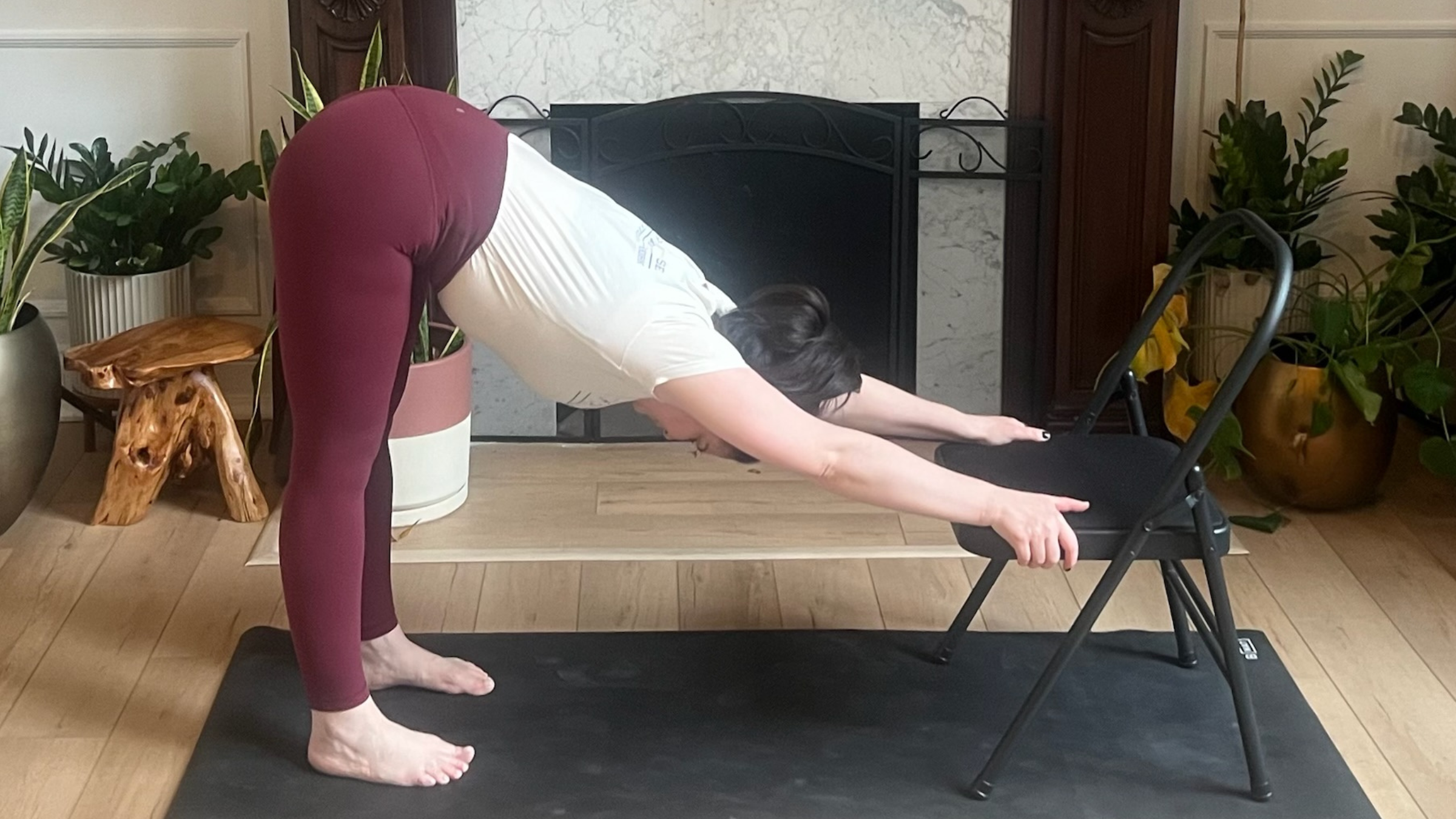
- The Technique: Stand facing a sturdy chair. Place your hands on the backrest. Walk your feet back until your torso is parallel to the floor. Soften your knees and let your head drop between your arms. Breathe into the space between your shoulder blades.
2. Reclined Bound Angle Pose (Supta Baddha Konasana)
This pose is the gold standard for "passive opening." By supporting the back and the knees, you allow the hips to release without effort.
- The Technique: Place a bolster or stack of pillows behind you. Lie back so your spine is supported. Bring the soles of your feet together and let your knees fall outward. Place additional pillows under your knees for support. Focus on deep, expansive breaths, allowing the chest to broaden with every inhale.
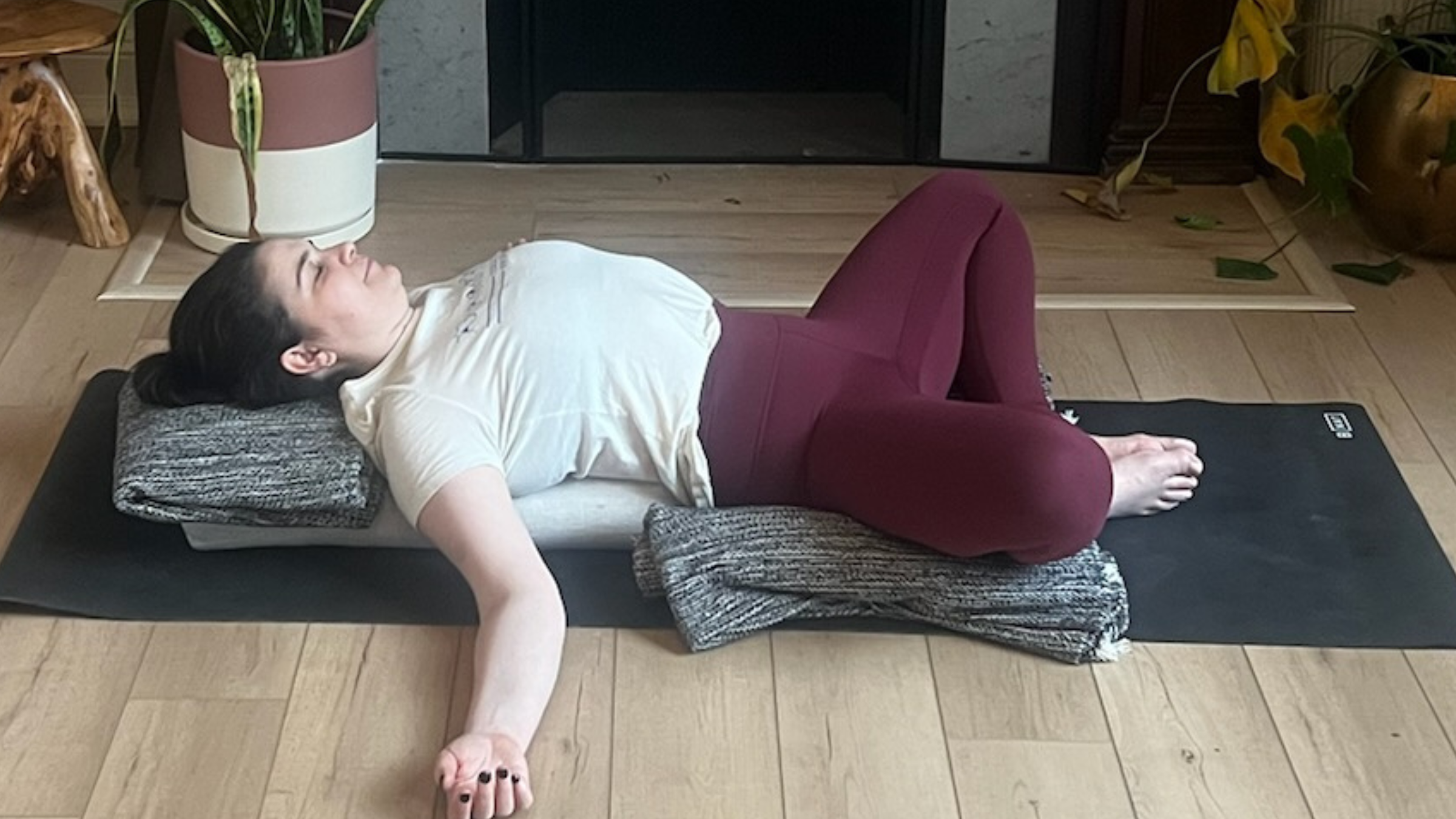
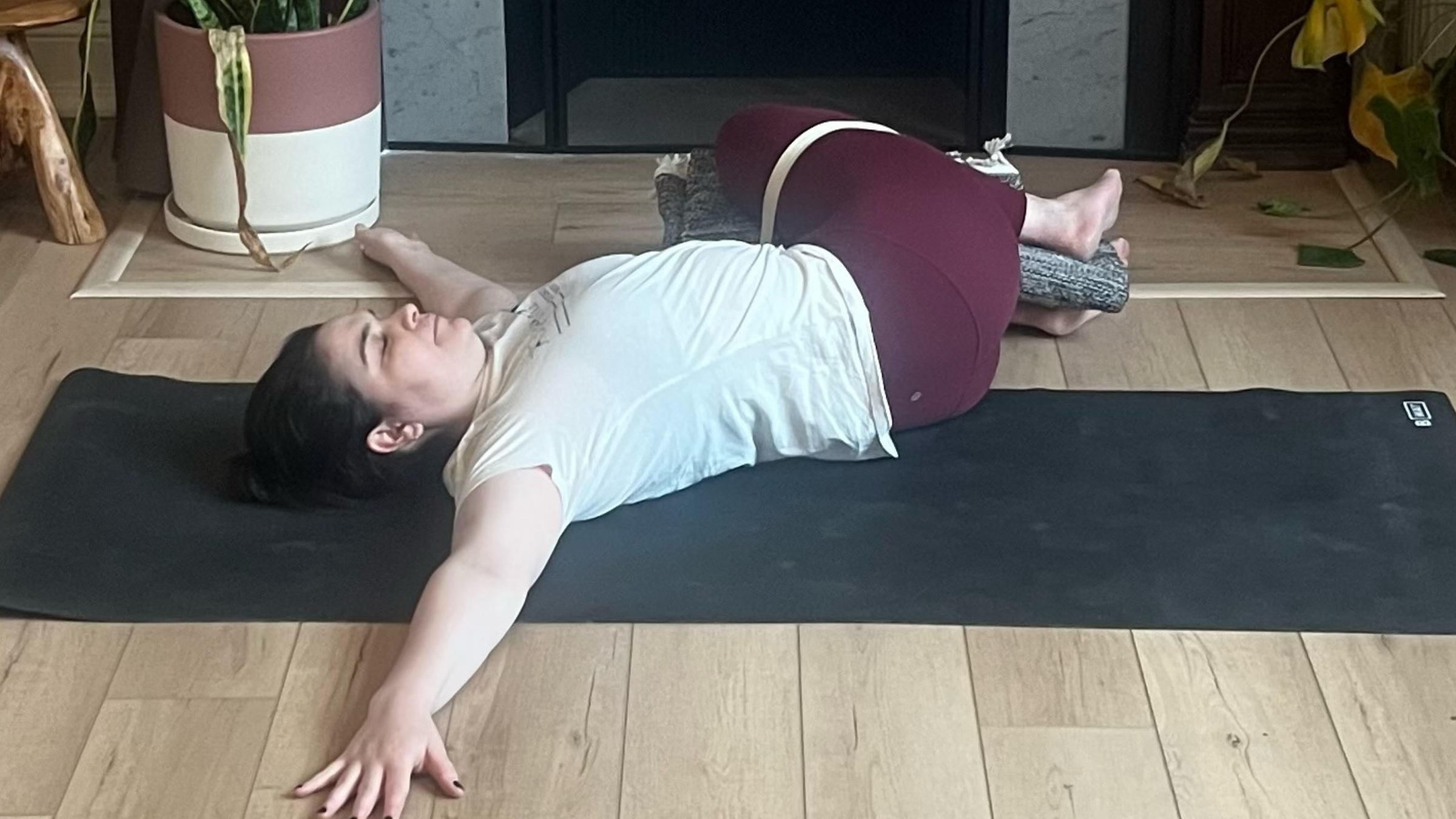
3. Supported Supine Twist
Often described as a "hug for the nervous system," the supine twist is essential for stimulating the vagus nerve—the primary component of the parasympathetic nervous system. By gently compressing the abdomen and twisting the spine, you encourage a physical release of tension that often mirrors an emotional one.
- The Technique: Lie on your back. Bring your knees toward your chest and gently lower them to one side, resting them on a pillow. Keep your shoulders firmly planted on the floor. Hold for two minutes per side.
4. Prone Supported Savasana
In a world that demands we always be "turned on," lying on your stomach is a profound act of sensory deprivation. This position cuts off visual stimuli and allows you to retreat into a private, dark space.
- The Technique: Place a bolster or folded blanket under your torso and head while lying face-down. Allow your arms to rest alongside your body. Release your jaw and close your eyes. Commit to three minutes of absolute stillness.
The Physiological Implications of Rest
The move toward restorative practices has gained traction in medical circles as a non-pharmacological approach to stress management. Recent studies (PMC, 2025) suggest that practitioners of restorative yoga report a 35% decrease in perceived stress levels over a six-week period.
"The implication is clear," says Purdon. "We have been taught that rest is something we earn after the work is done. But if we continue to push until we are depleted, the quality of our work and the quality of our life suffers. These poses are not a reward for work; they are the fuel for life."
Implications for the Modern Professional
The long-term implications of ignoring our need for rest are severe. Chronic burnout is linked to cardiovascular disease, clinical depression, and a decline in executive function. By integrating these four poses, individuals can create a "buffer zone" that protects their mental and physical health.
Official health guidelines increasingly recommend "micro-breaks" during the workday. The integration of restorative yoga serves as an ideal framework for these breaks. By moving from a state of "doing" to a state of "being," we reclaim our autonomy.
Expert Perspectives on Recovery
Industry experts note that the barrier to entry is often the biggest hurdle. "People think they need to put on yoga clothes, roll out a mat, and commit to 60 minutes," says one wellness consultant. "But restorative yoga is the antithesis of that. It’s about meeting yourself where you are, even if that means doing a stretch in your work clothes while waiting for your computer to boot up."
Conclusion: Giving Yourself Permission
Ultimately, the barrier to resting is often psychological. We feel guilty for pausing. We feel as though we must earn our relaxation. But as the research indicates, rest is a biological necessity, not a luxury.
Whether you are struggling with the mid-afternoon slump or the exhaustion of a long week, remember that you possess the tools to reset. You do not need to change your environment or find a block of free time that may never materialize. You simply need to take a breath, find a surface, and allow your body to do what it has been waiting to do all day: let go.
For more guided practices and to learn more about the work of Melie Purdon, visit her official website.