






For decades, millions of consumers have turned to "diet" sodas, sugar-free yogurts, and calorie-reduced desserts under the impression that they are making a healthier choice. By avoiding refined sugar, many believe they are shielding themselves from the metabolic risks associated with obesity and type 2 diabetes. However, a sobering new study published in Neurology, the medical journal of the American Academy of Neurology, suggests that these ubiquitous sugar substitutes may come with a hidden, long-term cost: a faster decline in memory and thinking skills.
As the global food industry continues to integrate low- and no-calorie sweeteners into an ever-expanding array of ultra-processed products, this research serves as a critical, albeit preliminary, warning regarding the potential neurological impact of these chemical additives.
The Study: Investigating the Sweetener-Brain Connection
The research, led by Dr. Claudia Kimie Suemoto of the University of São Paulo, Brazil, sought to investigate the long-term cognitive consequences of consuming seven widely used artificial and sugar-derived sweeteners. The study tracked 12,772 adults, providing a robust sample size that allows for a nuanced look at how dietary choices intersect with brain health.
Over an eight-year monitoring period, participants—who were 52 years old on average—underwent rigorous cognitive assessments at the beginning, midpoint, and conclusion of the study. These tests were designed to measure the four pillars of cognitive health: verbal fluency (the ability to retrieve and articulate words), working memory (the brain’s short-term information storage), word recall, and processing speed (the velocity at which the brain interprets and reacts to external information).
By comparing these metrics against the participants’ reported consumption of aspartame, saccharin, acesulfame K, erythritol, xylitol, sorbitol, and tagatose, researchers were able to draw a statistically significant correlation between high intake and cognitive deterioration.
Chronology of the Eight-Year Investigation
The study design was longitudinal, ensuring that the researchers could observe changes in the same individuals over nearly a decade.
Initial Baseline Assessment
At the onset of the study, researchers utilized detailed dietary questionnaires to establish a baseline of consumption. Participants were categorized into three distinct tiers based on their daily intake of sweeteners:
- Low Consumption: Averaging 20 milligrams per day (mg/day).
- High Consumption: Averaging 191 mg/day.
To put this in perspective, for aspartame, the "high" threshold was roughly equivalent to the amount found in just one can of diet soda. Sorbitol emerged as the most frequently consumed sweetener among the cohort, with an average intake of 64 mg/day.
Midpoint and Final Evaluations
Participants returned for follow-up testing at the study’s midpoint and again at its conclusion. This timeline allowed Dr. Suemoto’s team to observe the "slope" of cognitive decline. The results were startling: those in the highest consumption group experienced a 62% faster decline in overall cognitive abilities compared to the lowest consumption group. The middle-tier group also showed significant impairment, declining 35% faster than their counterparts in the lowest category.
Supporting Data: Quantifying the "Brain Age" Gap
The statistical findings of the study were adjusted for critical variables such as age, sex, high blood pressure, and cardiovascular disease to ensure that the cognitive decline was not simply a byproduct of existing metabolic conditions.
When researchers translated these percentages into functional terms, the results were staggering. The 62% faster decline observed in the high-consumption group was calculated to be equivalent to approximately 1.6 additional years of brain aging. For those in the middle tier, the decline was equivalent to 1.3 years of accelerated aging.
Sweeteners Under the Microscope
With the exception of tagatose, every sweetener examined in the study showed a correlation with impaired memory and cognitive function. The specific culprits identified were:
- Aspartame
- Saccharin
- Acesulfame K
- Erythritol
- Xylitol
- Sorbitol
Official Responses and Expert Perspective
The implications of these findings have sent ripples through the nutritional science community. Dr. Claudia Kimie Suemoto, the lead author, expressed the gravity of the results, noting that while these products are marketed as health-conscious, they may be doing more harm than good.
"Low- and no-calorie sweeteners are often seen as a healthy alternative to sugar, however our findings suggest certain sweeteners may have negative effects on brain health over time," Dr. Suemoto stated.
The research also highlighted a specific vulnerability in younger adults. Among participants under 60 years of age, the association between high sweetener intake and declining verbal fluency was significantly more pronounced. Curiously, this trend was not observed in participants older than 60, suggesting that the neurological impact of these substances might be cumulative or time-sensitive.
Furthermore, individuals with diabetes showed a much stronger correlation between sweetener consumption and cognitive decline. This is a critical finding, as those living with diabetes are frequently advised by healthcare providers to replace sucrose with non-caloric alternatives to manage blood glucose levels. Dr. Suemoto emphasized that while these individuals are doing their best to manage one chronic condition, they may be inadvertently placing their cognitive health at risk.
Implications for Public Health and Dietary Policy
The "sugar-free" label has long been a hallmark of the health-food industry, but this study suggests a need for a major pivot in dietary guidelines.
A Call for Alternative Alternatives
Dr. Suemoto has called for further research into whether natural sweeteners, such as honey, maple syrup, coconut sugar, or even fruit-based alternatives like applesauce, provide a safer profile for the brain. The goal is to move away from the assumption that "zero calories" equals "zero harm."
The "Association vs. Causation" Caveat
It is essential to interpret these findings with professional caution. As the researchers themselves noted, this study is observational. It demonstrates a clear association between sweetener intake and cognitive decline, but it does not definitively prove that the sweeteners are the direct cause.
Factors such as the "healthy user bias"—where people who are already prone to cognitive decline might gravitate toward diet products to mitigate health risks—could play a role. Additionally, the study relied on self-reported dietary data, which is inherently subject to human error or memory lapses. Despite these limitations, the sheer scale of the study and the consistency of the findings across nearly 13,000 subjects make it a significant contribution to the literature on diet and neurology.
Conclusion: Rethinking the Sweet Tooth
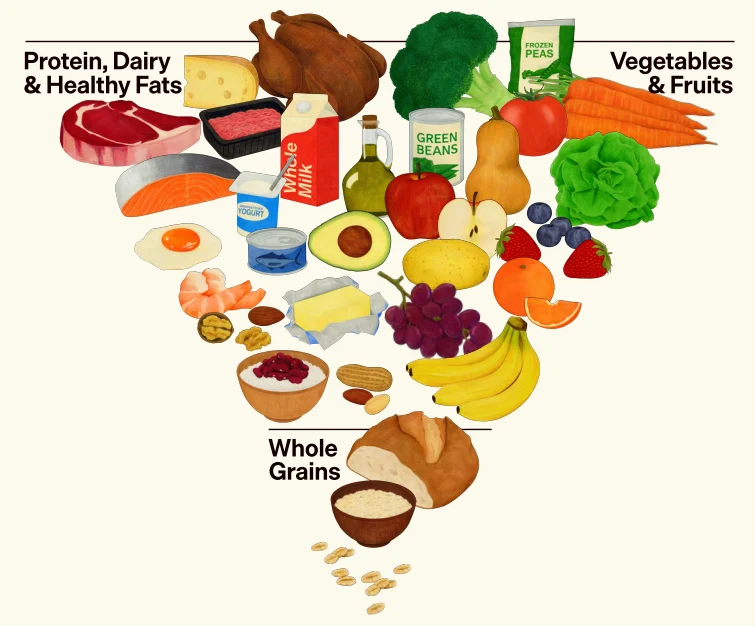
As consumers, we are currently navigating an era of unprecedented consumption of ultra-processed goods. The convenience of diet sodas and low-calorie snacks has made them a staple in the modern diet, but the Neurology study suggests that the brain may be paying a price.
The findings are not a final verdict, but they are a wake-up call. They suggest that the long-term impact of artificial sweeteners on the brain is a subject that requires urgent, continued scrutiny. Until more definitive data is available, the study encourages a more skeptical approach to "sugar-free" products. Whether through returning to whole foods or exploring less-processed sweeteners, it is becoming increasingly clear that protecting the brain may require us to rethink the very nature of how we define a "healthy" diet.
The scientific community will undoubtedly continue to investigate these substances, but for now, the evidence provides a compelling reason to reconsider that next diet beverage. The sweetness of the moment may not be worth the cost to our cognitive future.