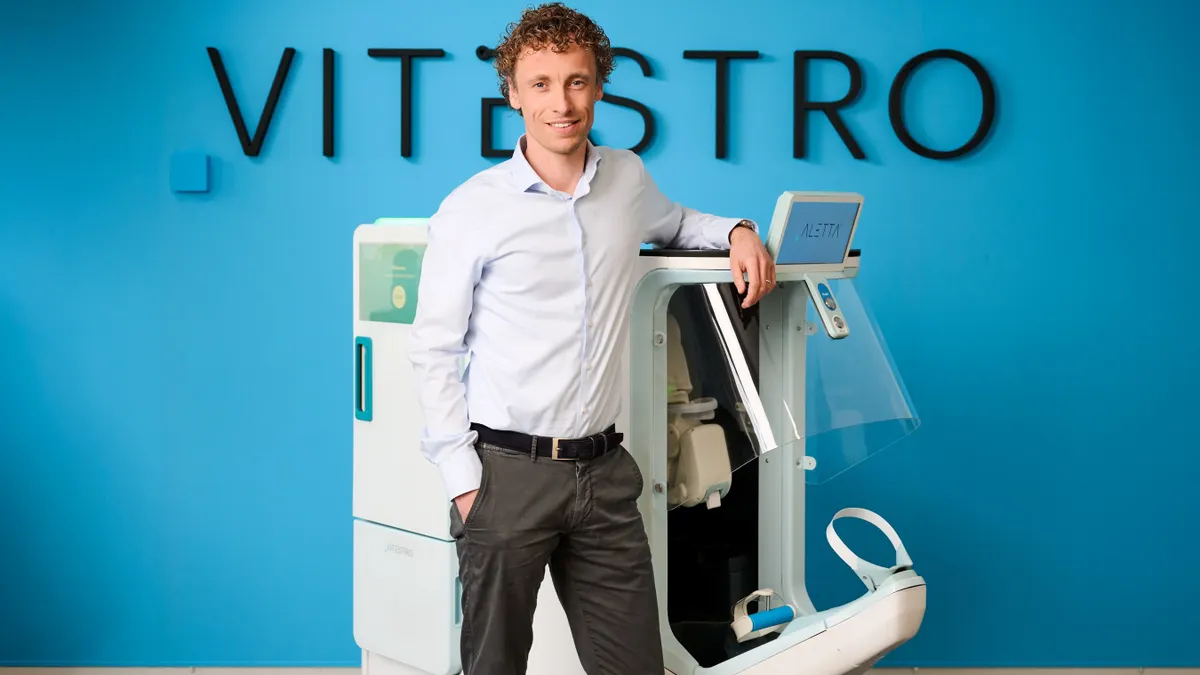
In a landmark decision for medical automation, the U.S. Food and Drug Administration (FDA) has granted authorization to Vitestro for its autonomous blood-drawing device, “Aletta.” This development marks a significant shift in clinical diagnostics, positioning robotics as a primary solution to the chronic, nationwide shortage of phlebotomists. As healthcare systems grapple with increasing patient volumes and a dwindling workforce, the integration of artificial intelligence (AI) and precision robotics into routine procedures is no longer a futuristic concept—it is a regulatory reality.
The Technological Leap: How Aletta Operates
At the core of Aletta’s clinical value proposition is its ability to standardize a procedure that has remained largely manual for over a century. The device employs a sophisticated suite of technologies, including high-resolution imaging, advanced robotics, and proprietary AI algorithms to navigate the complexities of human anatomy.
Unlike traditional methods that rely heavily on the visual inspection and tactile expertise of a human clinician, Aletta utilizes multi-modal ultrasound technology. This imaging capability allows the device to not only map the patient’s vein architecture with surgical precision but also to distinguish veins from arteries—a critical safety feature that mitigates the risk of arterial puncture.
The procedural workflow is entirely automated. Once a patient is positioned, Aletta manages the entire lifecycle of the blood draw: it applies the tourniquet, identifies the optimal venipuncture site, guides the needle insertion, collects the required samples into the appropriate tubes, and finally, applies a bandage to the puncture site. The role of the supervising healthcare professional is transformed from a manual laborer into a high-level safety monitor. The human phlebotomist is responsible for confirming the order of the tubes, verifying sample volume, and intervening should the device issue a safety alert. Between patients, a technician ensures the device is sanitized, maintaining the sterile environment required for clinical diagnostics.
Chronology: From Concept to Regulatory Approval
The path to FDA approval for Aletta was not instantaneous; it was the result of years of rigorous clinical development and strategic international scaling.
- Initial R&D Phase: Vitestro, based in the Netherlands, focused its early development on refining the sensor fusion required for real-time vein tracking and needle stabilization.
- European Validation: In early 2024, Vitestro secured the CE mark for Aletta. This European certification served as the essential proving ground for the technology, allowing the company to initiate a limited market release and gather critical real-world performance data.
- The $70 Million Milestone: In March 2024, Vitestro closed a significant $70 million Series B funding round. This infusion of capital was pivotal, drawing attention from industry heavyweights including the venture capital arm of Labcorp, the Mayo Clinic, Sutter Health, and Intuitive Surgical co-founder Fred Moll. This backing signaled strong institutional confidence in the scalability of autonomous blood draws.
- FDA Authorization: Following extensive performance and clinical testing, the FDA issued its de novo authorization. This classification is reserved for novel medical devices that have no existing predicate, effectively creating a new regulatory category for autonomous phlebotomy.
Supporting Data and Market Dynamics
The impetus for this technology is rooted in a worsening global labor crisis. The American Society for Clinical Pathology has repeatedly highlighted the critical shortage of laboratory professionals, including phlebotomists, who are essential for the operation of hospitals and diagnostic clinics. High turnover rates and burnout have led to backlogs in testing, delaying patient care and increasing operational costs for healthcare providers.
The investment profile of Vitestro reflects this market necessity. By including organizations like the Mayo Clinic and Labcorp—which operates one of the world’s largest networks of clinical diagnostic labs—the financing round confirms that the "customers" of this technology are already prepared to integrate it into their workflows.
Furthermore, the FDA’s decision to include "special controls" as part of the de novo authorization is a major milestone for the industry. These controls establish the benchmark for clinical testing and performance requirements for any future competitors entering the space. By defining the parameters for the 510(k) pathway for subsequent devices, the FDA has effectively opened the floodgates for a new sub-sector of medtech, signaling that the regulatory environment is now prepared to support the widespread adoption of robotic phlebotomy.
Official Perspectives: Regulatory and Clinical Implications
The FDA’s endorsement of Aletta is being interpreted as a vote of confidence in the safety of AI-assisted medical procedures. By formalizing the performance requirements, the FDA has provided a roadmap for companies to transition from experimental robotics to standardized clinical care.
For Vitestro, the mission is twofold: improving patient experience and operational efficiency. Patients often report "needle anxiety," and repeat punctures due to difficult vein access are a significant source of distress. Aletta’s precision-guided approach aims to reduce the "first-stick" failure rate, theoretically making blood draws faster, more consistent, and significantly less painful for patients.
"We are building the future of diagnostics," Vitestro CEO Toon Overbeeke noted during the company’s recent funding announcement. The focus is now on manufacturing scale-up and commercial infrastructure development. The company has already indicated that it is working on a next-generation version of the device, which will feature deeper integration into high-volume clinical workflows, such as those found in emergency departments and busy outpatient centers.
Implications for the Future of Healthcare
The arrival of Aletta signals a profound shift in how hospitals manage diagnostic testing. The implications are far-reaching, spanning labor economics, patient safety, and healthcare equity.

1. Labor Reallocation
One of the most sensitive aspects of introducing robotics into clinical settings is the impact on human roles. Critics often fear that automation leads to job displacement. However, proponents argue that in the context of the phlebotomy shortage, Aletta is a force multiplier, not a replacement. By automating the most repetitive and physically taxing aspects of the job, healthcare systems can allow highly trained phlebotomists to focus on patients with complex needs, such as those with chronic conditions, pediatric patients, or individuals with severe needle phobias, while the machine handles the high-volume, standard collections.
2. Standardization of Care
Human error—ranging from mislabeling tubes to incorrect collection orders—is a documented issue in clinical labs. Aletta’s autonomous nature ensures that every draw follows the exact same clinical protocol. This standardization reduces variability in sample quality, which in turn leads to more reliable diagnostic results for physicians.
3. The "Robotization" of the Clinic
Aletta is the latest in a long line of robotic advancements, following in the footsteps of systems like the Da Vinci surgical robot. While surgical robotics have dominated the headlines for decades, the "automation of the routine" represents a new frontier. Moving forward, we should expect to see similar robotic interventions in other routine clinical tasks, such as intravenous (IV) catheter placement and automated vitals collection.
4. Economic Barriers and Accessibility
While the technology is promising, the cost of deployment remains a significant factor. Initial adoption will likely be limited to large hospital systems and diagnostic chains capable of the capital expenditure required for high-tech medical hardware. For smaller rural clinics, the barrier to entry remains high, potentially widening the gap in diagnostic capabilities between urban centers and underserved areas.
Conclusion: A New Standard of Care
The FDA’s authorization of the Aletta device is more than a simple regulatory approval; it is the official sanctioning of a new era in diagnostic medicine. As Vitestro shifts its focus toward manufacturing scale and global commercialization, the medical community will be watching closely to see how effectively these robots integrate into the chaotic, high-pressure environments of modern hospitals.
If Aletta can deliver on its promise of consistent, error-free blood collection while alleviating the burden on the human workforce, it will likely serve as the blueprint for a broader wave of automation in healthcare. The goal is clear: to build a system where technology handles the repetitive, while humans are empowered to focus on the compassionate, complex, and creative aspects of patient care. As the device moves from the clinical trial phase to real-world deployment, it marks the end of the traditional, purely manual phlebotomy era and the beginning of a hybrid, tech-enabled diagnostic landscape.